Doha – Al Raya:
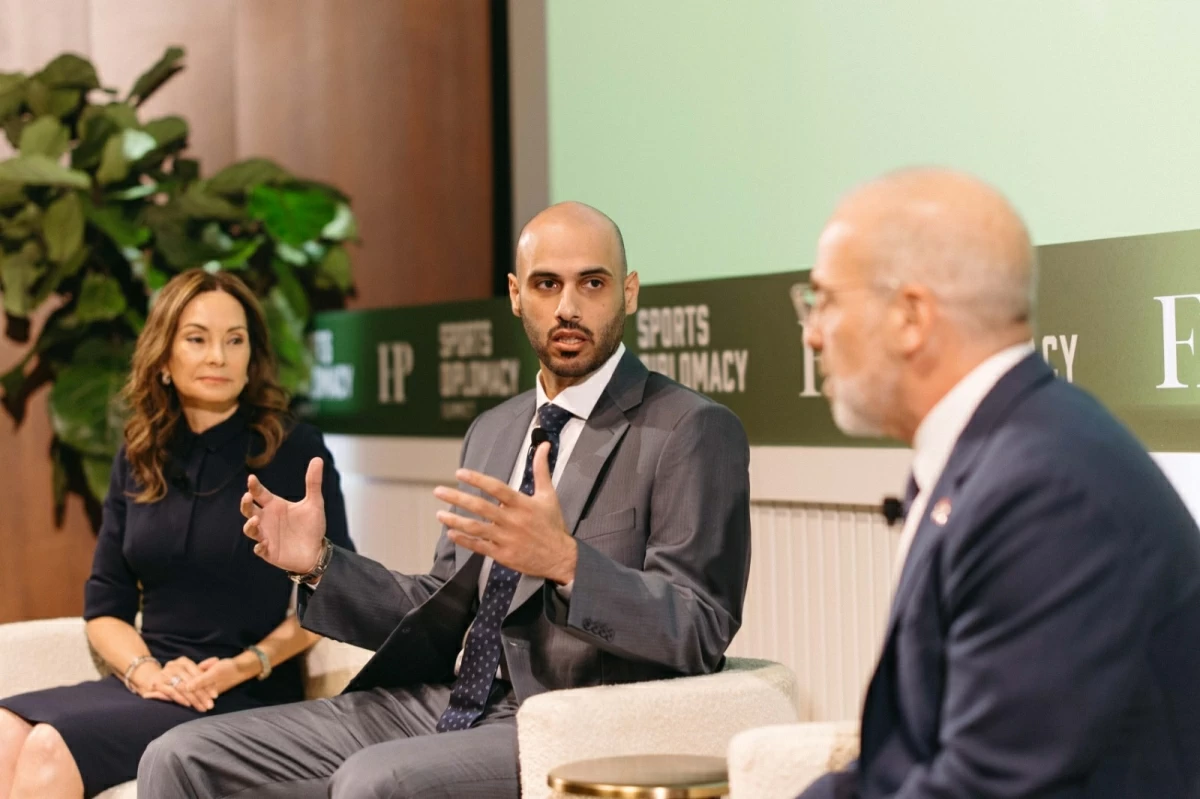
Mr. Jassim Abdulaziz Al-Jassem, CEO of the Local Organizing Committee for Football Events in Qatar, participated in the Sports Diplomacy Summit organized by Foreign Policy magazine at the Embassy of the State of Qatar in Washington, DC, on the occasion of the 250th anniversary of the founding of the United States of America and the approaching start of the 2026 FIFA World Cup in North America. The summit brought together an elite group of leaders and decision-makers from the government, diplomacy, media and investment sectors, to discuss the growing role of sport as a tool for international cooperation and promoting economic development.
His Excellency Sheikh Meshal bin Hamad Al Thani, Ambassador of the State of Qatar to the United States of America, said: “Qatar’s journey in hosting major sporting events did not end with the FIFA World Cup Qatar 2022. The expertise and partnerships built through that tournament continue today to support the global sports community, including the ongoing preparations for the 2026 FIFA World Cup in North America. We are proud that Qatar’s legacy in hosting tournaments contributes to shaping the next chapter in the history of the World Cup, and hosting the Sports Diplomacy Summit “It reflects our firm commitment to promoting international dialogue through sport.”
During a session titled “Welcoming the World: Leadership Lessons from Countries Hosting Major Events,” Al-Jassim reviewed the sustainable legacy of the FIFA World Cup Qatar 2022, which contributed to highlighting Arab culture, hospitality values, and operational efficiency on the global stage, and established Qatar’s position as a leading sports destination.
Al-Jassim said: “For Qatar, hosting the 2022 World Cup represented a starting point for building long-term national capabilities. We were not building for one event, but rather we were establishing an integrated system and creating a generation of expertise and competencies.”
He added: “Today we continue to benefit from the infrastructure, expertise, partnerships and international relations that were strengthened during the tournament. The human legacy is no less important, as thousands of people have acquired new skills and capabilities that continue to contribute to supporting Qatar’s journey and developing sports globally.”
Al-Jassim also touched on the cultural impact of hosting international sporting events, explaining how Qatar’s sporting heritage contributed to bringing together fans from all over the world and introducing them to local culture, which helped break down stereotypes and enhance mutual understanding.
He said: “Sports is one of the few global languages that everyone understands, and it provides countries with an opportunity to tell their story beyond the boundaries of politics, geography and culture. We have noticed during the various events we have hosted that the public interacts with authenticity wherever they find it; the most powerful stories are those that come from people, their values and their experiences. The World Cup provided us with a platform to introduce our identity and ambitions, and turned into a bridge for communication between cultures. Therefore, organizers of major events should focus on this aspect to ensure “Success.”
Since hosting the first FIFA World Cup in the Middle East, Qatar has continued to consolidate its sporting legacy by hosting a number of major events, including the AFC Asian Cup Qatar 2023, and three FIFA tournaments in 2025, which are: the first edition of the FIFA U-17 World Cup with the participation of 48 teams, the FIFA Confederations Cup for Clubs, and the FIFA Arab Cup.
Al-Jassim said: “Hosting events of this size is fundamentally about people. Infrastructure is important, but it alone is not enough to organize a World Cup or a continental championship. What makes success is qualified human cadres who work in harmony in the fields of security, transportation, operations, technology, media, hospitality, and health care, in addition to many other specializations.”
As the world’s eyes turn to the next edition of the FIFA World Cup in North America, Al-Jassim stressed Qatar’s commitment to continuing to build on its sporting legacy by exchanging experiences and enhancing international cooperation.
In this context, a specialized team of Qatari experts, who played pivotal roles in organizing the most prominent tournaments hosted by the country, was distributed to a number of host cities in the United States of America and Canada, to contribute to supporting the organization of the 2026 FIFA World Cup, within the framework of a memorandum of understanding to exchange knowledge and expertise between the Supreme Committee for Delivery and Legacy and the International Federation of Association Football (FIFA).
A second team of Supreme Committee employees and key partners is also participating in a monitoring and control program during the tournament, which aims to enable participants to understand the mechanisms of organizing major cross-border sporting events.
Al-Jassim concluded by saying: “Every tournament has its own mark on football and on the world. Qatar 2022 was a historic milestone for the Middle East and the Arab world, while the 2026 edition will carry a different kind of historical importance.”
Later this year, Qatar is once again preparing to embrace the world, hosting the second of five consecutive editions of the FIFA U-17 World Cup, from November 19 to December 13.