San Pedro Sula, Cortés
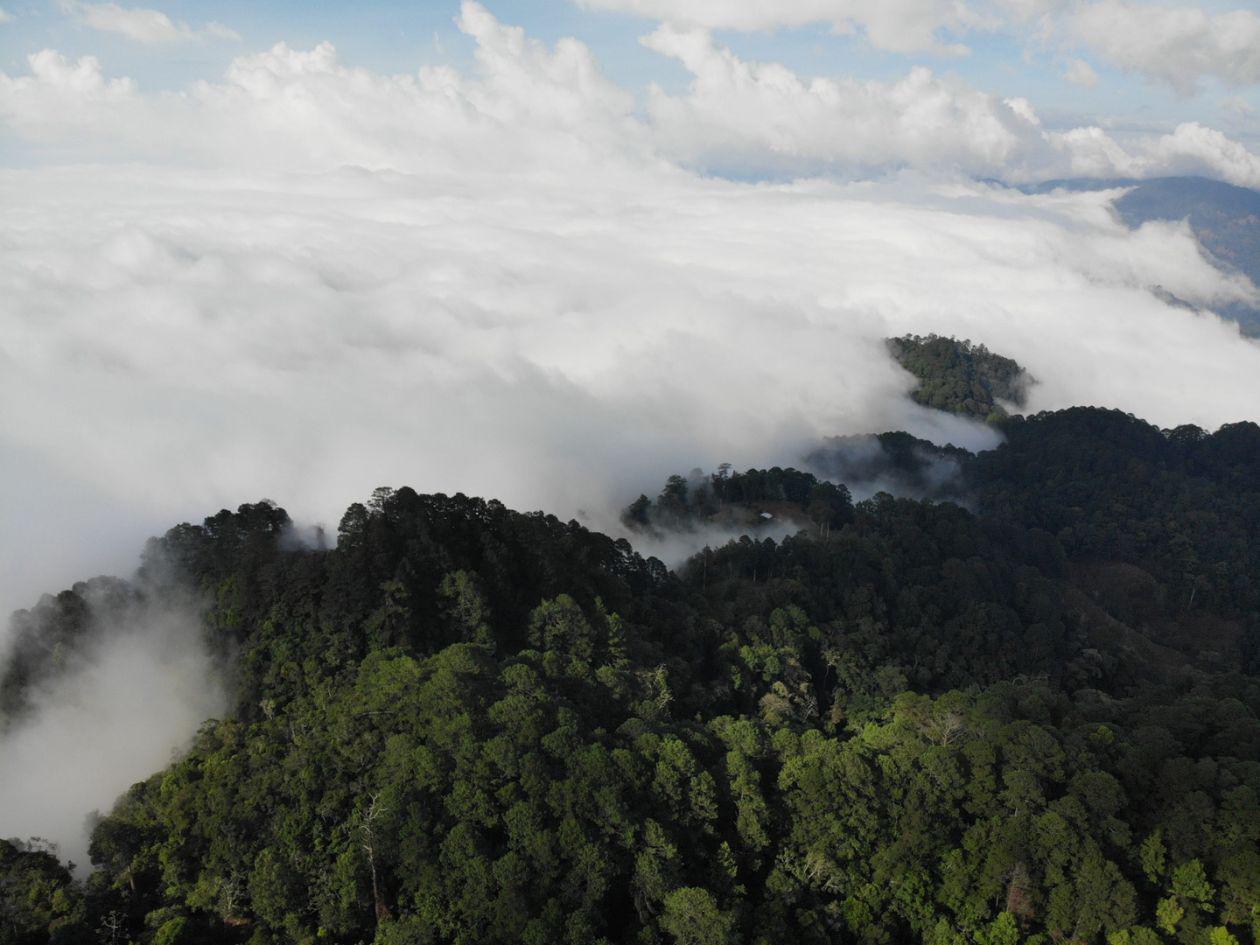
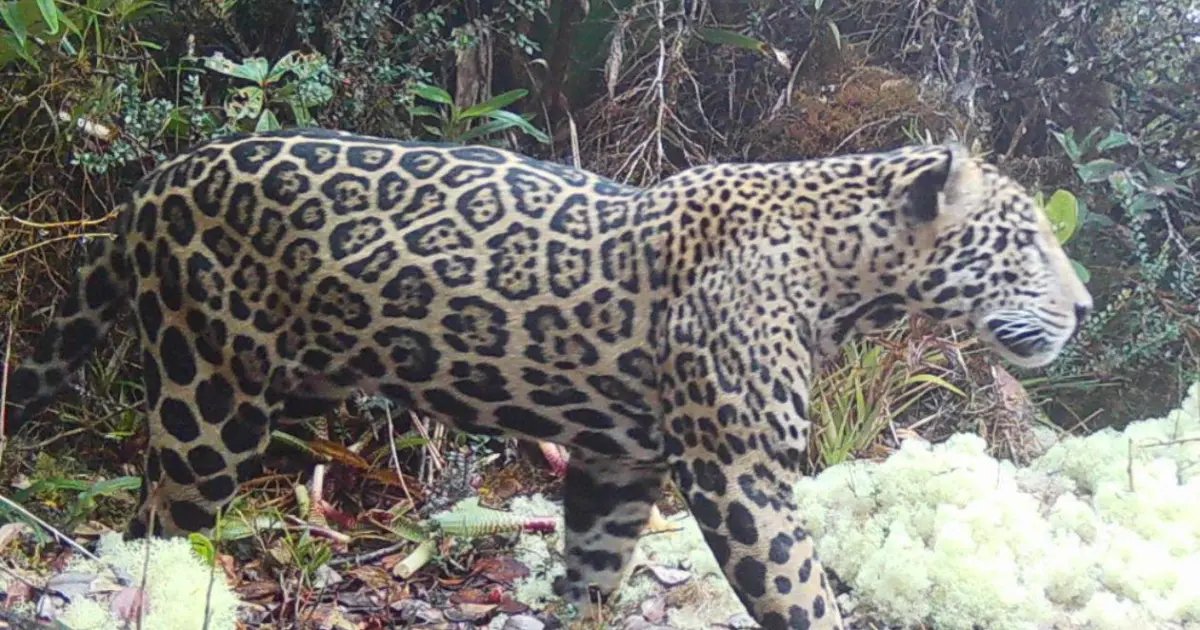
At the top of the El Merendón mountain rangewhere the fog embraces the forest and silence dominates the landscape, a camera trap captured a moment that restores hope: the passage of a jaguar.
This is not just any sighting. Ten years have passed since the last record in that area, and its appearance confirms that this specimen continues to travel these natural corridors.
The discovery was documented by organization Panthera Foundationwhose team has worked for more than a decade with constant monitoring, supported by rangers, acoustic sensors and more than twenty cameras installed at strategic points.
As explained by specialist Franklin Castañeda, director for Honduras of the Panthera Foundation this is not a resident jaguar. It is, rather, a “traveling jaguar”: a young male in transit, traveling great distances in search of territory and a population in which to settle.
“They are like migrants,” describes Castañeda. “Animals that leave the place where they were born and undertake long journeys, sometimes hundreds of kilometers, until they find a place where they can stay.”
That detail, far from downplaying the importance of the discovery, makes it even more relevant. It indicates that the mountain range continues to function as an active biological corridor, a kind of natural bridge that allows connectivity between jaguar populations.
The feline was captured at about 2,200 meters above sea level, in a cloud forest ecosystem, where a dwarf forest stands out, which has earned it another poetic name: the “jaguar of the clouds,” as it was titled by the CNN network.
But behind the image there is a fact that worries and, at the same time, invites us to reflect. Of more than 20 cameras installed in the area, only one managed to register its passage. In the rest it did not appear.
That raises an inevitable question: how many more jaguars have crossed that same corridor without being detected?
“If that camera had not been there, we would never have known that that jaguar passed by,” warns Castañeda. The statement suggests the fragility of the knowledge we have about these species and the importance of maintaining and expanding monitoring systems.
In Honduras, experts estimate that there could be between 300 and 700 jaguars throughout the national territory. However, they are approximate figures, built from models and partial evidence. The nature of these animals, stealthy, nocturnal and wide-ranging, makes their study a constant challenge.
Registration in The Merendon It also comes in a context of increasing human pressure. More and more people are climbing these mountains for tourism or recreation, posing new challenges for conservation.
The presence of the jaguar, although fleeting, is a reminder that these spaces are not empty. They are living, shared territories, where each human decision can tip the balance between conservation and loss.
More than a simple photograph, the “traveling jaguar” is a message: wildlife still resists, but it depends on natural corridors remaining intact. Because without connectivity, there is no future for the king of the jungle.
Behind this image there is a silent and persistent work. Teams of Panthera Foundation rangers and technicians travel for days on steep trails, carrying equipment, installing cameras and reviewing records in conditions rarely seen.
They are the ones who maintain surveillance in these remote ecosystems, often with limited resources, but with a commitment that is not measured in numbers. In this story, the great heroes are the rangers.
This effort is also intertwined with the life of the rural communities settled in the El Merendón mountain range, territories where the relationship with the forest continues to be direct and daily. In these towns, documented in different journalistic tours, the mountain is not just landscape, it is sustenance, identity and heritage. The conservation of the jaguar, in this context, does not occur in isolation, but in coexistence with those who live and know these spaces for generations.
Added to this work is a technical task that requires precision and resistance: the installation of acoustic monitors high in the forest.
Panthera staff climb trees in hard-to-reach areas to place devices that record sounds from the ecosystem, from birds to mammals.
Each piece of equipment installed expands the ability to listen to what the forest says in silence, and turns each record—like that of the traveling jaguar—into a key piece to understand and protect the life that still makes its way through the clouds.
Deforestation and poaching remain the main threats to the jaguar in Honduras, a species that has lost almost half of its historical range across the continent.
Faced with this scenario, conservation efforts have had to scale up in coordination and scope.
For years, teams in the field have worked alongside allies such as Rainforest Trust, Weeden Foundation, Wildlife Without Borders, the Forest Conservation Institute (ICF), the private company Lacthosa, Wallacea Trust and the United States Fish and Wildlife Servicein a network that combines financing, technical knowledge and territorial presence.
The recent sighting in Merendón is not an isolated event, but a concrete sign that these actions are giving results.
Park ranger patrols against poaching, the incorporation of conservation technology, such as the SMART-EarthRanger alliance and the use of acoustic monitoring and camera traps, as well as prey reintroduction efforts, are beginning to be reflected in the return of these big cats to routes that remained silent for years.