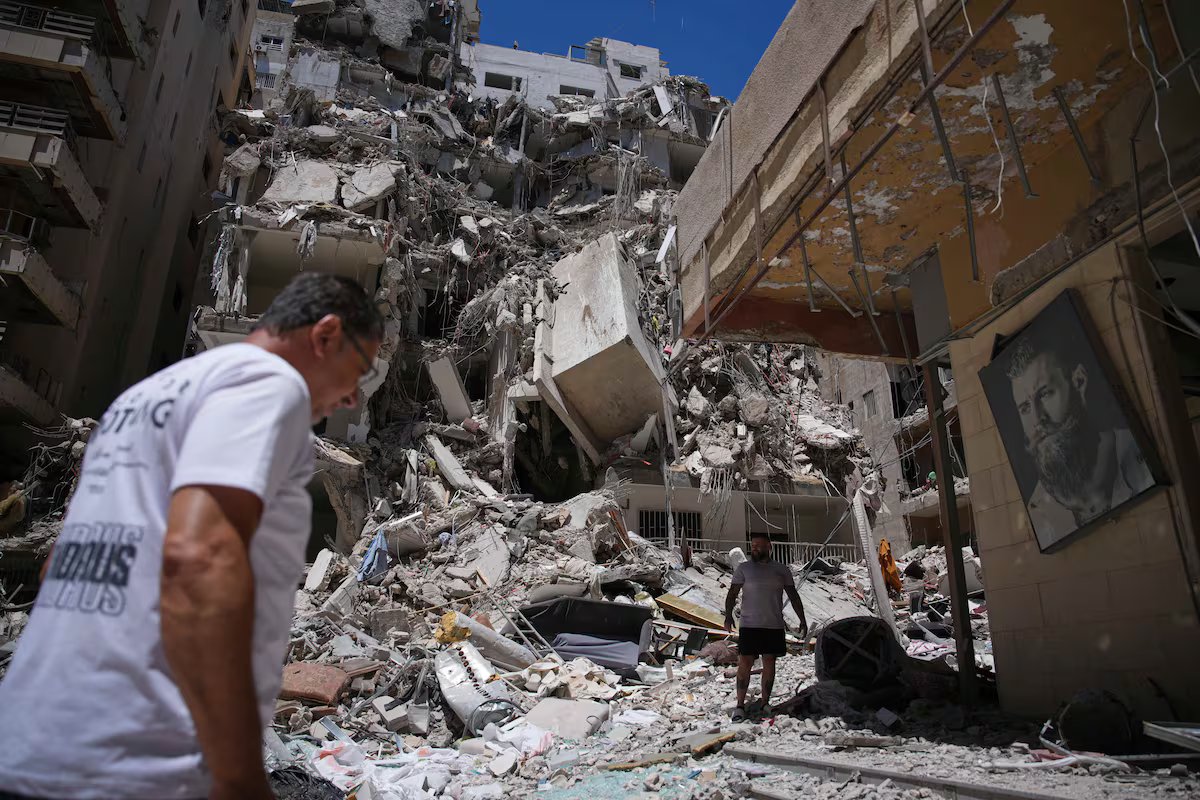
No one in the United States, Israel or Lebanon has announced it publicly, but according to official sources cited under anonymity, Israel and Hezbollah have maintained a ceasefire since 4:00 p.m. local time (3:00 p.m. in mainland Spain) this Friday. The reality on the ground seems different: the Israeli army continues its bombings and Hezbollah, the launching of drones against troops, both in southern Lebanon and northern Israel. The intensification of attacks – with 47 Lebanese and four Israeli soldiers killed since dawn – has postponed the negotiations that Iran and the United States were scheduled to begin this Friday in Switzerland.
In Israel, a prominent official source has confirmed the existence of the new truce, but has clarified that it will not mean the withdrawal of Israeli troops from the area they occupy in southern Lebanon and that, if Hezbollah attacks the soldiers present there, “we would be at war.” It is Israel’s first ceasefire with Hezbollah, not formally with the Lebanese State, as had been happening.
On paper, a truce has already prevailed in Lebanon since April. But, just like in Gaza, has been left on wet paperas Benjamin Netanyahu’s Government emptied it of its content through daily bombings, the refusal to withdraw to its borders, village demolitions and daily eviction orders. Attacks during the truce have left more than 600 dead and displaced 1.2 million people. The Israeli Defense Minister stressed this Friday that “not a single resident” will be able to return to what Israel calls the “security zone,” which is the area of southern Lebanon that it occupies. Hezbollah has also continued shooting during the ceasefire, killing more than 30 soldiers and four civilians.
Four of them, including a commander, died this Friday in an attack against their tank in southern Lebanon. It is the largest announcement of military casualties of the current hostilities, caused above all by the drone launch by Hezbollah, against which the army seeks a solution against the clock.
Shortly after 4:00 p.m., the Israeli army spokesman said he had not received “instructions” that there was a ceasefire with Hezbollah in Lebanon and specified that he continued to act “without limitations.”
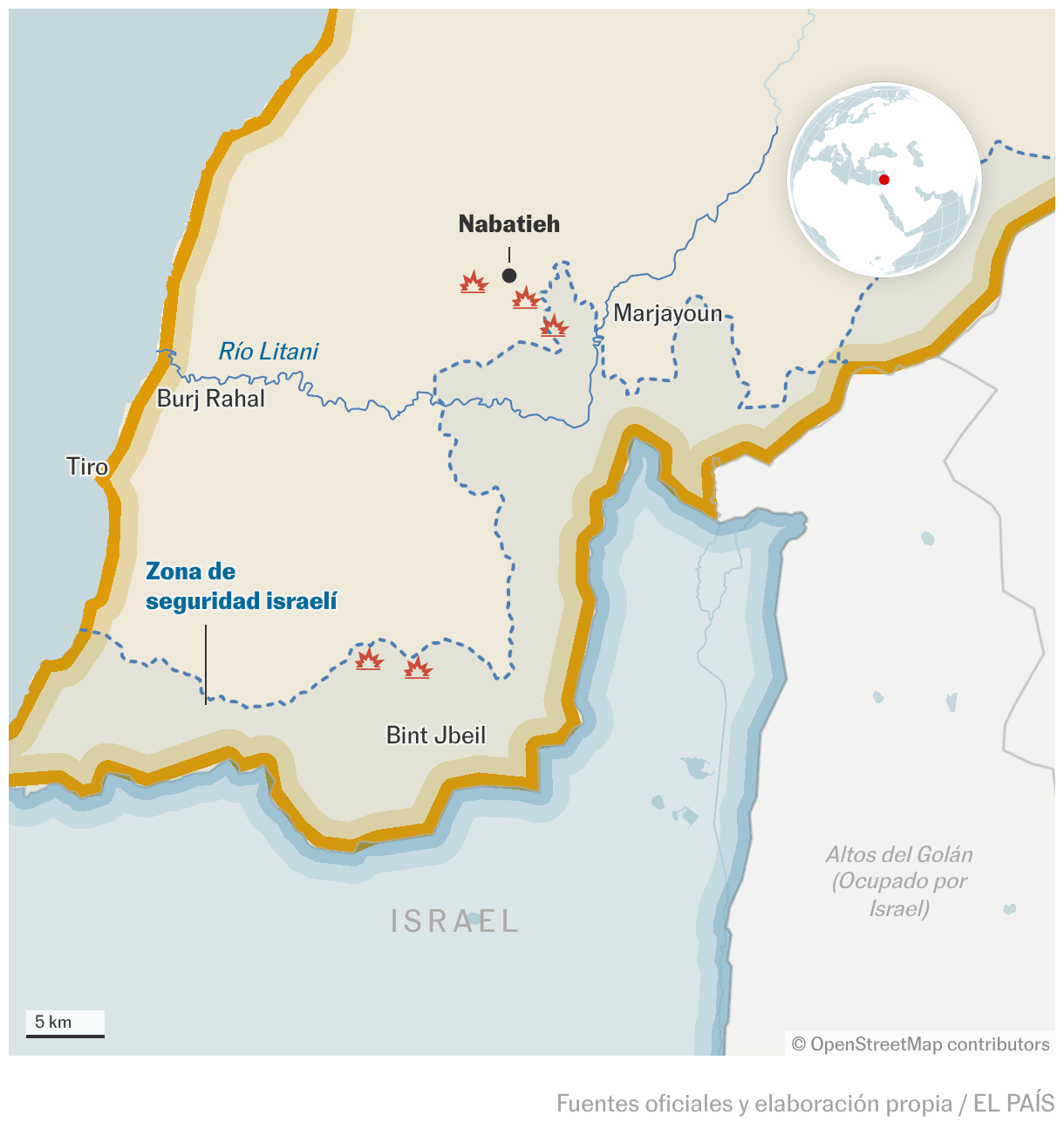
Lebanon is, right now, the key to both the tension between the governments of Donald Trump and Benjamin Netanyahu, and to the future of the agreement signed this week between Tehran and Washington. Israel refuses to cease hostilities in Lebanon, where the agreement extends. Their bombings this Friday (about 150, according to the army) have been among the most intense in weeks, focused around the southern city of Nabatiye.
Netanyahu and his Defense Minister, Israel Katz, repeated the same idea this Friday: they will not withdraw troops from Lebanon, despite the mention in the agreement of respect for the “territorial integrity” of the country. The first has insisted that they will remain “as long as necessary” and that he has “made it unequivocally clear.” And Katz has specified that they will stay “from the (Mediterranean) coast to the heights of Beaufort”, that is, in the area they currently occupy. Just the day before, the Israeli army published a map showing the –extended– area that he controls there militarily.
Netanyahu considers that the pact between Tehran and Washington does not concern him. He is not one of the signatories, but the text includes Israel. Hezbollah has been signaling for days that it will comply if it is not the only one to do so. And, this Thursday, US Vice President JD Vance urged Netanyahu not to “go crazy” in Lebanon and criticized Israeli ministers opposed to the agreement with Iran, telling them that Trump is their “only” ally in the world.
Against the backdrop of the Lebanese imbroglio, the United States and Iran have postponed the start of talks to put a definitive end to the war that they planned to celebrate this Friday in the tourist complex of Burgenstock, on the outskirts of Lucerne (Switzerland), as confirmed by the Ministry of Foreign Affairs of the host country, which clarifies, however, that the preparatory work for the meeting continues.
A spokesman for the Iranian Foreign Ministry stated this afternoon that preparations continue to hold the meeting in Switzerland “in the coming days”, without further details. Tehran does not want to meet with the United States if the situation in Lebanon is not stabilized.
The president of the United States, Donald Trump, and his Iranian counterpart, Masoud Pezeshkián, They signed the document on Wednesday in a virtual event. The American did so from the palace of Versailles, near Paris. “I just signed it,” confirmed the president himself as he left the former royal residence. “The text of the memorandum of understanding between Iran and the United States has already been officially finalized, as both parties have signed it,” announced Iranian Foreign Ministry spokesman Esmaeil Baghaei.
Second phase
The meeting scheduled in Switzerland would be the beginning of the second negotiating phase, the one that must define the content of the final agreement, especially with regard to the Iranian nuclear program and which should last, in principle, 60 days.
The memorandum of understanding indicates that Iran commits to at least diluting, under the supervision of the International Atomic Energy Agency, the uranium enriched to the highest level it has available.
But practically everything else remains to be defined, including whether all the radioactive material would remain in the hands of Tehran or whether it should hand over part of it, as happened with the pact sealed by Barack Obama.
It also remains to be finalized the gradual lifting of the sanctions to which the Trump Administration commitsas well as the investment fund worth $300 billion that should boost reconstruction.
Another fundamental aspect will be the pact on the status of the Strait of Hormuz. The interim pact establishes that circulation will be free – without tolls – “only” for 60 days, and it therefore remains to be decided what will happen next, with Iran determined to make its control clear.
This is a diplomatic task of immense difficulty. The pact signed a decade ago by Obama took two years of negotiations, but the previous contacts for the discussion itself lasted a decade.