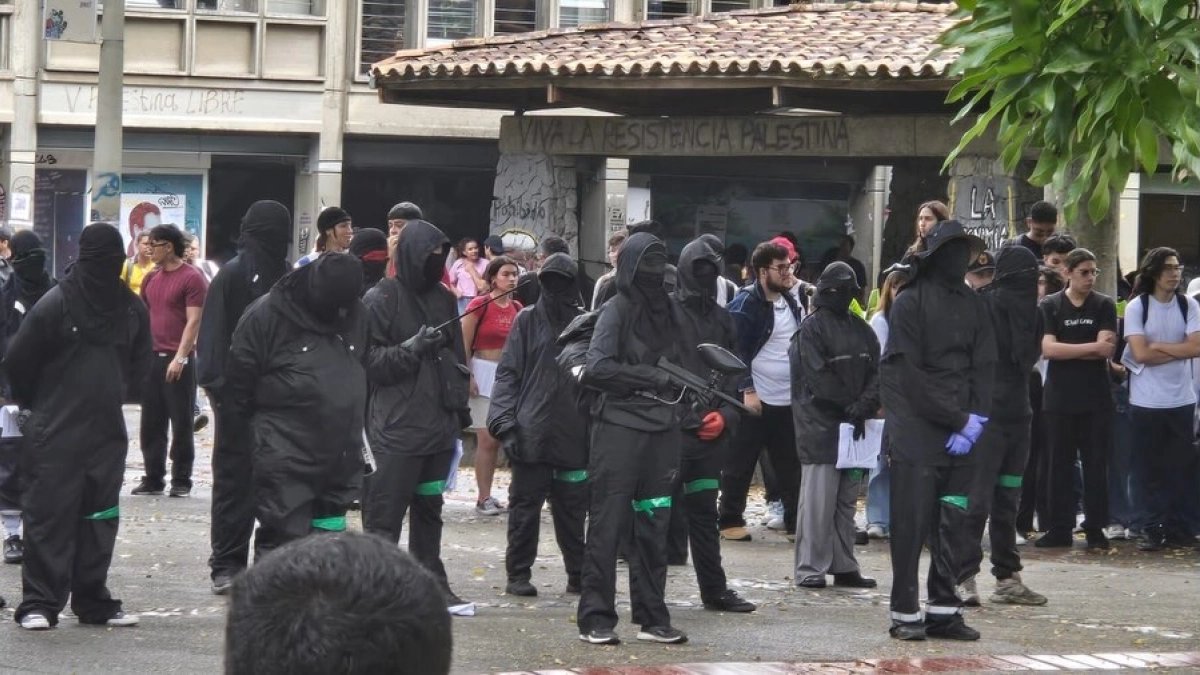
President Abelardo de la Espriella announced, during his speech this Sunday, that the Police will be able to enter public universities to act against those who promote violent acts on campus.
READ ALSO
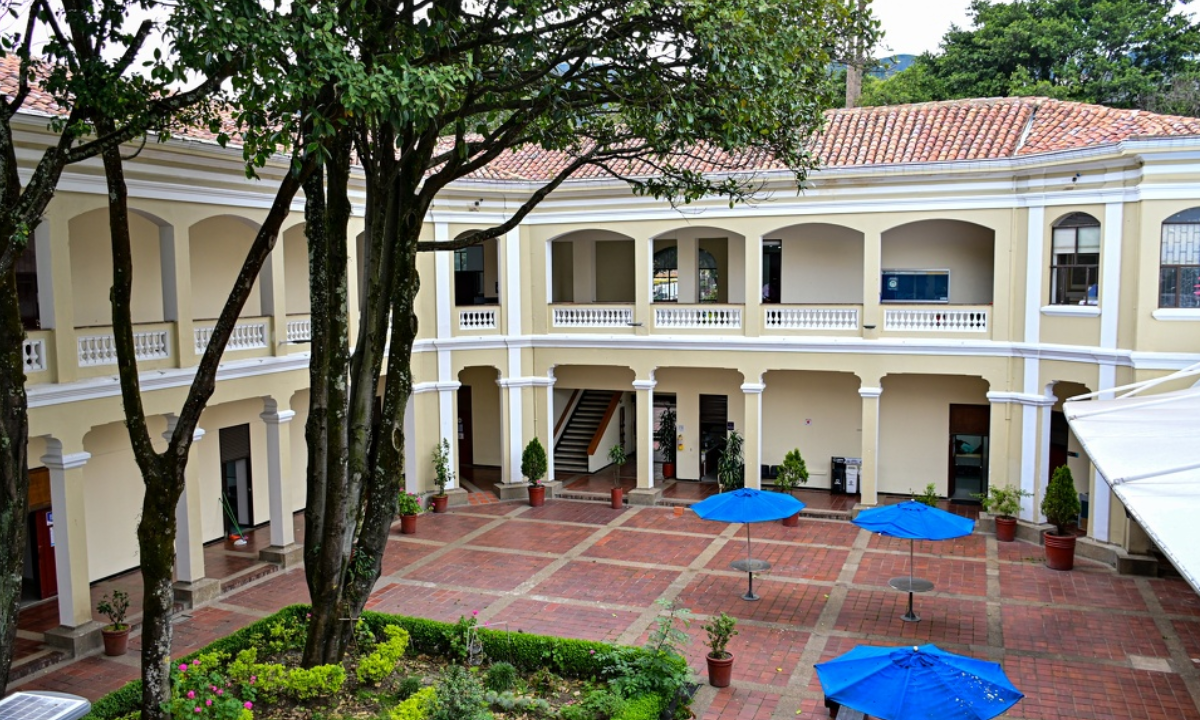
“University autonomy is not above public order,” said the president, who announced that they are already working on a protocol to outline the scenarios in which the Public Force may intervene.
The announcement revives a discussion that is not new in Colombia, but that until now had never been raised so directly by the Presidency of the Republic. And the underlying question is whether what the head of state proposes has legal backing.
The answer, according to current regulations, is not an absolute yes or no. It is, rather, a “depends on the circumstances” that Colombian law does regulate quite precisely.
In his speech, De la Espriella He described as “unacceptable” what, according to him, occurs in some public institutions due to attacks on the civilian population, the Public Force and infrastructure.
“Urban terrorism, vandalism, destruction of infrastructure and attacks on our Public Force and the civilian population is not protest,” he said.
The president went further and warned: “I am not going to allow public universities to continue being sanctuaries of violence.”
However, he qualified his announcement by recognizing that “universities have autonomy” and stated that the measure “protects students, the Public Force and the State itself.”
It is expected that during this week the Government will release the details of the announced protocol.
What the Constitution says about university autonomy
Article 69 of the Political Constitution establishes university autonomy as an institutional guarantee. Universities can give themselves their own statutes, elect their authorities and define their academic, administrative and financial regime.
Law 30 of 1992, which organizes the public service of higher education, develops this principle in its article 28. There, universities are recognized with the right to define their programs, select their professors and admit their students, among other faculties.
But this autonomy has never been interpreted by the Constitutional Court as absolute.
This was established, for example, by ruling C-829 of 2002, which defined autonomy as the discretion necessary for academic development, “with the limit that said autonomy finds in public order, the general interest and the common good.”
In the same sense, ruling C-337 of 1996 was pronounced, which also established public order and the common good as limits of autonomy.
That is to say: The constitutional norm has already contemplated, for more than two decades, that public order can take precedence over university autonomy in certain circumstances. At that point, the president’s statement has jurisprudential support.
What exactly does Law 30 say about this?
It is worth specifying it because it is usually cited imprecisely: Law 30 of 1992 does not mention anywhere in its articles the Police, the Public Force or entry to campuses.
What it does do, in its articles 3, 28 and 29, is define autonomy exhaustively: give and modify statutes, designate academic and administrative authorities, create and develop programs, grant degrees, select teachers, admit students and manage its own resources.
That is, the law limits autonomy to academic, administrative and financial matters. It does not go into matters of security or police powers.
For this reason, neither those who defend the entry of the Public Force nor those who reject it can cite Law 30 as literal support for their position. The debate is resolved, in practice, by crossing article 69 of the Constitution with the National Police Code.
Beyond the Constitution, there is a specific rule that regulates when the Public Force can enter a property without prior authorization: articles 162 and 163 of the National Police and Coexistence Code (Law 1801 of 2016).
This law replaced the old Decree 1355 of 1970 and establishes that Police authorities can enter a home without a written order when there is an “imperative necessity”, among other cases, due to flagrancy or imminent risk to people’s lives.
Universities, in that sense, do not have a special exception in the text of the law. For the purposes of this rule, a university campus is, legally, a property like any other.
The Constitutional Court reviewed the constitutionality of these articles in several sentences: C-223 of 2017, C-212 of 2017 and C-334 of 2017.
In those failures, The high court endorsed the power of entry without a court order, but imposed a condition: that entry must give rise to subsequent judicial control, at the request of anyone considered affected, to examine the validity of the police action.
Thus, the norm does allow the Public Force to enter a campus without authorization from the rector when there is flagrancy or risk to life. But that entry is subject to a judge later reviewing whether it acted within legal limits.
Is there any rule that prohibits it?
No Colombian law, decree or ruling expressly says that the Police cannot enter a public university. That literal prohibition does not exist.
What does explain why some sectors insist that entry would violate autonomy are four different sources, none of them a formal prohibition.
The first are the internal statutes of each university, approved by their own superior councils, which usually establish the rector as the highest authority within the campus and require coordination for the entry of external agents.
The second is a broad – not literal – interpretation of Article 69 of the Constitution, according to which control of who enters the campus would be part of that capacity for self-determination, although the constitutional text does not say so.
The third It is a historical and political tradition rather than a legal one: the Córdoba Reform movement of 1918, which inspired university autonomy throughout Latin America, understood the campus as a space protected from direct police and military intervention.
The fourth is the factual precedents of violent episodes, such as that of the student who was left in a coma after an intervention by Esmad at the University of Antioquia, which fuel distrust towards any police entry, beyond what the norm says.
Even the rector of the National University, José Ismael Peña, He clarified that argument this week: He said that autonomy and security “can coexist” and recognized that the Public Force can enter without authorization from the directives when it involves a serious crime, such as a terrorist act, a seriously injured person or the commission of a crime.
The voices for and against
Jurists consulted by different media in similar episodes have defended that same reading.
Lawyer Hernando Herrera, director of the Excellence in Justice Corporation, has indicated that “Esmad (now UNDMO) is not prohibited from entering universities”, although he clarified that it must be done “in coordination with the directives” and respecting the right to protest.
Former magistrate José Gregorio Hernández has also spoken along those lines: if within an institution ““There is a situation of violence, of disturbance of public order, of course the public force has to intervene to restore order.”
Under this position, university autonomy protects the academic and administrative aspects, but does not convert the campus into a space exempt from criminal law or police action in the event of flagrant crimes.
On the other hand, university rectors and directors have insisted that the entry of the Public Force without prior dialogue aggravates conflicts instead of resolving them.
The National University of Colombia, for example, rejected Esmad’s entry into the University of Antioquia in 2020 and warned that these types of actions “violate university autonomy, a fundamental pillar in the construction of any modern society.”
Other defenders of autonomy have recalled episodes from previous years in which police intervention ended in serious attacks against students, including the case of a young man who was left in a coma after being beaten by the Police at the University of Antioquia.
From this sector it is also argued that, if the rectors allow the automatic entry of the Police in the event of any disturbance, the confrontation between students and the Public Force tends to worsen instead of decrease.
a bill
The president’s announcement also comes in the middle of a parallel debate in Congress.
On September 1, the project known as the “Anti-capuchos Law” was filed, promoted by representatives Jaime Arizabaleta, from the Democratic Center, and Julio César Triana, from Cambio Radical.
The initiative seeks to create a criminal offense for those who hide their identity with hoods, masks or balaclavas and, under that anonymity, commit acts of vandalism in demonstrations, with sentences of between 54 and 96 months of non-releaseable prison.
The filed text focuses on the concealment of identity and the toughening of sanctions for blocking roads. It is not clear, based on the articles known so far, whether it explicitly retains provisions on the entry of the Public Force into universities, a point that had been mentioned in the announcements prior to the filing of the project.
MATEO CHACÓN ORDUZ | Deputy Editor Life of Today