
Listen to this article
Estimated 3 minutes
The audio version of this article is generated by AI-based technology. Mispronunciations can occur. We are working with our partners to continually review and improve the results.
Ottawa’s Iranian community is shaken by the rapidly changing situation back home as tensions between the United States and Iran remain high.
On Tuesday, U.S. President Donald Trump warned that “a whole civilization will die” if a deal wasn’t reached to end the conflict by 8 p.m. that night. By Wednesday, a shaky two-week ceasefire had been announced.
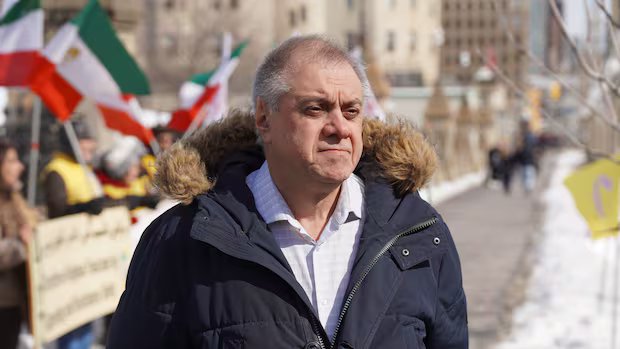
For Mehdi Pouragha, an Ottawa resident with family still in Iran, the turbulent news coming out of his home country has been “difficult and surreal.”
“The news of this ceasefire was certainly welcome,” he told CBC. “But we all know that these things are so fragile.”
Pouragha isn’t the only one struggling with the uncertainty of what will come next.
“It’s really hard for us to actually gauge any real news out of this, especially since we can’t have full access to people back home,” said Nikan Nadimi, another Iranian in Ottawa.
“I know once you talk to a majority of Iranians, you’ll see a lot of sadness, you see a lot of anger, you see a lot of depression. I think I’m one of the people who would try to stay optimistic,” he said.
“The end game is what matters to us, not the [momentary] reaction.”

Prime Minister Mark Carney recognized ‘positive developments’ in the U.S. and Israel-Iran war after the parties reached a two-week ceasefire deal. While Israel says the ceasefire doesn’t include its war with Hezbollah in Lebanon, Carney said more needs to be done. ‘When we say peace, we mean peace in the region, very much including Lebanon,’ he said.
Diaspora divided
Pouragha said the war has divided the community, with some in the diaspora hoping to see an end to the violence, while others are looking to the U.S. to help topple the current regime.
“It’s not that everyone who opposes war is supporting the government,” he explained. “When you’re dealing with conflicting ideas, conflicting statements, conflicting arguments … that confusion prevents the community to come together.”
Nadimi said the hopes of many Iranians still lie with the U.S.
“It’s very unique,” he said of the situation, explaining that he’s heard from family and friends back home who, despite having to deal with power and water outages and the threat of attacks on Iranian infrastructure, felt disappointed at the news of the ceasefire.
“They already have to go through hardship,” he said. “And now they’ve gone through all of this with no resolution.”
Shahram Golestaneh feels differently.
“Regime change by bombardment, that will never happen,” the director of the Iran Democratic Association said.
“It can happen, but by relying on the Iranian people to do that, not by foreign intervention or foreign war. ”
He said instead, he would like to see the international community put pressure on Iran to address the human rights violations in the country.
For Pouragha, the most important thing is for Iranians to feel supported by the rest of the community, and “asking Iranian people to tell you what they’re going through.”
“It’s very difficult to convey. But those small acts of solidarity go a long way,” he said. “There’s so many things that you can say and it could be interpreted as wrong, but taking that risk is what makes us humans, I think.”