Madrid/Iran executed at least 1,639 people in 2025, 68% more than the previous year, which is the highest number in the country since 1989, according to the annual report of the Norwegian NGO Iran Human Rights (IHRNGO) and the French Ensemble contre la Peine de Mort (ECPM).
Only 113 of these executions were announced by official sources, a figure that corresponds to less than 7% of the total, compared to 9.5% in 2024 and 15% in 2023.
Almost half of the deaths occurred from suspected drug-related crimes, a 58% increase from the previous year, while another 37 occurred from rape charges.
At least 57 were due to armed rebellion (baghi), enmity against God (moharebeh) and corruption on Earth (efsad-fil-arz), three charges related to security for which, among others, two protesters, 18 political prisoners, 13 accused of espionage and one convicted of financial corruption lost their lives.
At least 57 were charged with armed rebellion, enmity against God and corruption on Earth, three charges related to security
The joint report indicates that at least 48 women were executed, 55% more than in 2024 and the highest number in 20 years.
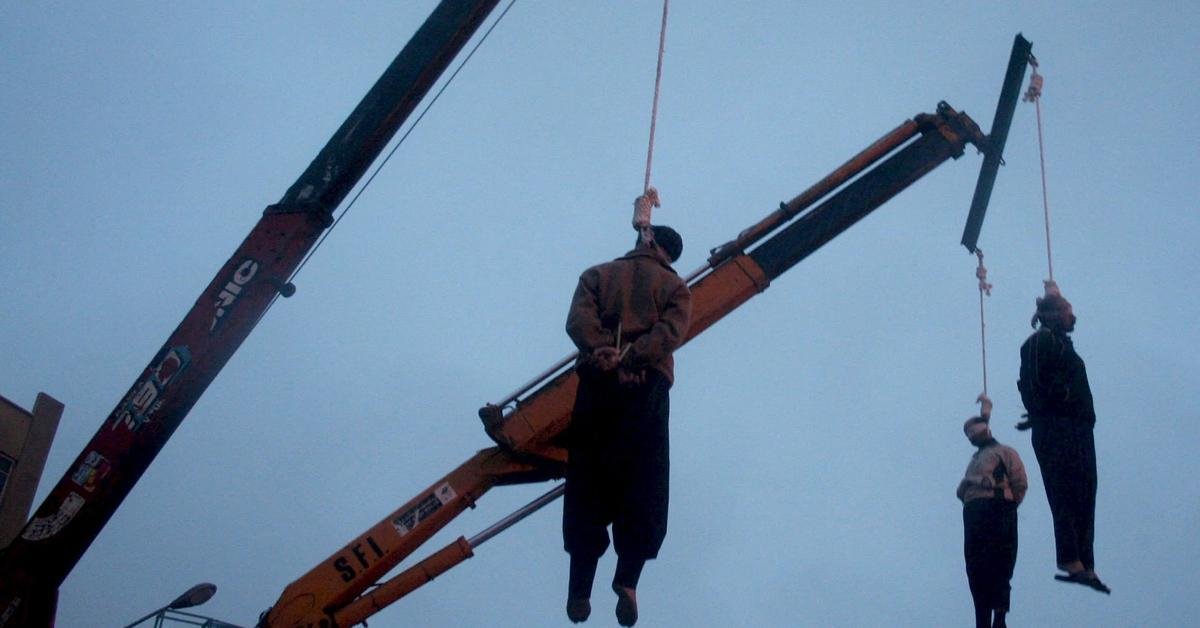
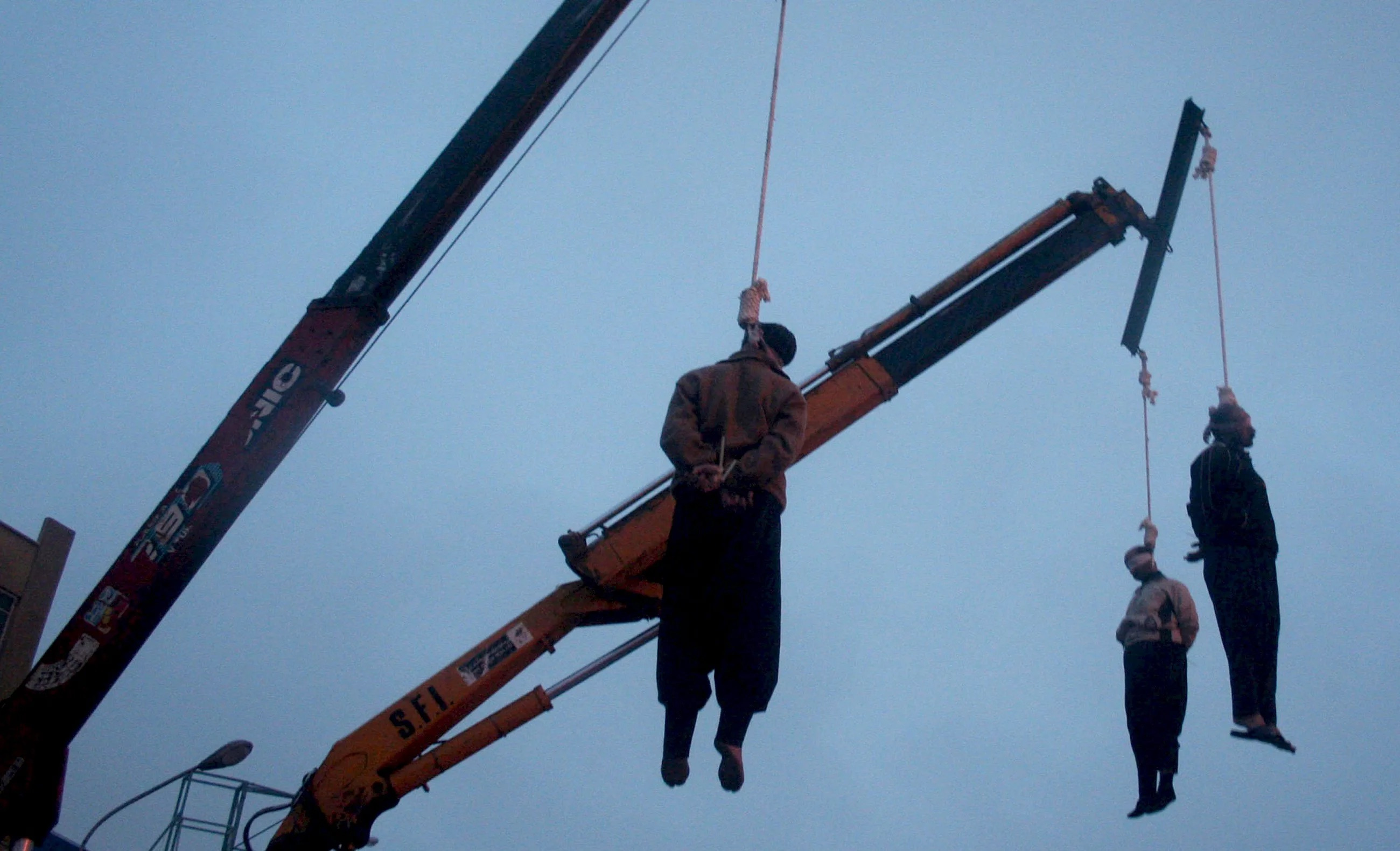
IHRNGO and ECPM highlight that 11 executions were carried out in public spaces and that at least 84 Afghan citizens were killed, compared to 80 in 2024 and 16 in 2022. Among the non-Iranians there are also three Iraqis and another person identified only as a foreigner.
The count reflects that 852 of the executions in 2025 and more than 5,972 since 2010 have been based on death sentences handed down by the Revolutionary Courts.
According to the two NGOs, these figures reveal an unprecedented escalation in the use of the death penalty in Iran, a trend that began after the protests sparked in 2022 by the death of Mahsa Amini for not wearing the veil correctly.
“The death penalty in Iran is used as a political tool of oppression and repression, and ethnic minorities and other marginalized groups are overrepresented among those executed,” says ECPM executive director Raphaël Chenuil-Hazan.
IHRNGO and ECPM make it clear that there continue to be executions in the country, whose population now lives “under the fear and anxiety of daily bombings” within the framework of the current war.
“The death penalty in Iran is used as a political tool of oppression and repression, and ethnic minorities and other marginalized groups are overrepresented”
The document clarifies that last year IHRNGO was notified of 553 executions that could not be verified by two independent sources, a figure more than ten times higher than the annual number of reports of unconfirmed executions in the previous four years.
The organization said it could not rule out the possibility that some complaints are part of a disinformation campaign by the Islamic Republic to discredit human rights organizations.
IHRNGO’s first report, in 2008, recorded 350 executions that year. Since then, the total has exceeded 11,196, which puts the average at 622 annually.
With the publication of this report, the two NGOs call on the international community, including the United Nations and governments with diplomatic relations with Iran, to place the abolition of the death penalty at the center of their engagement with Iran and support the growing abolitionist movement within the country.