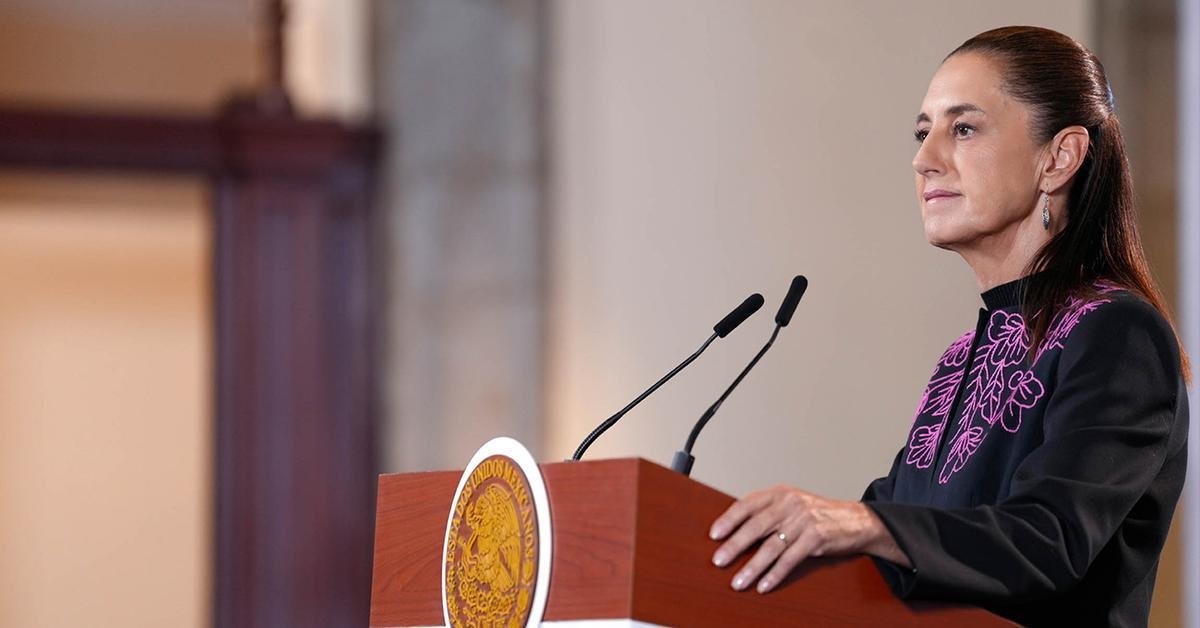
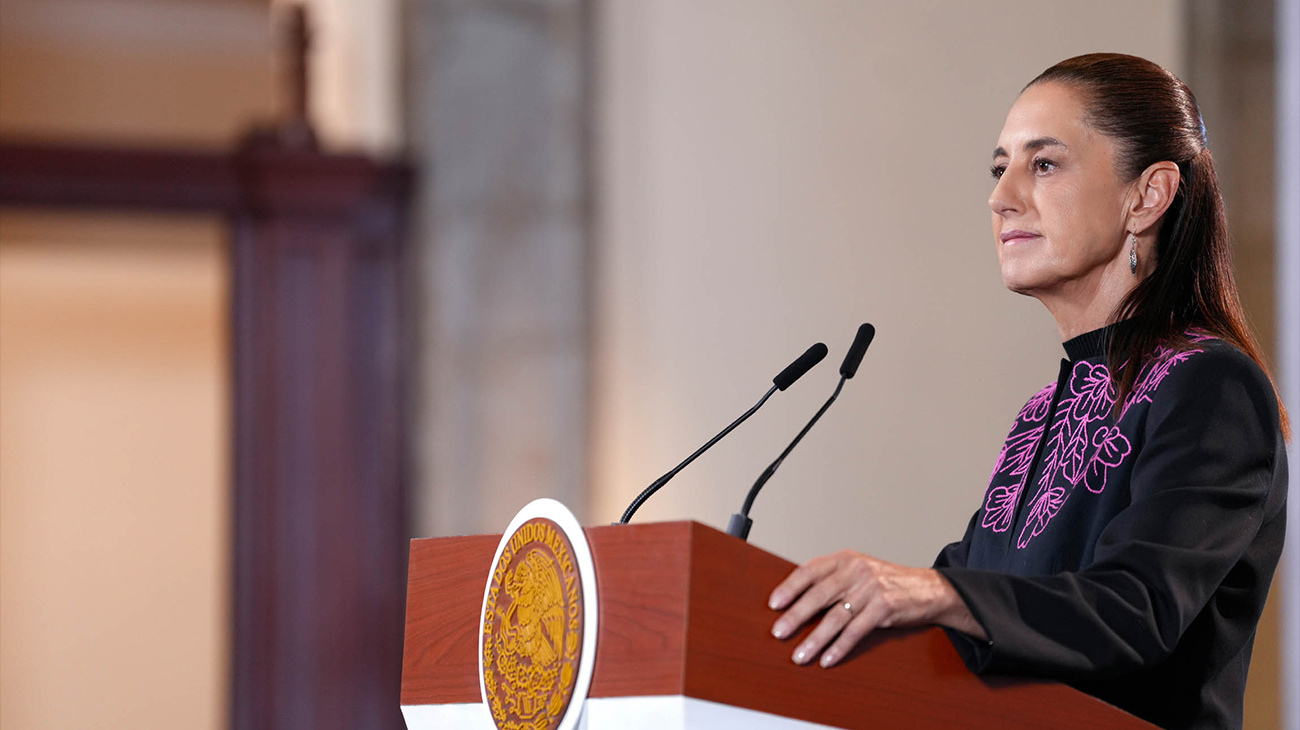
Mexico City/The president of Mexico Claudia Sheinbaum has left out of her Second Government Report the agreements with Cuba. In the 1,342 pages of the document there is no data on the 3,650 contracted specialists on the Island, their current location or the money disbursed to the regime for their services. There is no mention of the program either. Sowing Lifedespite the fact that last April a donation of more than 30 million dollars was recorded.
Sheinbaum has limited himself to pointing out in the report’s gloss the collaboration of Mexico in “the transportation of donations to Cuba from Belize, Guyana, Uruguay and the Caribbean Community.” In addition to the “transfer, between February 15 and March 13, of 3,125 tons of humanitarian aid” in three ships that carried powdered milk, beans, electrical equipment, medical equipment, drugs and pantry supplies.
Last April, the second chief of mission of the Cuban embassy in Mexico, Johana Tablada, recognized the pressure from the United States on the hiring of specialists. However, he assured that the Sheinbaum Administration “has acted in accordance with its national interest, its sovereignty, its autonomy.”
Tablada affirmed “not having communication with the Government of Mexico asking to reconsider the presence of the doctors”
The pressure exerted by Washington on Honduras, Guatemala and Antigua and Barbuda, as well as Guyana, Saint Vincent and the Grenadines led these countries to end the hiring of Cuban doctors, a program that has been accused of promoting slave labor.
Despite this, Sheinbaum has insisted that the agreement is “legal” and defended the presence of the specialists by assuring that “there is no forced labor” because there is a contract with Cuba.
A source from the Health sector, who requested anonymity, told 14ymedio that due to the model under which Cuban health workers operate, where the regime keeps 75% of their salary, Mexico contravenes the provisions of the T-MEC, the trade agreement it has with the United States and Canada.
“The T-MEC commits the three countries, Mexico, Canada and the United States, to guarantee fair wages, freedom of association and decent working conditions in accordance with the fundamental conventions of the International Labor Organization (ILO).”
Although, he clarified, the controversy exists if the United States or Canada expose it as “labor exploitation,” then “the arbitration panels are activated” for the review and “if this is the case, determine the actions to follow, which can range from blockades to tariffs.”
The president also omitted the Sembrando Vida program, which began in 2022 on the Island and of which He claims that it benefited 5,000 farmers with the delivery of seeds and equipment for the field, as well as technical support.
From a project promoted by Andrés López Obrador as a mechanism to stop migration, the implementation of the second phase of the program was reported in Guatemala, Belize and El Salvador.
The shipment of oil to Cuba was also not addressed, with Pemex reporting that in 2025, through its subsidiary Gasolinas Bienestar, exported 15,000 barrels of crude oil per day to Cuba and 2,200 barrels of oil derivatives for a total value of 500 million dollars. According to the company, they represented 3.1% of total exports and 1.8% of derivatives.