In its evening edition this Friday it was published in the Official Gazette of the Federation (DOF) the decree that eliminates the “golden pensions”by which article 127 of the Political Constitution of the United Mexican States regarding the limit to retirements and pensions of the entities.
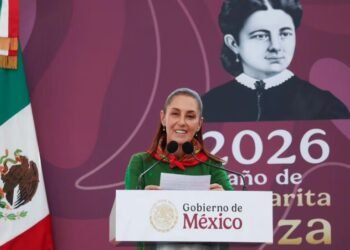
In February, the president of Mexico, Claudia Sheinbaum Pardosent to Senate of the Republic an initiative to reform article 127 of the Constitution in order to establish that the pensions of former officials of trusted senior management may not exceed 50% of the remuneration received by the head of the Federal Executive, except for those pensions or retirements provided for in the general working conditions, which will allow the recovery of around 5 billion pesos that will be allocated to the Wellness Programs.
Sections II and III are reformed from the second paragraph, and the second, third and fourth paragraphs of article 127 are added to section IV of the same second paragraph so that “no public servant may receive remuneration, in terms of the previous section, for the performance of his or her function, employment, position or commission, greater than that established for the head of the Federal Executive in the corresponding budget.”
Read also They open debate on networks about lupus; specialist considers it a disabling disease
“No public servant may have a remuneration equal to or greater than his or her hierarchical superior; unless the surplus is a consequence of the performance of several public jobs, that his remuneration is a product of the general working conditions, derived from qualified technical work or due to specialization in his function, the sum of said remunerations must not exceed half of the remuneration established for the head of the Federal Executive in the corresponding budget,” it indicates.
It adds that in any case, the retirements or pensions of trusted personnel in charge of decentralized organizations, public State companies, national credit societies, companies with majority state participation and public trusts constituting parastatal entities, all of the federal governmentas well as decentralized organizations, companies with majority state or municipal participation, public companies and public trusts, federal entities and municipalities, must not exceed half of the remuneration established for the head of the federal executive in the corresponding budget.
The decree establishes that the Armed forces; retirements or pensions that are constituted from voluntary contributions to retirement savings systems based on individual accounts; retirements or pensions established from union contributions in complementary savings systems; and the non-contributory pension referred to in article 4 of the Constitution.
“It is a constitutional reform so that from now on the pension is half of what the head of the Federal Executive earns as a pension. What they earned before cannot be moved, but from now on they can no longer be followed, in a government that seeks to eliminate privileges, paying a million pesos monthly pension or 300 thousand pesos.
“I want to make it very clear that it has nothing to do with workers with collective contracts, but rather because those are their contracts, historical negotiations that they have made. We are referring to those trusted workers, to the senior management who to date with public resources In other words, we have to continue paying the people’s resources very high pensions,” he emphasized. Sheinbaum.
As of the entry into force of the decree, one day after its publication, all retirements or pensions that are not excluded in accordance with section IV of article 127 of the Constitution, and that have been granted prior to entry into force, must adjust to the limit established in the second paragraph of said section, including those that are in force.
Retirement benefits granted in accordance with the constitutional framework in force prior to the entry into force of this decree will be preserved in the terms in which they were recognized.
The contributions made by the State to individual accounts or complementary pension or retirement plans of public servants of parastatal entities of the federal government, federal entities and municipalities, as of the entry into force of the decree, will be subject to the limit provided for in the second paragraph of section IV of article 127 of the Constitution.
It is indicated that within a period of no more than 90 calendar days, counted from its entry into force, the Congress of the Union and the Legislatures of the entities must review and, where appropriate, adapt the applicable legal framework, in order to make it consistent with the provisions of this decree.
The expenditures generated as a result of the entry into force of the decree will be covered by the budgets approved for the executors of expenses involved in its application, “so no increase in resources will be authorized for these executors of expenses in the current or subsequent fiscal year and they will not be able to increase their regularizable budget in personal services or operating expenses.”

Join our channel EL UNIVERSAL is now on Whatsapp! From your mobile device, find out the most relevant news of the day, opinion articles, entertainment, trends and more
dft