Madrid/Data broken down by product from the US Energy Information Administration (EIA), the US energy agency, shows the extent to which the increase in fuel sales to Cuba is exponential. If the data from the US-Cuba Economic and Trade Council (US-Cuba Trade) showed a 30% increase taking into account the value of exportsthe volume figures reflect a much more significant increase.
In June, the last month that for the moment register the EIAshipments of petroleum products from the United States skyrocketed and reached 778,000 barrels. This was not only the maximum of the year, but 63.4% more than the 476,000 barrels in May.
The trajectory of these sales has been upward since the beginning of the year, when the United States intervened in Venezuela, captured Nicolás Maduro and imposed an oil siege on Cuba. The difference begins to be noticed in February, the month that Washington authorized the sale of fuel limited to the Island.
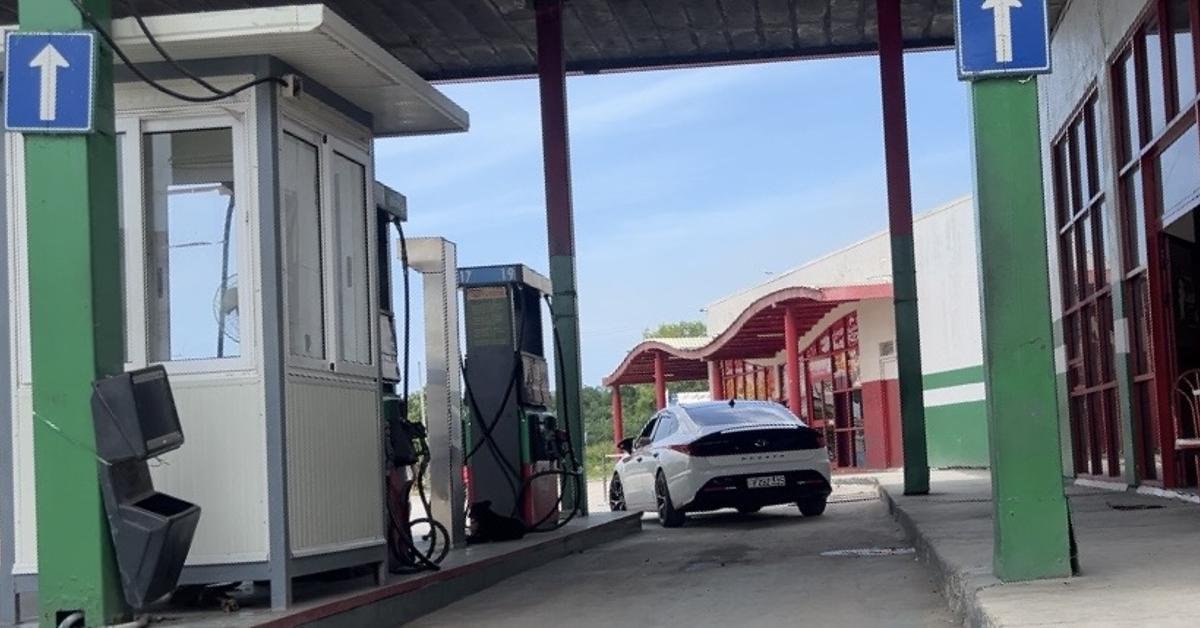
The permit was conditional on private companies, but as has been proven 14ymedioCuban gas stations have been supplying for months also to the state sector. Even one of them, El Eficiente, in Havana, located one block from Villa Marista, the State Security detention center, supplies all types of vehicles belonging to the Ministry of the Interior, that is, to the repressive apparatus of the regime.
The expansion of this “range” of clients coincides with the upward curve of US exports to Cuba
The expansion of this “range” of clients coincides with the upward curve of US exports to Cuba. From 1,000 barrels in January, it went to 19,000 in February, and from there, there is a jump of 900% in March, with 190,000 barrels, and a slight rise to 210,000 in April. In the first six months of 2026, therefore, accumulated shipments amount to 1.67 million barrels.
Since the United States does not export crude oil to the Island, it is only refined products, especially diesel, which accumulated about 1.08 million barrels in the first half. In June, 648,000 barrels of American diesel were imported into Cuba, compared to 187,000 in May (250% more than the previous month) and 43,000 in April.
The second most important item is gasoline, although it has registered a drop of 58% in June (110,000 barrels) compared to the previous month, when it reached 262,000 barrels. In April, 161,000 arrived, after registering just 6,000 in March and 1,000 in February.
In June, 5,000 barrels of liquefied hydrocarbon gases were added to these products, all of them corresponding to propane, in addition to 1,000 barrels of kerosene and 13,000 barrels of lubricants.
The purchase from the United States by “private” companies is, it is proven, the only foreign source of fuel on the Island, which received the last Mexican oil tanker on January 9, the Ocean Marinerwith 80,000 barrels.
Meanwhile, University of Texas expert Jorge Piñón observes in comments to this newspaper, eight of the ten Cuban-flagged oil tankers have remained anchored for at least the last ninety days.
Only the Vilma and the Hope They are in transit, with a route from Matanzas to Cienfuegos and then to Nipe, in Holguín. “It should be noted that there is no activity around Havana. Only three coastal oil tankers are in transit, all between Cuban crude oil terminals,” says Piñón. There are also no movements of LPG gas tankers.
Most of the movements, estimates the energy specialist, “correspond to mixtures of Cuban crude oil.”