
Listen to this article
Estimated 4 minutes
The audio version of this article is generated by AI-based technology. Mispronunciations can occur. We are working with our partners to continually review and improve the results.
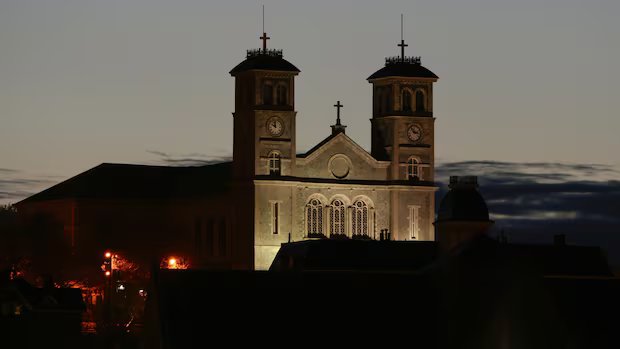
The Roman Catholic Episcopal Corporation of St. John’s (RCECSJ) has now transitioned into bankruptcy, putting an end to a restructuring process that saw more than 100 church properties sold off to compensate victims of abuse.
Lawyers for the church brought forth an application at the Supreme Court of Newfoundland and Labrador in St. John’s on Friday morning, asking Justice Garrett Handrigan to approve the termination of proceedings under the Companies’ Creditors Arrangement Act (CCAA).
Handrigan obliged, ending a complicated process that started five years ago.
“No process will ever make right the terrible things that happened here, but I think we all played a positive role over the last five years,” said Geoff Budden, lawyer for the largest contingent of the 369 claimants who came forward in the case.
Budden has been working on behalf of his clients for more than 30 years, starting with a drawn-out process that sought to hold somebody accountable for the abuses of the Christian Brothers who ran the Mount Cashel Orphanage in St. John’s.
The survivors scored a landmark victory in 2020, when the province’s court of appeal ruled the church was vicariously liable for the actions of the Christian Brothers. The Supreme Court of Canada declined to hear an appeal in 2021, putting an end to the lengthy legal saga.
CCAA proceedings followed, which resulted in the RCECSJ listing its assets for sale to compensate the growing number of victims who came forward with claims.

Geoffrey Spencer is lead counsel for the Roman Catholic Episcopal Corporation of St. John’s. (Terry Roberts/CBC)
Geoffrey Spencer, a lawyer for the RCECSJ, told the court on Friday that they initially expected about 100 claimants to come forward and estimated the value of their claims could top $50 million.
It turned out, they drastically underestimated.
In total, 369 people came forward and an independent evaluator pegged the total value of their claims at $121 million.
In the end, the CCAA proceedings resulted in the sale of 132 church properties for a total of $32.8 million. There are only seven properties left unsold, of which two have accepted offers but have yet to close.
The provincial government kicked in $45.8 million earlier this year to cover its liability to the claimants — many of whom were placed by government in an institution like Mount Cashel, or were abused while attending Catholic schools funded by the province.
Lawyers told the court on Friday that the total value paid out to survivors so far sits at $85.2 million.
“This is a significant recovery,” Spencer said.
What happens next?
The Archdiocese of St. John’s incorporated two new entities during the restructuring process — one to handle day-to-day operations of parishes and the other to manage properties retained by the church, such as cemeteries.
Handrigan’s order releases those entities from the process going forward, meaning they cannot be targeted by future claims related to the RCECSJ. Spencer said that was crucial to allow the church and its parishioners to move forward without lasting worries.
The RCECSJ will also hold back $1 million to handle future claims or professional expenses that may arise. That includes legal costs associated with an appeal related to the church’s insurance company, which is currently sitting with the Supreme Court of Canada.
Going forward, Spencer said, the RCECSJ will exist as a shell company with the few remaining properties unsold during the CCAA proceedings. If those properties are eventually sold, funds will flow to survivors with the assistance of a trustee.

St. John’s lawyer Geoff Budden has been locked in litigation with the Catholic church and its related entities for 30 years. (Terry Roberts/CBC)
Budden thanked all the lawyers who were involved in the process, noting the efficiency of those involved over the last five years of a 30-year legal marathon.
Two survivors were in the gallery behind him on Friday morning, watching as the process finally came to a close.
“Their dignity and patience throughout this process has been acknowledged and I’d like to acknowledge it again here today,” Budden said. “I’ve had the privilege of working with these men and, in some cases, their widows.”
Download our free CBC News app to sign up for push alerts for CBC Newfoundland and Labrador. Sign up for our daily headlines newsletter here . Click here to visit our landing page.