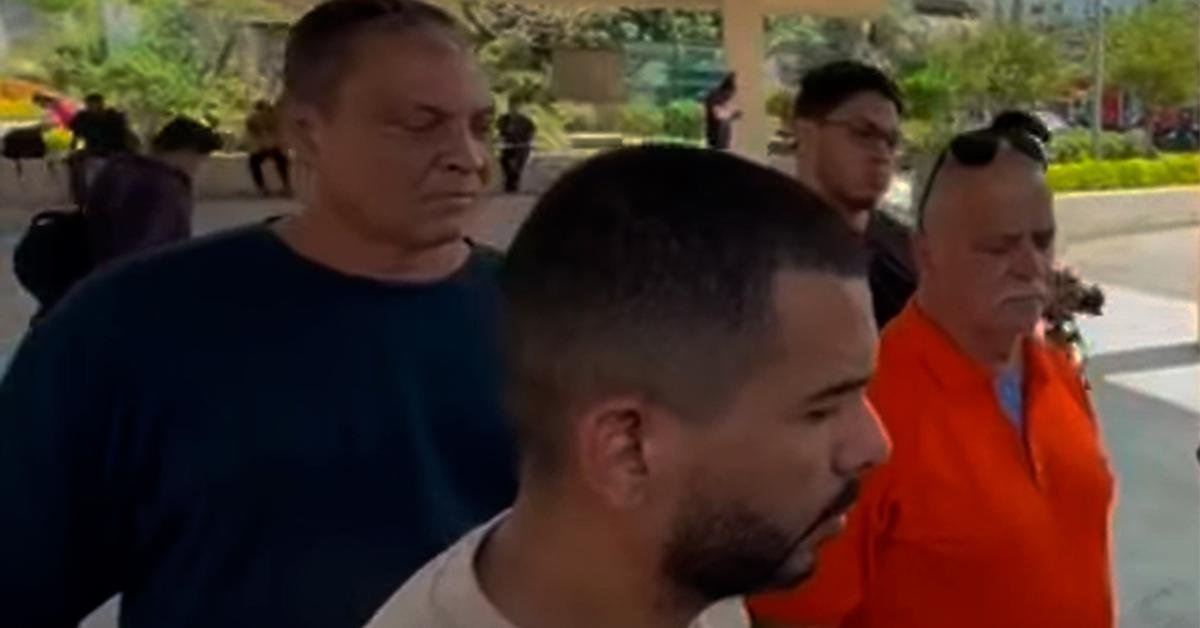
Mexico City/Tapachula, in the state of Chiapas, has become the epicenter of deportations from the United States of Cubans, Haitians, Mexicans and Salvadorans. “Mexico does the dirty work, today it accepts people that Donald Trump’s Government does not want, people with criminal records and the elderly, people who are abandoned without papers or money,” says lawyer Jacinto Gómez.
In the Jesús el Buen Pastor del Pobre y el Migrante shelter, there are seven Cubans. The eldest, tells 14ymedio Olga Sánchez Martínez, director of the center, is about 65 or 75 years old. “These people have spent more than half their lives in the United States, they have children, family, property, but they were expelled and in Mexico they have no one.”
Doña Olga, as the migrants call her, has accepted these Cubans regardless of their history. “They need help, most are on average between 40 and 50 years old, and many of them have spent days without eating and sleeping on the street.”
In the shelter, located almost 20 minutes from the center of Tapachula, migrants find a place to sleep, bathe, eat, “for as long as they need.” The establishment, which has been receiving migrants for decades It has capacity for 1,500 people, but right now it only houses 90. In addition to Cubans, “there are Nicaraguans, Haitians, Salvadorans, Africans and Mexicans.”
Although they were expelled, the island’s nationals, says Sánchez, “hope to return when Trump leaves” the White House. “They are waiting for changes.”

More than 500 Cubans have been deported by the United States between March and so far in April. The director of the Center for Human Dignification, Luis Rey García Villagrandenounced the apathy of the authorities in the face of requests for immigration regulation. They allow them to fill out the forms and “in the best of cases they ask them to wait between three to four months to receive an email that will never arrive.”
The shelter is supported by Sánchez Martínez, who has a store: “that’s where the money comes from to cover the costs of electricity, water, and food.” The state government helped him this year in remodeling the bathrooms. “Health authorities go to the site twice a week to provide medical care.”
In 1992, Sánchez began his support for migrants, for people who “fell off the train and lost legs or an arm,” he says, referring to the railroad route they call La Bestia, cargo cars that travel through Mexico from south to north transporting all types of merchandise and to which migrants board hidden. She did so even when the authorities were besieging her to end the aid. “The train left and the migrants continued to arrive, first a few, then there were thousands and they know that they will not lack food and shelter.”
During the day, migrants go out in search of work, “there is work on the farms, harvesting bananas, papaya, coffee.” Due to their condition, salaries are low, they receive 150 pesos (a little more than 8 dollars) when the average salary is 270 pesos (15.60 dollars) per day.
While some deported Cubans hope to be able to return to the United States, others have expressed their desire to return to the island. One of them is William Herrera López, who last March told South Journal that due to the lack of opportunities in Tapachula he was seeking the support of Mexico to return him to his country. “I’m already 53 years old and I would like to be sent to my country. There I have my mother, brothers, nephews and a humble little house where I can be, not here in a place I don’t know and completely alone.”
Óscar Rodríguez, another of those expelled by the United States, lamented: “The work here is difficult, it is poorly paid and not enough. The truth is that there is nothing left but to ask that they return us to Cuba or that they give us the opportunity to move to another part of Mexico, because in Tapachula it is complicated.”