The world football championship that ends today has been a simulation of a world war with the uniforms of the armies and the lineups well arranged. Every war has a high expectation since it is a ritualized carnage conditioned by red cards. It is curious that a tournament played by different names of countries occurs in a world dominated precisely by the coexistence of different homelands in the identity of many players. In the Moroccan team, for example, none of the starters were born in Moroccan lands. In some cases, such as that of the Williams brothers, each one plays for different teams, Ghana and Spain. Luca, the son of the national team and France star Zinedine Zidane, has been the goalkeeper for the Algeria team, the land of his grandparents. Like at no time in history, today there are millions of people who belong to more than one country. That does not make them belong any less to his team, as Mariano Rajoy’s stupid comment stated these days.
LOOK: I read you like a book, by Irene Vallejo
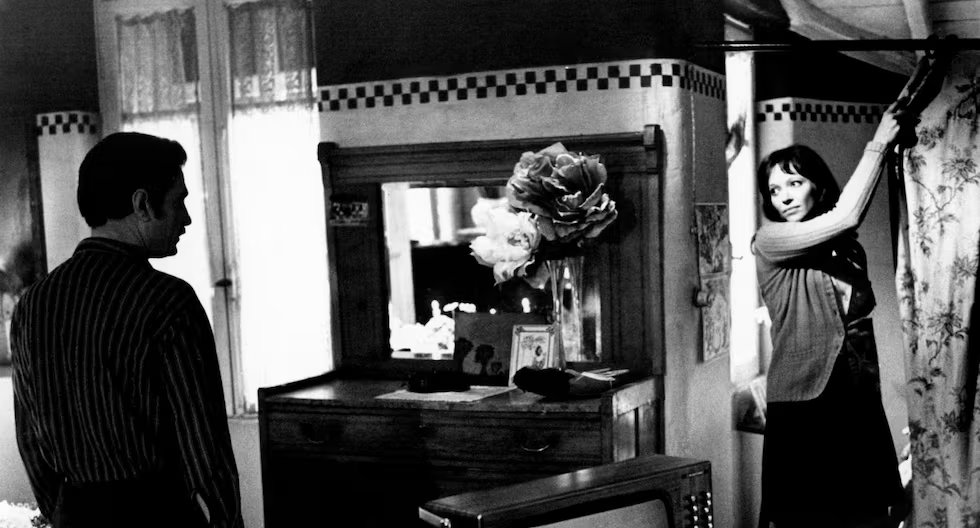
Cinema has given rise to many immigrant stories, from “Casablanca” to “Sin nombre,” Cary Fukunaga’s moving film about violence on the Mexican border. However, these days I have remembered the story of Nino, the character from “Bread and Chocolate”, which Nino Manfredi starred in more than fifty years ago, under the direction of Franco Brusati.
Nino is an Italian immigrant in Switzerland. He tries to make his way as a waiter in a luxury restaurant. One of his first duties is to know how to cut an orange beautifully, like the other waiters do. He can’t and has to bite it open. Then, when he is caught urinating in the street, his work permit is revoked. He begins a clandestine life in Switzerland. Meet Ana, a Greek refugee, who appears in the beautiful immortal eyes of Ana Karina, Godard’s first muse. When a millionaire who was going to help him dies, Nino takes refuge with a group of Neapolitans who take care of chickens. They all live there, with clothes decorated with bird feathers. They feel so demeaned that they start singing like the chickens they care for. In one of the most revealing scenes, these punished workers see some young, blonde and slender Swiss men appear in the field. Clinging to some wires, they contemplate the naked bodies, examples of a kind of First World Olympus. After seeing them, Nino wonders who he is. He doesn’t know if he’s Italian or not. Then she dyes her hair blonde. You will want to be or look like a Swiss. Enter a tavern. There is a soccer game. The Italian national team is playing against a local team. At the beginning Nino joins the rest. Boo Italy. But when Fabio Capello scores a goal, he jumps for joy. Shout out Italy’s goal. It’s Italian. They throw him out of the tavern.
At the end of the film, he must embark back to Italy with other immigrants. In the last scene, however, everything has changed again.
The story of Nino’s loneliness is that of infinite immigrants today. They have all contributed to enriching the country to which they arrived without denying their country of origin. But when it comes to a football match, they obey a deep identity. They go to the country where they or their parents were born. We’ll see what happens today.