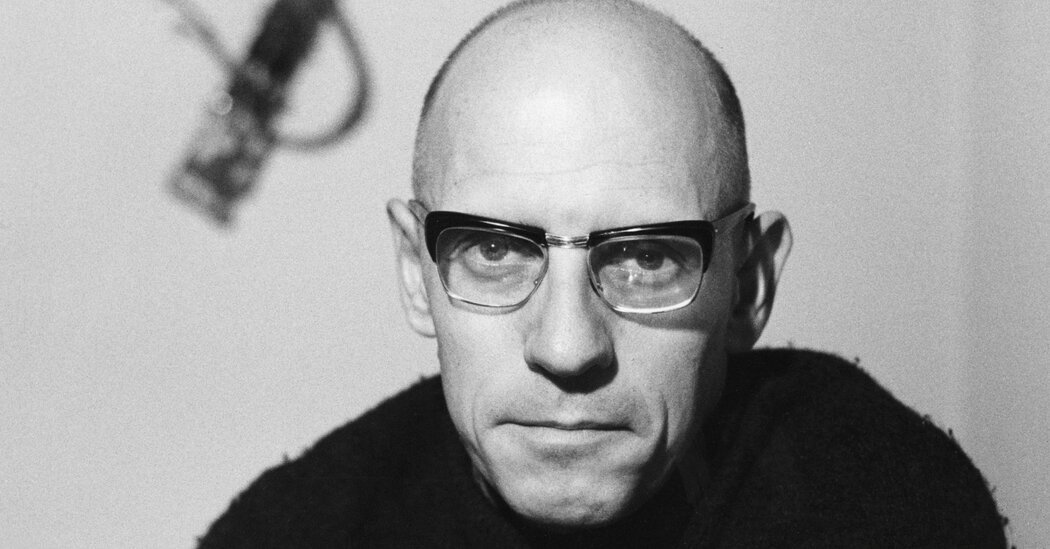
For him, the modern prison, where inmates’ lives unfold under total surveillance, was merely an exaggerated version of everyday life, the place where the power that governs all of us was legible “in its naked state.”
Power All the Way Down
Power is Foucault’s big theme, and it is an awesome thing. In his conceit, it is like an electric current coursing through society. There is nothing power doesn’t touch. There is no knowledge outside power. There is also no life. For Foucault, the philosopher Susan Neiman has written, “it’s power all the way down.”
He coined the term “biopower” to describe the ability of the state not only to take away life, through, say, capital punishment, but also to preserve it — by licensing doctors, providing medical care, regulating the food supply, and the like. Then again, maintaining a living population is in the state’s interest, and power, in Foucault’s view, always acts in its own interest. Modern society’s proliferation of expert authorities — doctors, lawyers, judges, teachers, psychologists, etc. — all serve to uphold power’s status quo.
Already during his lifetime some scholars complained that, as the historian Lawrence Stone put it, Foucault’s “dominance and control” model “reduces the actors in history to two, the controllers and the controlled.” In a recent book, “Left Is Not Woke,” Neiman goes further. For the political left, she argues, Foucault’s legacy has been disastrous: a reflexive distrust of Enlightenment ideals — including tolerance, universalism and progress itself — which are viewed as cynical ploys by European states to justify imperialist ambitions. His theory does not allow for a human collective bound by shared values and fighting for the common good, she writes, only for “a bunch of tribes jockeying for power.”
The same logic may explain Foucault’s growing appeal on the right. In a pair of essays for the conservative Washington Examiner during the Covid pandemic, for example, the historian Blake Smith urged readers to look to Foucault as a potential ally who shared their suspicion of the liberal administrative state and its ranks of meddling experts.