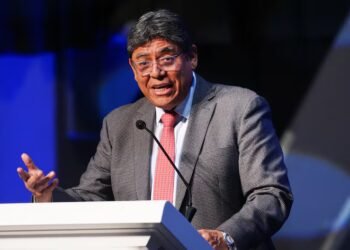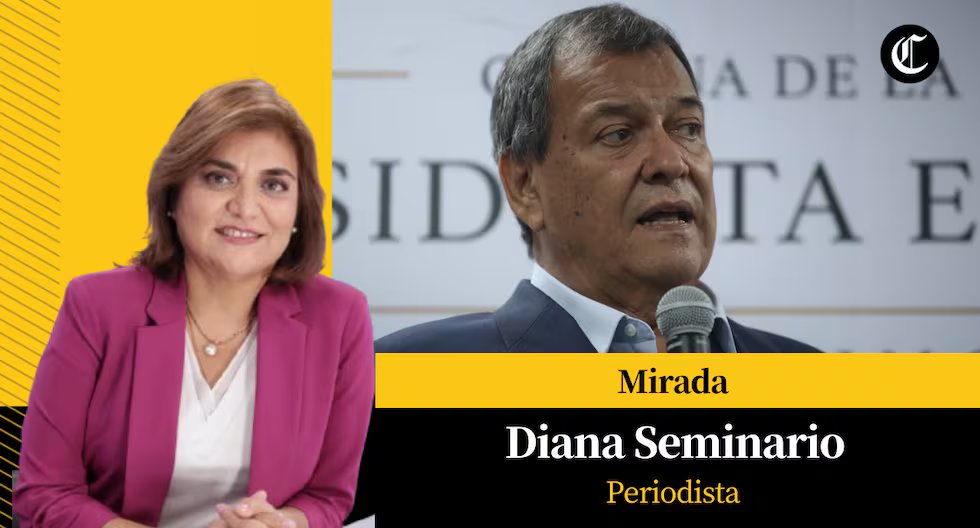

The country is polarized. Who will depolarize it? He who depolarizes it, a great depolarizer will be… Listening to Jorge Nieto last Tuesday after the meeting he held with Keiko Fujimori reminded me of those tongue twisters that we once learned as children and that caused us so much laughter when uttered.
At the end of the meeting with Fujimori Higuchi, Nieto revealed to the journalists who were covering the incidents of the meeting: “I have suggested that you consider the routes to the freedom of President Castillo, seeking for the country to find a space for decompression and depolarization.”
This single statement from the former Minister of Defense generated more than one reaction. Does Nieto really believe that Castillo’s release will reconcile Peruvians? Does Jorge Nieto believe that, in the hypothetical case that Castillo is released, we will see him making proclamations of peace and reconciliation in favor of all Peruvians? Will Nieto remember that it was precisely Aníbal Torres – for some the mastermind behind the December 2022 coup – who threatened that “rivers of blood” would flow if Castillo was vacated? What “depolarization” are we talking about?
With all due respect to Mr. Nieto’s freedom of expression, the country’s agenda deserves different priorities than the release of Pedro Castillo. The immediate fight against citizen insecurity, the prevention and mitigation tasks for the imminent El Niño phenomenon, among other issues, are more important than the freedom of a coup plotter.
Although Nieto was careful to say that any process that implies Castillo’s freedom must be constitutional, the truth is that there is no legal basis that could open the door from Barbadillo to Castillo.
The former president who gave a constitutional break speech on December 7, 2022 has been sentenced to 11 years in prison for the crime of conspiracy to rebel, and this sentence has been appealed before the Supreme Court; Therefore, it does not have a final sentence. In addition, he has other corruption proceedings, such as Puente Tarata, for which he has been serving preventive detention.
That is to say, no matter how much power a head of State has to grant a pardon or common grace, this does not apply for the simple fact that these are cases that are still being processed by the Judiciary, and there is no room for interference by the Executive with the instrument of pardon. The separation of powers is also democracy.
A true reconciliation must happen, perhaps, by knowing how to disagree loudly, by not canceling those who think differently, and by understanding that a country deserves memory, but also justice and forgiveness.