
Ministers and senior agricultural officials from across the Americas have called for stronger regional coordination to reduce vulnerabilities in agrifood systems, mitigate external shocks, and take advantage of emerging opportunities in a complex global environment.
The discussions focused on addressing the impacts of geopolitical tensions and market disruptions on agriculture, while reinforcing the region’s role in global food security, share a press release from the Inter-American Institute for Cooperation on Agriculture (IICA).
The call was made during a high-level virtual meeting convened by the institute.
It is reported that representatives highlighted the organization’s role in coordinating collective action and promoting the use of new technologies to strengthen the agricultural sector’s capacity to respond to challenges.
IICA also shared that participants emphasized the importance of reducing dependence on imported fertilizers and agricultural inputs. They pointed to the need for greater regional investment in the production of organic fertilizers and bioinputs, as well as increased technical cooperation to support sustainable agricultural development across the hemisphere.
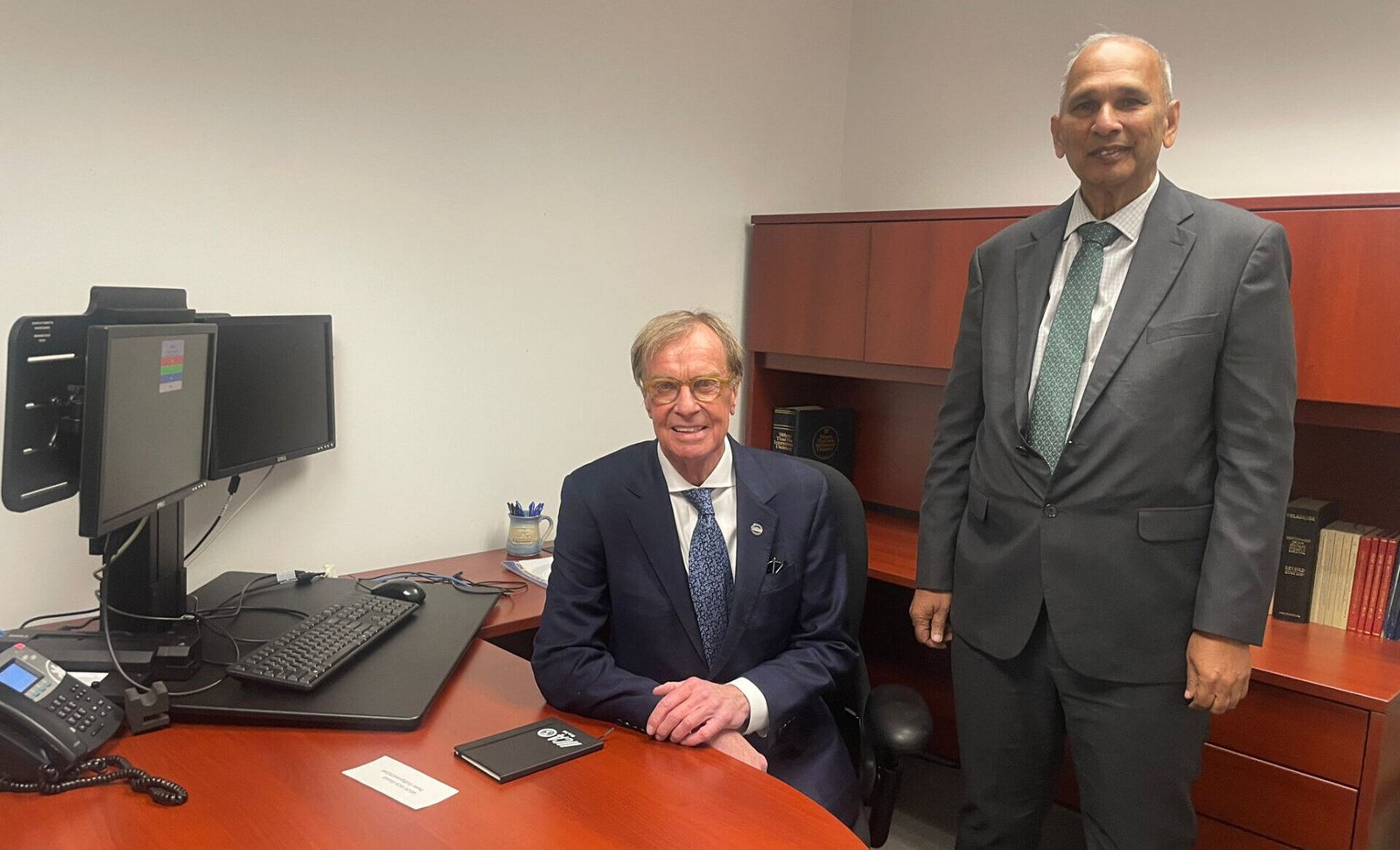
The meeting took place during IICA Director General Muhammad Ibrahim’s visit to Washington, D.C., where he is engaging with U.S. officials and international funding agencies to develop an agenda for strengthening regional agriculture.
Representatives from these agencies and private sector organizations also participated in the discussions.
Opening the meeting, Kip Tom stressed the importance of cooperation, stating, “The Western Hemisphere is a leader in global agriculture and feeds billions of people around the world each day. Today, despite global uncertainty, we must serve as a model of strength and continental cooperation.”
He also underscored the link between food security and national security and called for greater trade integration and market expansion, noting that IICA’s role “is more important today than ever before, so that the Americas may grow even stronger.”
Ibrahim noted that current challenges are rooted in deeper structural issues rather than temporary disruptions.
“We must reduce our dependence on fertilizer imports through alternatives that enable us to have a robust production chain. The issue of nitrogen-based fertilizers is particularly critical, given that nearly 80% of them come from the Middle East. Today, small-scale producers are facing risks and uncertainty for this very reason,” he asserted.
He added that IICA is well-positioned to support solutions through technological innovation, including the development of improved seed varieties.
Agriculture leaders from several countries also shared national perspectives.

Zulfikar Mustapha noted that geopolitical tensions, particularly in the Middle East, highlight the vulnerability of agrifood systems in smaller Caribbean nations. He explained that Guyana is developing a fertilizer plant using its natural gas resources to supply the Caribbean, while also investing in smart agriculture.
Viviana Ruiz highlighted the growing link between energy, fertilizer, and food markets, stating, “The production costs of strategic crops are leading to a decrease in the use of inputs. However, the situation also affords an opportunity to transition towards greater sustainability and low-carbon production. Now more than ever, the region must act in unison and adopt a collective commitment.”
Representatives from Mexico and Argentina also addressed the issue of fertilizer dependence and trade.
On behalf of Mexico’s agriculture leadership, Santiago Ruy Sanchez de Orellana stated that the country imports 75% of its fertilizers and is working to expand local production through its state oil company while promoting bioinputs.
“Through the state-owned oil company PEMEX, we are expanding local fertilizer production. Mexico is also promoting a bioinputs policy,” he said, adding that “hemispheric cooperation makes the pursuit of food sovereignty viable while respecting each country’s priorities. Food sovereignty is not in opposition to trade and international cooperation; on the contrary, it needs it.”
Meanwhile, Agustín Tejeda cautioned against restrictive trade measures, stating, “The response from countries in our region should not be further withdrawal, but rather greater cooperation, greater efficiency, more trade, and more transparent information.”
Additional participants included representatives from international organizations such as the World Bank and the International Fund for Agricultural Development, as well as private sector leaders. They “emphasized the responsibilities of the Americas in times of pressure on global food demand and expressed the need to protect small-scale producers,” said the release.


![COMMENTARY: Once upon a time – Diplomacy in the image of our times [Shridath Ramphal Centre Trading Thoughts]](https://agentially.org/wp-content/uploads/2026/05/pexels-gabby-k-6289049-e1777829357976-350x250.jpg)