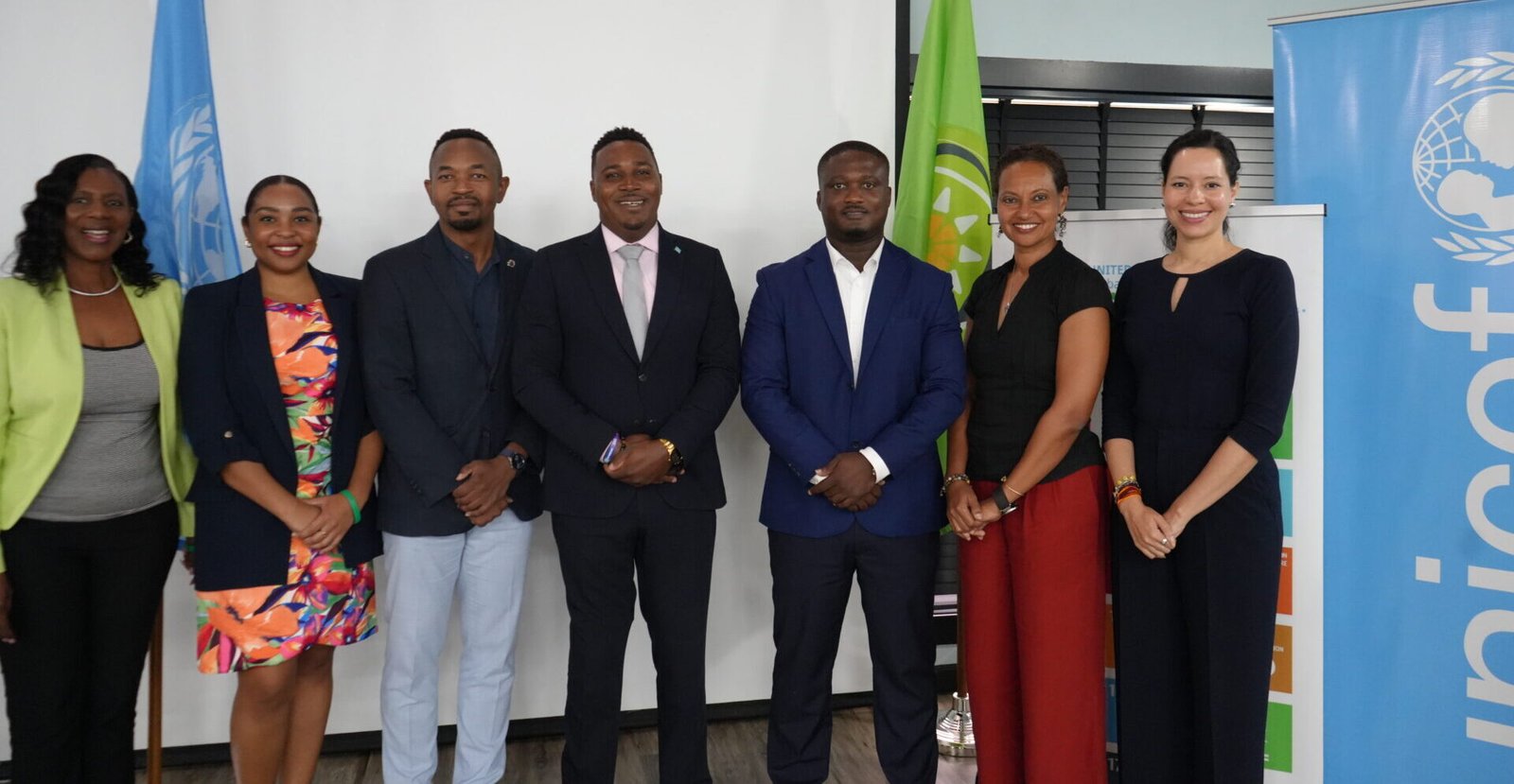

The Joint Programme for the Prevention of Youth Crime and Violence in the Eastern Caribbean recently took a significant step forward with a Sub-Regional Consultation held in Saint Lucia. This one-day event, convened on April 1, featured over 50 government leaders, regional institutions, youth representatives, development partners, and United Nations agencies from Dominica, Grenada, Saint Lucia, and Saint Vincent and the Grenadines.
Hosted by the United Nations Barbados and Eastern Caribbean Multi-Country Office (MCO), a press release said the consultation aimed to validate the programme’s design, results framework, and governance arrangements to ensure it is ready for implementation across the sub-region. (Source: United Nations press release)
The Joint Programme adopts a public health and socio-ecological approach to prevent youth crime and violence among adolescents and young people aged 10 to 29. It delivers a coordinated package of primary, secondary, and tertiary prevention interventions with a strong emphasis on youth rights, gender equality, positive masculinities, resilience building, and meaningful youth participation.
The programme addresses the disproportionate impact of crime and violence on boys and young men, who are often both victims and perpetrators, due to factors like structural inequality, socio-economic exclusion, weak protective environments, and unmet psychosocial needs.

The organization reports that Dominica took an active role in the consultation. The Honorable Oscar George, Minister of State in the Ministry of Culture, Youth, Sport and Community Development, highlighted the importance of addressing youth crime through positive youth development.
“Getting all of us here this morning speaks volumes on the importance placed on the issue of youth crime. So, I want to really commend the UN team for this. We are here for an important exercise, and the reality is, in our small islands across the region, our greatest resource, is our vibrant youth. If we want to attain sustainable growth, productivity and improved standards of living, that we all strive for, we must pay a lot
more emphasis on positive youth outcomes or the lack there of,” Minister George stated.
During the consultation, Simon Springett, UN Resident Coordinator for Barbados and the Eastern Caribbean, delivered virtual opening remarks calling for a whole-of-society approach to tackling youth crime and violence. He warned that young people are preparing to face a complex future shaped by climate change, conflict, and rising crime—all of which threaten social cohesion, citizen security, economic resilience, and sustainable development.
“In very real terms, your future is under pressure. This is why as a United Nations we remain committed to working with Governments and partners to advance peace and security across the region,” he added. He emphasized that success will be measured not by policies alone but by whether young people feel safer, more supported, and hopeful about their futures.
The consultation also featured strong statements from other regional leaders. Saint Lucia’s Minister responsible for Home Affairs and Crime Prevention, the Honorable Jeremiah Norbert, spoke about the need to restore dignity and hope among young people.
“If we are serious about preventing youth crime, then we must be equally serious about restoring dignity and hope among young people. Let us choose prevention over reaction, opportunity over exclusion, and hope over despair, for in doing so, we do not just change outcomes, we change lives,” he urged.
Adding a global partner’s perspective, Abebech Assefa, Counsellor (Development) and Head of Cooperation for the Eastern Caribbean at the High Commission of Canada, applauded the programme’s emphasis on prevention, youth participation, gender-responsive approaches, and accountable institutions. She noted these align closely with Canada’s broader Caribbean engagement and its commitment to shared security and human rights.
Youth representatives and advocates were key contributors as well, including members of the UN Youth Advisory Group.
Don Lucien, a Spoken Word Artist and Youth Rehabilitation Advocate from Saint Lucia, shared a personal story of overcoming incarceration through faith and community service, highlighting the risks youth face and the importance of meaningful support and engagement.
Throughout the consultation, participants reportedly worked collaboratively to validate a shared Theory of Change, agree on priority country-specific interventions, and define governance and coordination mechanisms to guide programme implementation. The press release shared that the discussions underscored the importance of data-driven decision-making, safeguarding, and strong national and regional systems for identifying and supporting youth most at risk.
Following this important consultation, stakeholders are expected to endorse a regionally aligned and country-responsive Joint Programme framework. This framework will aim to reduce youth involvement in crime and violence, improve well-being, and foster stronger, more cohesive communities across the Eastern Caribbean.

![COMMENTARY: Once upon a time – Diplomacy in the image of our times [Shridath Ramphal Centre Trading Thoughts]](https://agentially.org/wp-content/uploads/2026/05/pexels-gabby-k-6289049-e1777829357976-350x250.jpg)