The writer is a lawyer by training who deals with and is involved in technology. Cryptocurrency investment fund manager, and lives in the US. Author of the book “A Brief History of Money” and KanAmerica.com podcast recorder. On Twitter @ChananSteinhart
There is no place where the risks are more measurable, daily and can be tracked and analyzed than in the capital markets. In these markets millions of buyers and sellers meet every day, condensing all their beliefs, needs, hopes and assessments into a few simple actions: sell, buy, hold. Wall Street has always been a dangerous place. The crises that developed in it can not only teach a lot about human psychology, but also wreak havoc on individuals and entire economies.
● The intelligence man who reveals: This is what I learned from the biggest investors in the world
● One of the richest in the world or the most in debt? In the case of Larry Ellison it is not contradictory
Nissim Taleb, a researcher of Lebanese-American origin and an expert in risk management, has held senior positions in financial institutions, hedge funds and academia. Perhaps his most famous work is the Black Swan theory, according to which events that could not be predicted have a decisive effect on the future sequence of events, and therefore the ability to understand the world is limited.
Another book by Taleb published in 2001 is called “Fooled by Randomness”. One of the central ideas in it is called the “survivor bias” – the human tendency to draw conclusions based on who we see, that is, those who survived and succeeded, while ignoring those who failed and disappeared.
The planes that didn’t tell the real story
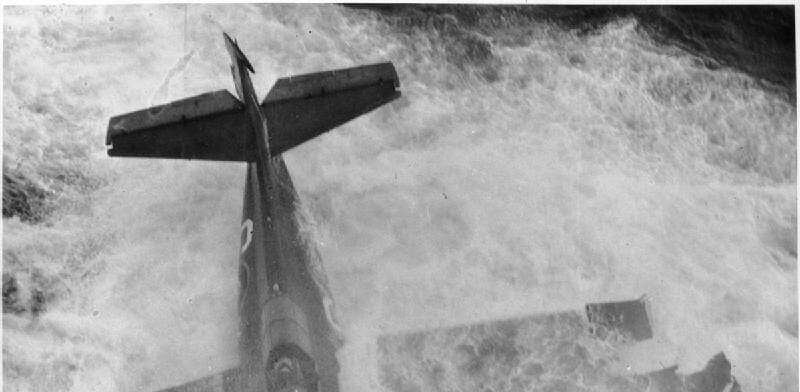
One of the famous times when such a bias was evident was during World War II. The British sought to improve the survivability of Air Force aircraft. Analysis showed that the returning planes absorbed most of the fire in the wings and fuselage, and the conclusion was that these areas should be strengthened. But Avraham Wald, an Austrian Jewish mathematician who fled the Nazis, realized that this was a mistake.
Those holes in the returning planes represented areas where the bomber could be hit and still return safely, he explained, while the downed planes took fire in the really dangerous areas. Wald therefore recommended protecting the areas where the planes that returned were not damaged, since there were most likely the fatal weak points that caused the downing of the planes that did not return.
This is how survivor bias works in the investment world. Images of entrepreneurs in black t-shirts after an exit of hundreds of millions fix a distinct image in the reader’s imagination. Few know or internalize that only 2-3% of the startups that seek to raise a seed round from venture capital funds will succeed in this recruitment. And of those who managed to raise, about 75% will fail within two years, of which less than 4% – that is, about 0.15% of those who started – reached an exit of over 50 million dollars.

Nassim Taleb. Humans have a limited ability to understand the world / Photo: Shutterstock, Anton Gvozdikov
The same goes for traders who profited from strategies that in retrospect seem genius. We don’t see the hundreds or thousands of identical failed attempts along the way. To illustrate this, Taleb uses the example of Russian roulette: a person puts one bullet into a six-chamber drum gun, spins the drum, and pulls the trigger. His chances of survival are 1 in 6. If that person plays 50 turns, their chances of survival drop to 1 divided by 9165, about 0.01%. Thus if 100,000 people play Russian roulette after 63 rounds, statistically only one person will survive.
The conclusion is simple: in a series of actions where there is a chance of a fatal event, each successful turn does not reduce the real risk, but only postpones the inevitable disaster. In this example, Taleb illustrates how survival and skill are confused, praising methods that are nothing more than Russian roulette where the ball has not yet been rolled.
In the financial markets this deception is particularly acute. This is because risky strategies often produce a long streak of successes that enhance the appearance of skill, while the final failure, the one that erases everything, removes the participant from the game – and therefore also from the statistics. Thus we see only the “geniuses” who survived, and not all those who adopted the same strategy, or a similar one, and disappeared.
In Taleb’s terms, in such cases, survival is seen as proof of safety, when in practice it is just the result of luck that has not yet run out. Therefore, ignoring the losers is not a marginal mistake but a major source of the illusion of security. In practice we are actually playing Russian roulette, only we call it a model, strategy or expertise.
Taleb emphasizes that the fact that a fatal event has not yet occurred is not evidence that it is impossible. Therefore an analysis based on survivors alone leads to a dangerous underestimation of the risk. Every pull on the financial trigger that doesn’t end in disaster is seen as proof that the strategy is working, and in the monthly and quarterly reports the returns look great. But this success is not the result of skill, but of unending luck. This is because real risk is not measured by the number of times the investor has made a profit, but by the question of whether he can afford the one time the randomness will not work. When the profits are accumulated in the face of one event that can wipe everything out, each successful month reinforces the illusion, but does not in the least reduce the real risk. On the contrary, he increases it, partly because with the increase in security, the leverage also increases.
How devastating are the mistakes when they happen
Real risk analysis and management does not focus on the probability of an unusual event, but on the relationship between the probability of such an event and its outcome. Whether the chance of an injury is one in six or one in a thousand, when upon its occurrence the result is final and irreversible, an analysis that focuses on the question “what is the chance that it will happen” and ignores the question “what will the result be if it happens” is dangerous and absurd in terms of risk management. This is true in matters of national security, as well as in matters of personal financial security.
Ironically, this rule is especially true for long-term investments. Rather over time there are more and more times when one fatal option is possible. Just like the dramatic decrease in the chances of survival as the number of spins of the drum increases in Russian roulette. Accumulated profits, for example, in a pension fund over 30 years, are not compensation for final destruction if one occurs in the 31st year. Therefore, risk measurement must focus not on the incidence of success, but on the possibility of irreversible loss. Whoever ignores this is playing Russian roulette, even if he calls it strategy. Simply put, what matters is not how many times you are right, but how big and devastating your mistakes are when you are wrong.
Risk expectancy is not a question of probability, but of exposure. It is measured as a product of the probability of the occurrence of the event, by the intensity of the damage that will be caused if and when it occurs. As we witnessed on October 7, 2023, rare events are not negligible when their outcome is devastating. In leveraged financial systems, i.e. multiple in credit, even a minimal probability of risk sooner or later becomes an existential threat.
This mistake is not the property of small or inexperienced investors only, on the contrary, some of the biggest failures, which endangered economies and even entire countries, happened as a result of mixing up the chances of the risk and its expectancy.
The banking shares affair: the flood cost billions
In 1983, a huge collapse occurred in Israel that threatened the stability of the entire economy. At the center of it were the bank shares that collapsed dramatically as a result of prolonged manipulation of their prices. The manipulation was called regulation, and it was done for years by the banks themselves, who bought and sold their shares while worrying about a constant real increase in the price. Thus an illusion was created that bank stocks will always rise. After all, the banks were too big to fail, and they had enough means to make sure the process was under control – or so the propaganda went. This is how things continued for almost a decade to the delight of all involved, including the government.
The regulation, which began not long after the Yom Kippur War and the economic crisis that followed, created a fairly rigid demand for bank stocks. This allowed banks to issue new shares easily, and raise capital from the public at a relatively low cost. The capital that was raised was used by the banks to expand their activities, and the credit helped to strengthen the economy that was very difficult after the war, also due to a dramatic increase in the defense budget.
For years, the banks managed to steadily increase the value of the shares, and their equity. This situation created a feeling among the public and bank managements that their shares are a completely safe asset. The risk was indeed very small, but not so the duration of the risk. One day, for various reasons, including the fear of a sharp devaluation, a flood of sales began that the banks had difficulty controlling. Within a week, Israel was caught up in the biggest economic-financial crisis in its history. It ended de facto in the nationalization of the banks, in the deletion of billions of investors’ money, and in government financing of aid packages that cost the taxpayers huge sums over many years.
AIG: The mix-up that nearly collapsed a world system
Mixing up the likelihood of the risk and the duration of the risk was not unique to Israel. He also almost brought about the collapse of the global financial system in 2008. Before him, AIG was a global insurance and finance giant, and considered one of the most powerful companies in the world. It employed approximately 120,000 employees in 130 offices across the globe, managed a trillion dollars in assets, and was ranked as company number 9 on the Fortune 500 list. Its market value was estimated on the eve of the crisis at approximately $187 billion, company number 15 in the market. Worth more than Intel, Coca Cola and Goldman Sachs.
One of the company’s occupations, since the nineties, was to sell a kind of insurance on credit risks, in a financial instrument called Credit Default Swap (CDS). With the inflation of the real estate bubble, the company began to increase its activity in the field, and became a huge insurer of the mortgage-backed bonds, which were at the center of the real estate credit bubble. The assumption was simple: the American real estate market will not collapse all at once. In the meantime, the company reaped huge profits from this activity. In 2006, the activity brought in almost a billion dollars, or about 7% of the company’s total revenue, while only about a third of all its employees were employed in the field.
Huge profit without risk – this is how the company’s managers saw the activity, which on the eve of the crisis led to its exposure to about 500 billion dollars in mortgage insurance, compared to about 101 billion dollars of equity. The risk of the entire American real estate market collapsing together and the value of the mortgages being insured being put to the test at exactly the same time seems far-fetched and far-fetched. But that is exactly what happened in the summer of 2008, when the real estate bubble exploded with a thunderbolt.
Within days, huge payment demands for the insurance coverage began to flow in, followed by a downgrade of the credit rating. In the blink of an eye, the world’s largest insurance company fell into a fatal liquidity crisis, and was on the verge of bankruptcy. In September 2008, a few days after the collapse of Lehman Brothers, the US government realized that the collapse of AIG would bring down the entire global banking system. With no choice, the government and foreigners rushed to save her with 182 billion dollars.
In the capital market, it happened more than once that sophisticated models created an illusion of security and encouraged high leverage, while ignoring the rules and principles detailed above. One of these failures, one of the most dramatic and famous ever in the American capital market, happened to the talented and successful geniuses of Wall Street players. This is the story of the hedge fund Long Term Capital Management, or LTCM. About her, and how the Fed had to lower interest rates three times because of one hedge fund, in the next article.
code of ethics
appearing
in the trust report
according to which we act. Expressions of violence, racism, incitement or any other inappropriate discourse are filtered out automatically and will not be published on the site.