In the 1980s, he was arrested for insubordination in the Army. Before, he had suffered reprimands for disobedience. A football fan, the then conscript missed work to watch matches, especially the World Cup.
He has a history of missing political debates and encouraging undemocratic ties between his family and the international far right. His children and wife practice another segment of Christianity, different from his own — instrumentalized for political objectives.
The above facts could be about Jair Bolsonaro. Arrested in 1986 for publishing an article asking for salary increases for cadets, he also did not attend presidential debates in 2018 and is married to an evangelical, even though he declares himself Catholic. His children have links to the extreme right, mainly in the United States.
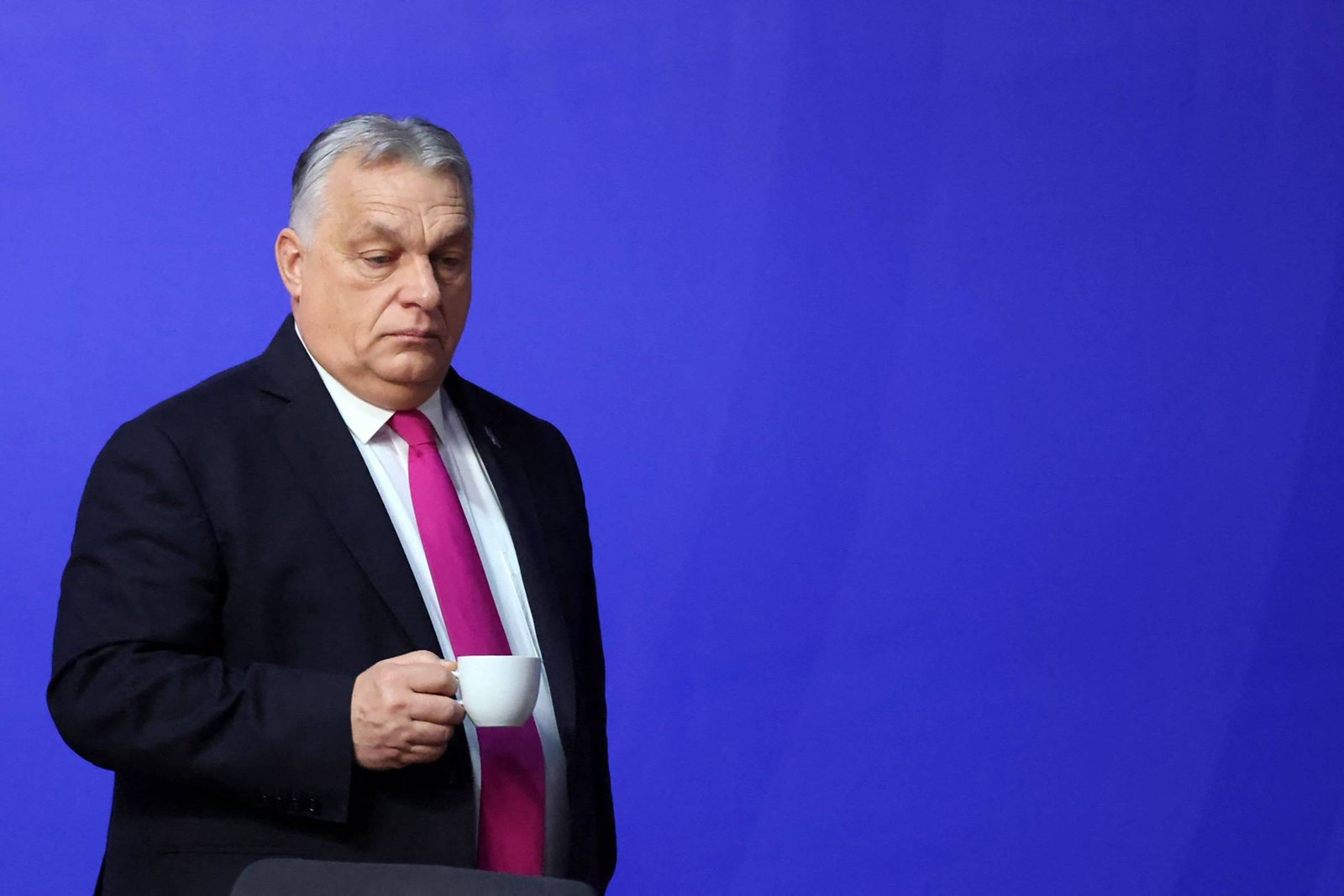
But the picture is different: Viktor Orbánimprisoned for ten days in 1982 for fighting with an officer and evading political debates since taking office in 2010. His son Gáspár, the only man among four women, made periodic visits to the Sahel to encourage military missions in the name of Christianity. Today, allied with the faith of his Protestant father, he exercised the Catholic faith until 2014, when he was converted.
Prime Minister of Hungary 16 years ago, Orbán, 62, is today the European leader who has held the leadership of a country for the longest time. European Union. Like every tick in power, it is not easy to characterize it in a monolithic way. Today’s Orbán was carved out in phases.
Young arsonist
The first phase came with his blunt opposition to the Warsaw Pact, the Soviet bloc’s military alliance during the Cold War. After the fall of the Berlin Wall, there were still around 70,000 soldiers and a thousand tanks in the country. At the age of 26, Orbán emerged as a star of the new generation, when he gave a speech at the ceremony to honor the martyrs of 1956.
There, he stated in public: “If we trust in our own strength, we will be able to put an end to the communist dictatorship.” The message was given: get rid of the Soviet burden and move towards the liberalism promised by Europe western and the USA.
Ambitious and smart, Orbán had graduated in law in Budapest and if politicized in previous years, in contrast to his apolitical family background. Coming from a rural area in Fejér, I had never had access to toilets until I was 15 years old.
In 1988, he founded a movement opposing the communist regime called the Alliance of Young Democrats, whose acronym in Hungarian is Fidesz. With the end of the Warsaw Pact, the movement was institutionalized as a political party. In 1989, he was awarded a scholarship from the Open Society Foundation, created by George Soros, to study politics at Oxford, in the United Kingdom.
Skeptical turncoat
Ten years later, his position could not be more opposite. Already sworn in as prime minister, Orbán emphasized his break with the ideals of 1989 in Vienna. According to him, 1989 would have been neither a revolution nor a rupture, but rather a change in continuity.
Accompanied on the occasion by trade union leader Adam Michnik and the then president of the Czech Republic Václav Havel, Orbán was repressed by his peers. Michnik countered Orbán’s discrediting speech, emphasizing the miracle of the peaceful transition to democracy in central-eastern europe.
At the time, however, Orbán was unable to remain in power. After his term ended in 2002, he joined the opposition. Until he was catapulted back in 2010, when he was elected prime minister after two Hungarian Socialist Party governments and a severe economic crisis in the region, as a result of 2008.
convinced autocrat
From 2010 onwards, Hungary began to see a third phase of Orbán. He re-entered the scene by promulgating a new Constitution, in force since 2012. In 2015, the then president of the European Commission greeted him with “hello, dictator” and gave him a light slap in the face in Riga, Latvia.
His game could not be clearer: the country should become an “illiberal” (2014) or “Christian” (2018) democracy. The meanings would become clear in the following years, driven by constitutional engineering, redesign of electoral districts and persecution of minorities: LGBTswomen, migrants, gypsies, NGOs – in particular, that of the same Soros who financed it in 1989.
In 2014, it won less than 45% of the popular vote but 133 seats in Parliament. The left-wing opposition, which obtained half of these votes, reached 38. In 2022, Orbán’s last re-election, the opposition tried a coalition to defeat the autocrat, but it did not take off due to internal differences.
In 2026, the result could be different. Even though, to beat Orbán, the opposition needs to get between 4 and 5% more votes than Fidesz, according to Péter Balogh, researcher at Eötvös Loránd University.
Peter Magyar, Fidesz’s internal dissident, is the biggest opponent. From the center-right Tisza party, the 45-year-old politician promises term limits for prime ministers and even a progressive tax system in his political program. Fidesz did not publish any programs.
The return of the opposition
Magyar (a name that means “Hungarian” in Hungarian) is profiled by Orbán as the candidate of the war, ally of Volodimir Zelenski and the European Union. The population responds with partial rejection. Even Fidesz’s historic electorate, from rural sectors and villages, is turning to the opposition. On April 8, Orbán was booed to the tune of “Russians, go home” when he took to the stage in Sopron.
On the other hand, Orbán does not hide ties with Russia. In November 2009, Orbán met with Vladimir Putin in Moscow. “We don’t know if it was the carrot or the stick,” said Balogh about what prompted such a sudden approach. From April 2010 onwards, when he won the chancellorship, Orbán began to act as Moscow’s proxy in the European Union. Recent reports confirm the leak of secret information between the EU and Russia via the Chancellor of Hungary.
More than other EU leaders, Orbán knows how to do the “peacock dance”. It clashes with the EU while appearing to agree with its base. Embraces Russia, but does not consider leaving the EU.
It remains to be seen whether, on Sunday, Magyar will be able to overcome to this dance. Orbán has already made his appeal: “We need 3 million votes on Sunday night, and then there will be national unity.” It remains to be combined with the Hungarians.