COVER STORY
Community plans to celebrate 150th year since the arrival of the first LMS missionary Rev William Lawes, with a host of activitiess
EXACTLY 150 years ago, London Missionary Society (LMS) missionary Reverend Dr William George Lawes made first contact with the Hula community.
This set the foundation towards a transformation of faith for the coastal village lying along the Hood Peninsula of Central and the beginning of religious faith, culture and community that has endured for six generations.
A covenant was prepared in 1909, marking the conversion, as Christianity was rooted in the community with the Hula locals formally abandoning traditional customs, marking a full and public commitment to Christian life.
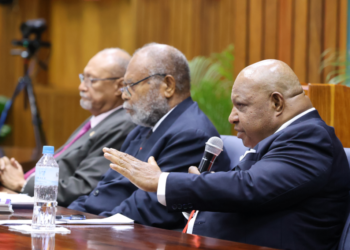
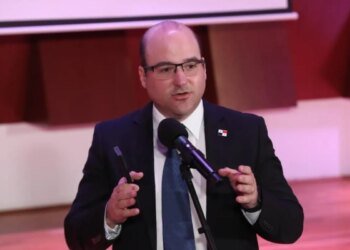
On March 28, the Hula community marked the start of preparations for the the 150th anniversary of Lawes’ arrival planned for June. Hula Nixon Memorial Church Minister Rev Kila’ Apae Walo said the anniversary was a time of thanksgiving, remembrance and unity.
Rev Walo said “150 years is a rare and sacred milestone and it is a time to honour the early believers, church leaders, village elders and faithful families who carried the Christian witness from one generation to the next.”

He said that legacy now passed onto the next generation and this being an open invitation to Hula Nauna and friends to join in the celebrations in June.
In 1976, the Hula community celebrated the 100 years’ anniversary of Christianity’s arrival with plaques and a commemorative marker installed in the village.
In June, the Hula community will celebrate 150 years since the arrival of Rev Lawes and honour six generations of faith and shared heritage.
Rev Lawes was born on July 1,1839 in England. He was educated in a village school at Mortimer West End. He was apprenticed for six years and in 1858 volunteered for service with the London Missionary Society. He was trained at Bedford and two weeks before ordination on Nov 8 in 1860 he married Fanny Wickham and on Nov 23 set sail for the Pacific.
A missionary home still stands to this day and is located towards the end of the village toward Raukele beach.
Last month, the village launched its programme and celebration plan which covers two months of preparations and fundraising activities.
The celebration had three phases; a press conference launch and outreach in March and April, a corporate fundraising dinner on May 2 and the main anniversary week which will be held at Hula. The corporate dinner is aimed at raising over K100,000.

The media outreach started with a press conference in the village attended by Rev Walo, community elder Laka Kala, Poerupu clan (largest clan) representative Walo Augerea, history lecturer Keimelo Gima, committee representatives of Ravu Kila, Bri Olewale and Alurigo Ravusiro (women’s representative).
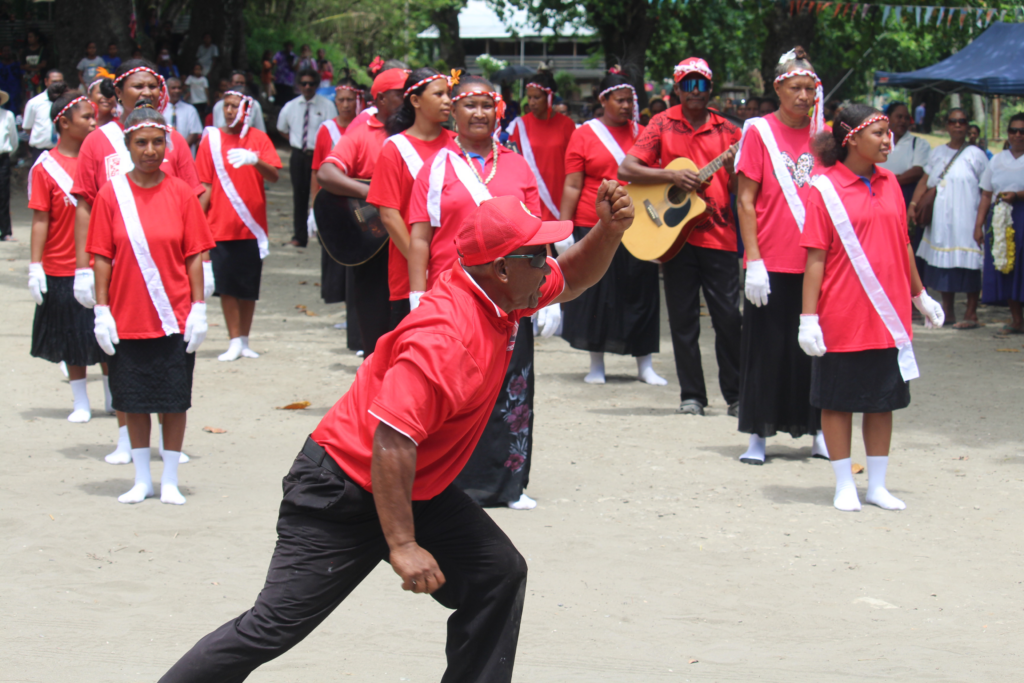
Other media outreach and awareness, media participation, interviews and broadcasting will continue to end of April. The celebration week from June 23 to 28 will include church services, cultural events, a heritage exhibition and other community gatherings.
One of the main highlights involved the ground breaking for a proposed memorial museum to honour the work of the first missionary Rev Lawes and others that followed to Hula.
The anniversary days will also produce archival materials, a history video covering 1876 to 2026 and programme pamphlets documenting the community’s heritage.
Rev Walo said this would be a permanent heritage facility to be built on land released by the church. He said the museum ground breaking set for June, was to honour the life and work of missionaries and preserve the history of Christianity and community life in Hula for the future generations.
“The museum will be a permanent institution that will serve as a place of learning, memory and community identity,” he said.
The programme is organised by the Hula Nixon Memorial Church and the Hula 150th anniversary planning committee, led by a three-member committee of Bri Olewale, Kemeilo Gima and Ravu Frank, and includes representatives of the four Hula clans of Poerupu, Kwamonuma, Siligo and Konerigo.

An invitation has also been extended to other community leaders, and diaspora members based in Port Moresby, Australia, and New Zealand.
The official programme after preparations will start on June 23 with the official opening at Hula with a church service. June 24 will see the launch of archival materials, oral history recordings and educational displays.
From June 24 to 26 will involve daily church services, youth and village activities, sports and inter-clan events and on June 27, there will be an anniversary feast for community leaders, returning diaspora and other stakeholders.
The ground breaking ceremony for the proposed Dr Lawes Memorial Museum will be on June 28 followed by the official closing ceremony.
Other activities during the history on trade routes with Hula and how Hula has advanced over the years and contributed to the country.
Based on historical records, the Hula people who speak the Hula-Keapara language were involved in heavy maritime trading and that is still part of normal traditional living to this day.
Driving along the 100 kilometer east of Port Moresby to Hula, a last stretch of road toward the village shows sago palms lining the road on a large swampy area. This is evidence of trade with people in the Gulf of Papua.
Sago was a critical carbohydrate staple imported into the coastal regions to supplement local diets during dry seasons when local gardening was insufficient or when the weather did not permit maritime activities.
A committee has also been formed under the leadership of Bri Olewale, Alurigo Ravusiro and University of Papua New Guinea lecturer Keimelo Gima to record the genealogy in a bid to preserve the family lineage and the language.
The group will during this time also conduct awareness and conduct individual surveys with families to trace lineages and explore ancestral stories through stories, oral interviews and tracing back over six generations.
Gima said this was about building family trees and documenting relationships’ and history. He said this would strengthen personal identity, foster a sense of belonging and preserve family history allowing individuals to understand their origins and cultural roots.
This work coincides with the 150 years’ anniversary and will be showcased under the presentation of Hula community history. This will be included in the launch of archival materials, oral history recordings and educational displays.
The celebration is funded through community contributions, the corporate dinner fundraiser, and appeals to the broader Hula diaspora. A dedicated bank account has been established under the Hula Nixon Memorial Church, with three authorised signatories required for all transactions to ensure full financial accountability and transparency.
Rev Walo said despite the village now having other denominations that have branched out from the main church, it should not stop the village members from attending the event.
“We are bonded by work of early missionaries and Christians that have one way or another sealed the foundation on which our individual faith rests on today.”
He said this was part of history and everyone in the village, regardless of denomination, was part of the celebrations.