
It is true, as Alexander Pope once said, that to err is human. But while we are all fallible, some human beings are more prone to error than others. That is one justification for democracy – subjecting decisions that affect large numbers of people to deliberative processes that include checks and balances. The history of authoritarian and absolutist political regimes is littered with figures whose mistakes were calamitous not only for themselves, but also for the societies they governed.
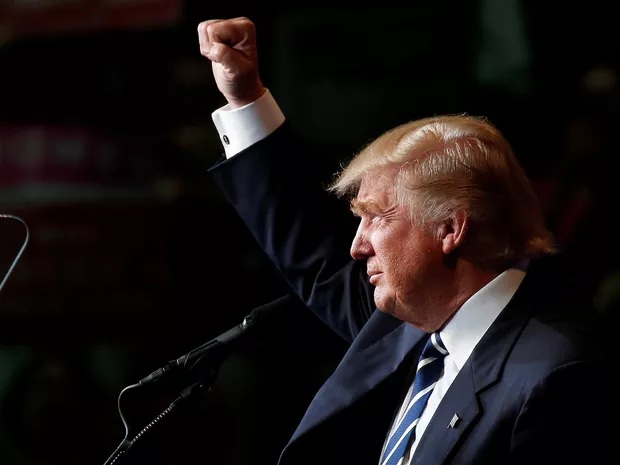
There is no more important decision than declaring war on another country. Yet the United States has done just that without even considering its own system of checks and balances or the process of reasoned deliberation. Like the kings of yesteryear, American President Donald Trump, a lying and impulsive man, is not subject to any control by the legislative branch and is surrounded by psychopaths who only tell him what he wants to hear. The disastrous result today is evident: the United States is once again involved in a war in the Middle East that has already cost thousands of lives – mostly civilians – and in which, in all likelihood, it has committed multiple war crimes.
No one knows how long the war with Iran will last, how many more war crimes will be committed, or how many more innocent people will lose their lives. But Americans are apparently so accustomed to Trump’s violations of human rights and the rule of law, and so overwhelmed by the constant barrage of breaking news, that they have barely managed to organize any protests. Even in our universities, which are often hotbeds of protest and dissent, fear reigns. As is the case under all repressive regimes, the threat of financial consequences or, worse still, of losing one’s visa or facing expulsion from the country or a criminal investigation, is having the desired effect.
As an economist, I am often asked what implications the war Trump has chosen to wage against Iran will have for the U.S. economy and the global economy. The short answer is that the longer it lasts, the greater the damage. But even if the war ends quickly, the effects will linger. After all, critical supply chains have already been disrupted and oil and gas production facilities have been destroyed. Most estimates suggest repairs will take years.
Likewise, not only the supply of oil and gas has been endangered. Unlike the oil embargoes of the 1970s, fertilizer production on which global food systems depend has also been threatened. This crisis also comes on the heels of other major global economic disruptions – from the COVID-19 pandemic and Russia’s invasion of Ukraine to Trump’s global tariff war and the destruction of the rules-based international trading system – all of which have contributed to rising inflation and a widening affordability crisis.
Before Trump returned to the White House, inflation was on a downward trend, although still well above the central banks’ desired 2% goal. However, tariffs significantly slowed this trend, and inflation has skyrocketed again globally. With many countries, including the United States, already facing a purchasing power crisis that U.S. policies have aggravated, the risk now is that central banks around the world will raise interest rates or, at a minimum, slow the pace at which they have been lowering them.
This, in turn, will exacerbate the affordability crisis – as buying a home or paying off a credit card will become more difficult – and slow a US economy already shaken by the trauma of Trump’s erratic trade, immigration and tax policies. If it weren’t for excessive spending on AI data centers – which support about a third of US growth – the US economy would be truly anemic. And with Trump’s regressive tax cuts for billionaires and corporations already in place, the United States has less fiscal room to cushion the disruptions he has caused and those that AI may bring – from job losses to the collapse of the tech bubble.
Trump’s claim that the United States will benefit as a net oil exporter is nonsense. True, Exxon will benefit, but American consumers pay prices that are set globally – and have risen substantially. Under these conditions, the United States should obviously impose a windfall tax. But that won’t happen under an administration so captured by the fossil fuel industry.
America’s former allies in Europe are also affected by rising energy prices and supply shortages caused by Trump. If European policymakers tie electricity prices to gas prices (as they did at the beginning of the Ukraine war), they could make the situation even worse. But if Europe adopts a strategy to regain its sovereignty by reducing its dependence on American technology and defense, it could strengthen its position both now and in the long term.
Regardless of how long the war and current stagflation conditions last, the long-term consequences of this episode will be profound. Hopefully the world will recognize that the “variability” of solar and wind power is much more manageable than continued dependence on fossil fuels, which are subject to the whims of erratic authority figures like Trump and Russian President Vladimir Putin. If Trump’s war accelerates the green transition globally, it will have an important positive aspect.
In any case, another nail has been added to the coffin of the peaceful, borderless world that our ancestors tried to build after the Second World War. Under Trump, the country that laid the foundations for that world is today dismantling it. Between the new cold war with China and the apparent lack of resilience of global supply chains, there is little reason for optimism. And with democracy in the United States in such a weakened state, human errors and their consequences accumulate at an accelerated pace.
The author is a Nobel Laureate in Economics, was chief economist of the World Bank and president of the Council of Economic Advisers to the President of the United States, and is a professor at Columbia University and author, most recently, of The Road to Freedom: Economics and the Good Society (WW Norton & Company, Allen Lane, 2024).
Copyright: Project Syndicate, 2026. www.project-syndicate.org