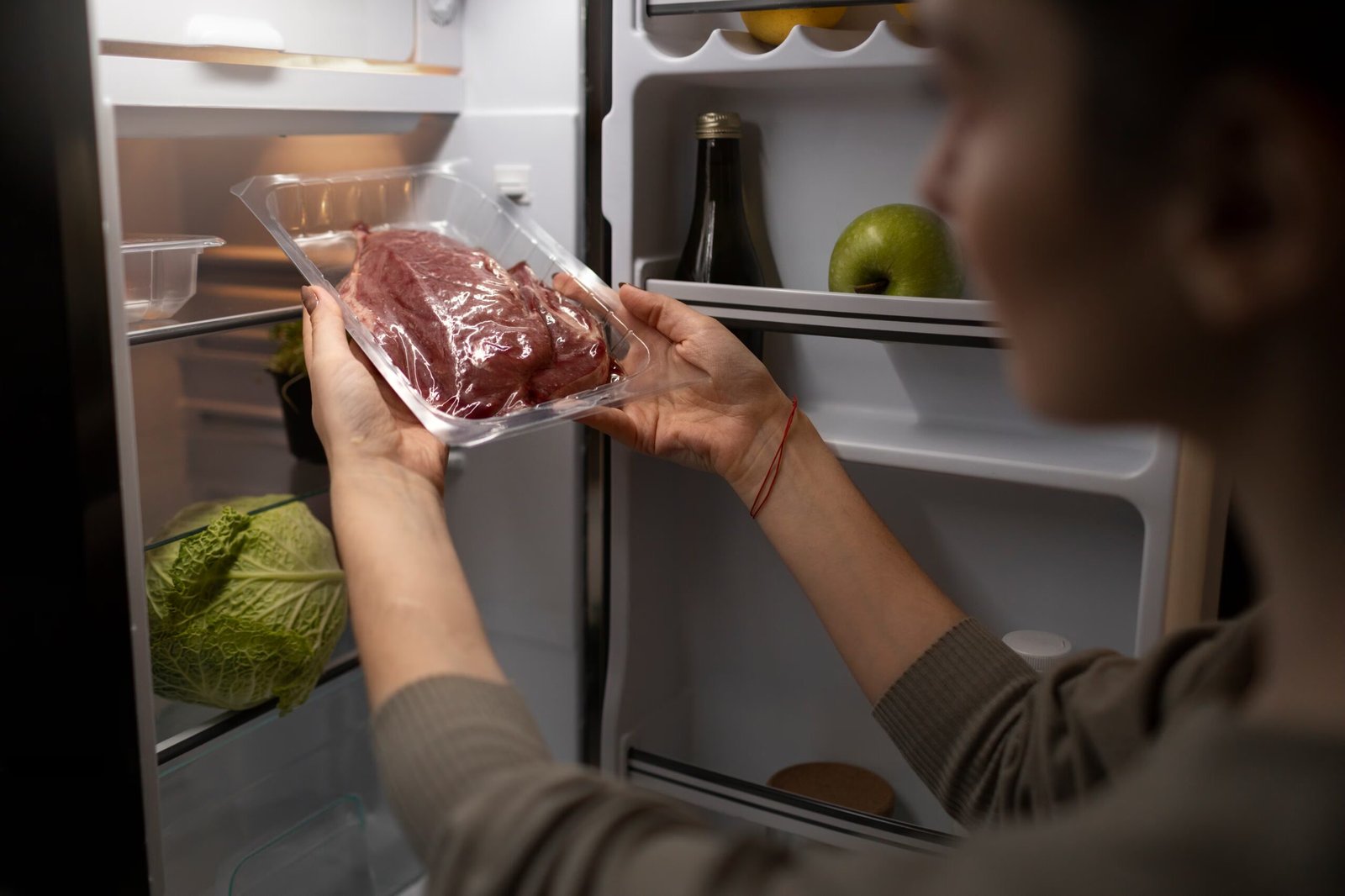
If you are one of the people who stocks your pantry for several months and freezes the food to make it last longer, then you should know how to do this process safely.
And it is not enough to put the products in the refrigerator and leave them there; In reality, there are a series of recommendations that prevent the spread of bacteria and, therefore, they take care of your health.

When foods are defrosted, ice crystals melt and cause the loss of juices, which can give them a dry texture. Photo: Freepik
Read also How much should banana cost? Profeco reveals maximum prices
According to nutritionist Mayte Ponce, leaving food outside the refrigerator to defrost is one of the most common practices, but also the least recommended.
This is due to the fact that, as the product loses cold, its temperature increases until it reaches that of the environment, which generates an ideal environment for the proliferation of bacteria.
Similarly, the Government of Gualeguaychú, Argentina, warns that a poor defrosting process increases the risk of pathogenic bacteria.
How does it happen? Although the microorganisms present in frozen foods remain inactive, they can multiply rapidly if exposed to inappropriate temperatures before cooking.
Additionally, it is important to mention that although freezing stops the growth of bacteria, it does not eliminate it. Therefore, if you do not know defrost food properly before cooking, can shorten its consumption period.

Don’t let your food thaw at room temperature. Photo: Freepik
The United States Food Safety and Inspection Service points out that the best way to defrost food is, first, planning well how long you want to consume it and then choosing the safest method:
This method is the most efficient, as it keeps food at a constant temperature of 4°C or less; However, it requires more time due to the weight of the meal.
Another thing to consider is that some areas of the refrigerator are colder than others, which can influence defrosting time.
However, the advantage of this method is that it allows the products to be frozen again.
Here, the only recommendation is to monitor the texture, for example, that the meats have not lost their juiciness.
In this case, the food should be placed in airtight bags to prevent it from coming into contact with bacteria in the environment or absorbing non-potable water.
The second method is to submerge the bag in cold water and change the water every 30 minutes to defrost. Just keep in mind that small portions can thaw in less than an hour; while larger pieces may take between 2 and 3 hours.
Once thawedthey should be cooked immediately and not refrozen without prior cooking.
According to the Banner Health health system portal, this method is useful when there is a rush, but it has one condition: the meal It should be cooked immediately.
This is because some parts of the food can begin to heat up or cook during the process, entering the “danger zone” where bacteria tend to proliferate.
Therefore, if you defrost your products in the microwave, you should cook them before putting them back in the refrigerator.
If you don’t have that much time anymore, it’s safe to cook foods straight from frozen. But be careful, because the cooking time can increase 50% more than normal.
Finally, nutritionist Mayte Ponce mentions that the bain-marie method was very popular in the past, when there were no powerful appliances such as the microwave. And to this day, there are still those who use it.
It consists of placing the meal in a container within another with hot water, without the water directly touching the food. In such a way that it will begin to defrost.
The advantage is that it allows for more uniform defrosting, but it is also not the most difficult option because you need complete control of the temperature of the water and containers.

Proper freezing helps maintain the quality and food safety of meat, poultry and fish. Photo: Freepik
Read also What are the benefits of drinking alfalfa water with pineapple?
Receive Hello Weekend every Friday, our newsletter with the latest in gastronomy, travel, technology, cars, fashion and beauty. Subscribe here: https://www.eluniversal.com.mx/newsletters