In June 1926, an elderly man in shabby clothes was hit by a streetcar while crossing the street on his way to church. A few days later he died in a hospital for the poor.
That man was Antoni Gaudi, who would later become known as “God’s Architect”.
Gaudi left a monumental task to future generations.
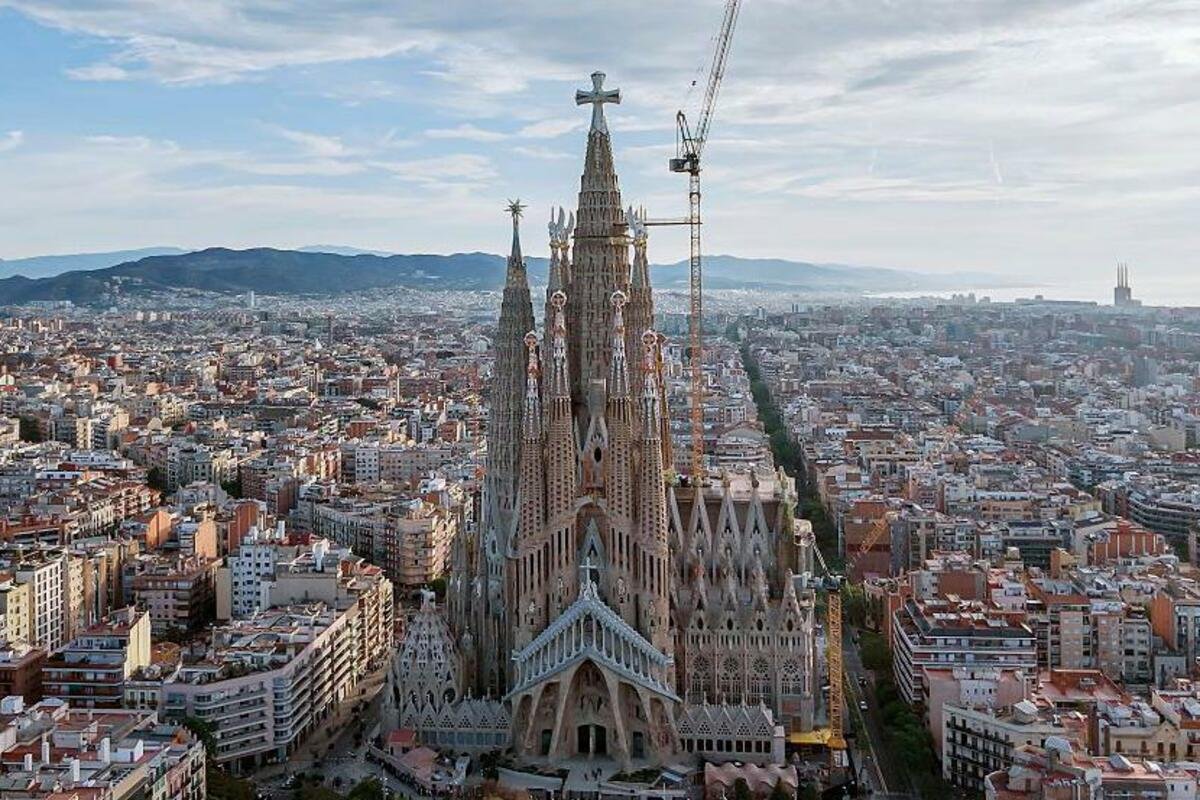
He died in the middle of building the Sagrada Familia, the famous, imposing church in Barcelona, in northeastern Spain.
From afar, the church looks like an organic mighty giant towering over the city, and up close it seems even more like a living being.
The mesmerizing details of the facades, depicting biblical scenes, seem to grow out of the stone itself.
As from the beginning Gaudí imagined that the church would continue to be built long after his death, the completion of the Sagrada Familia was an extremely complex challenge for those who continued his work.
Gaudi’s blueprints and models were destroyed during the Spanish Civil War in 1936, leaving subsequent builders with very few instructions to work with.
Tall towers were once thought to be too heavy for their foundations and susceptible to wind.
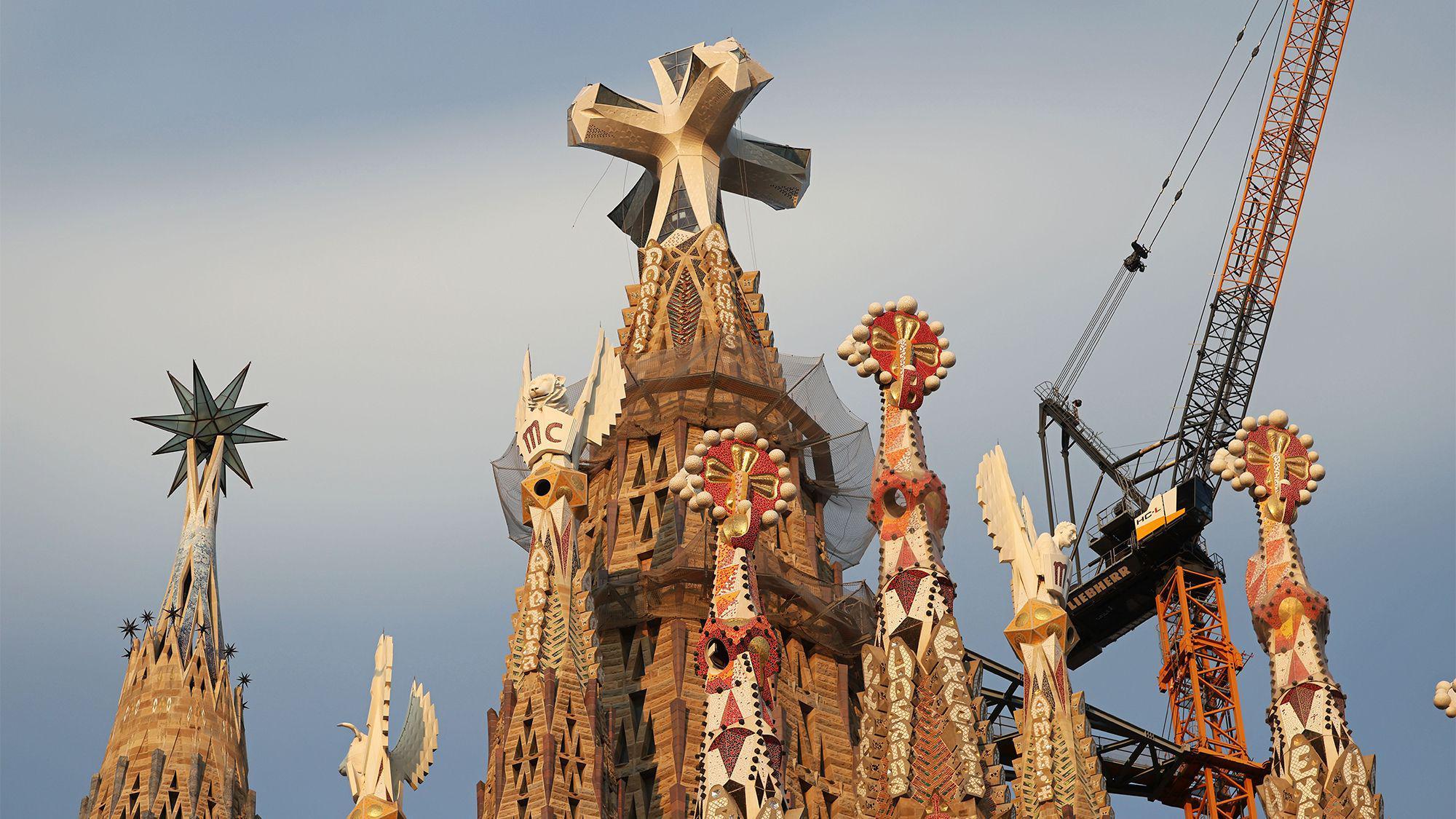
Nevertheless, 100 years after his death, the central peak of the church – the tower of Jesus Christ – was completed, and it is 172.5 meters high.
Thanks to him, the Sagrada Familia became the tallest church in the world.
Inspiration from ancient buildings
As a young, extremely ambitious architect and deeply religious Catholic, Gaudí had two goals, says Gijs van Hensbergen, an art historian and Gaudí biographer.
“He wanted, above all, to create a Bible carved in stone, which is the Sagrada Familia.”
“But also to correct all the mistakes of previous architectural styles”.
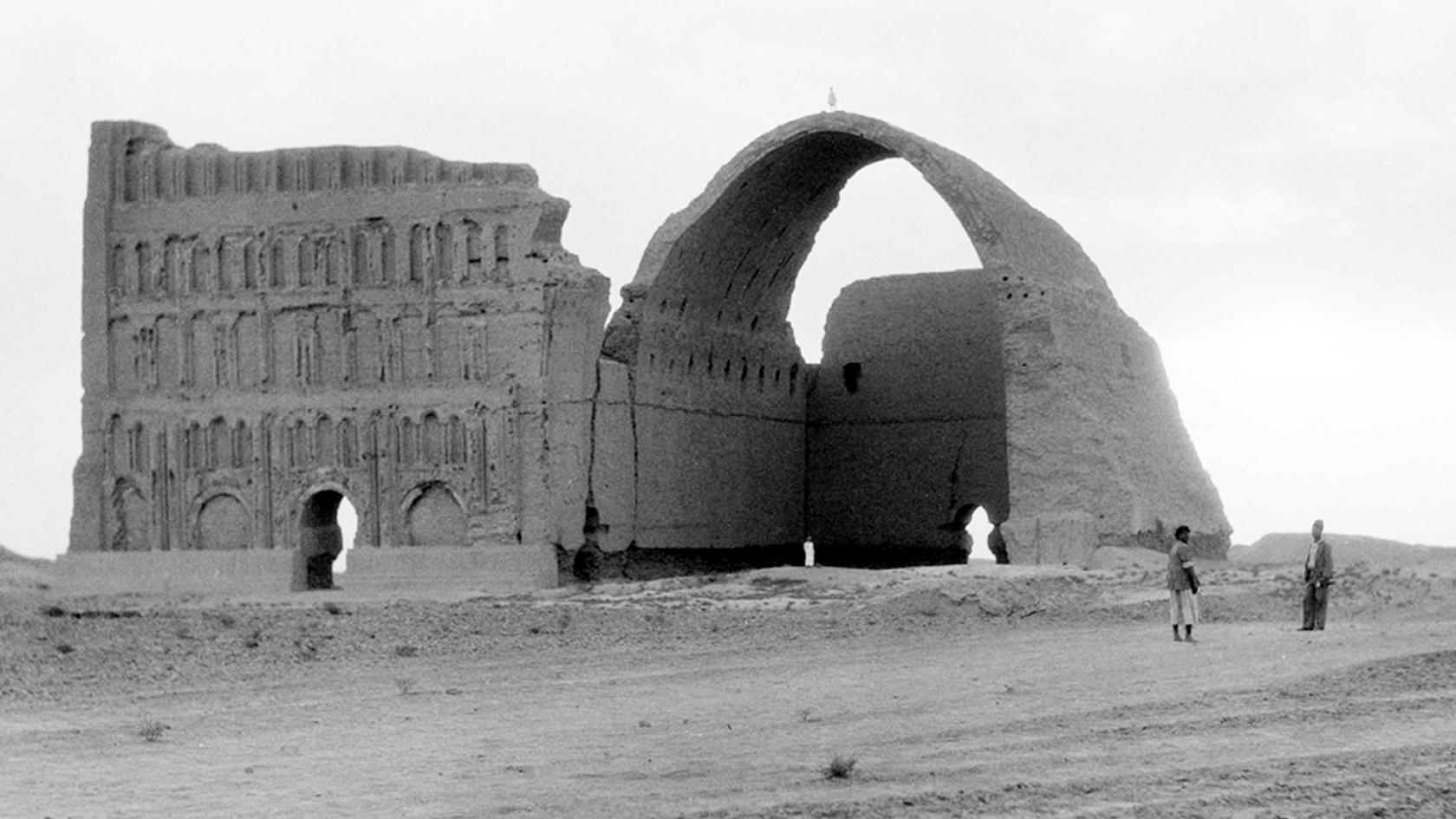
To achieve this, he had to emulate one of the wonders of the ancient world – the arch of the remains of the Tak Kasra monument (Taki Kisra) in the old city of Ctesiphon, in present-day Iraq, which is also known as the Arch of Ctesiphon.
It is an impressive early example of an extremely stable construction known as a parabolic arch.
Gaudí was convinced that this very constructive element would allow him to correct what he considered to be a boring element of the cathedrals of his time.
To be able to support vaulted ceilings, large neo-Gothic churches had buttresses – stone supports placed at right angles to another wall or against the wall itself against lateral forces, which extend from the outer upper parts of the walls to the lower levels of the building.
Gaudí considered them “crutches” to support buildings that could not support their own weight.
Instead, he chose a parabolic arch for all 18 towers of the building.
If this form were to be applied, the towers would be able to support their own weight.
“He was certainly a man fascinated by mathematics, but for him it was always the work of the Creator,” says van Hensbergen.
Gaudi believed that gravity and the parabolic arc were divine inventions.
“That’s why that shape was the perfect leitmotif for him, a kind of bow to God as the great architect.”
As he deepened his knowledge of the structures and the forces acting on them, he became more and more certain that he should remove vaults and arches that were not necessary for the statics of the basilica.
“He completely changed the design of the temple three times,” says Liam Duff, a civil engineer who heads the team at the engineering company Arupu that is engaged in the construction of the Sagrada Familia.
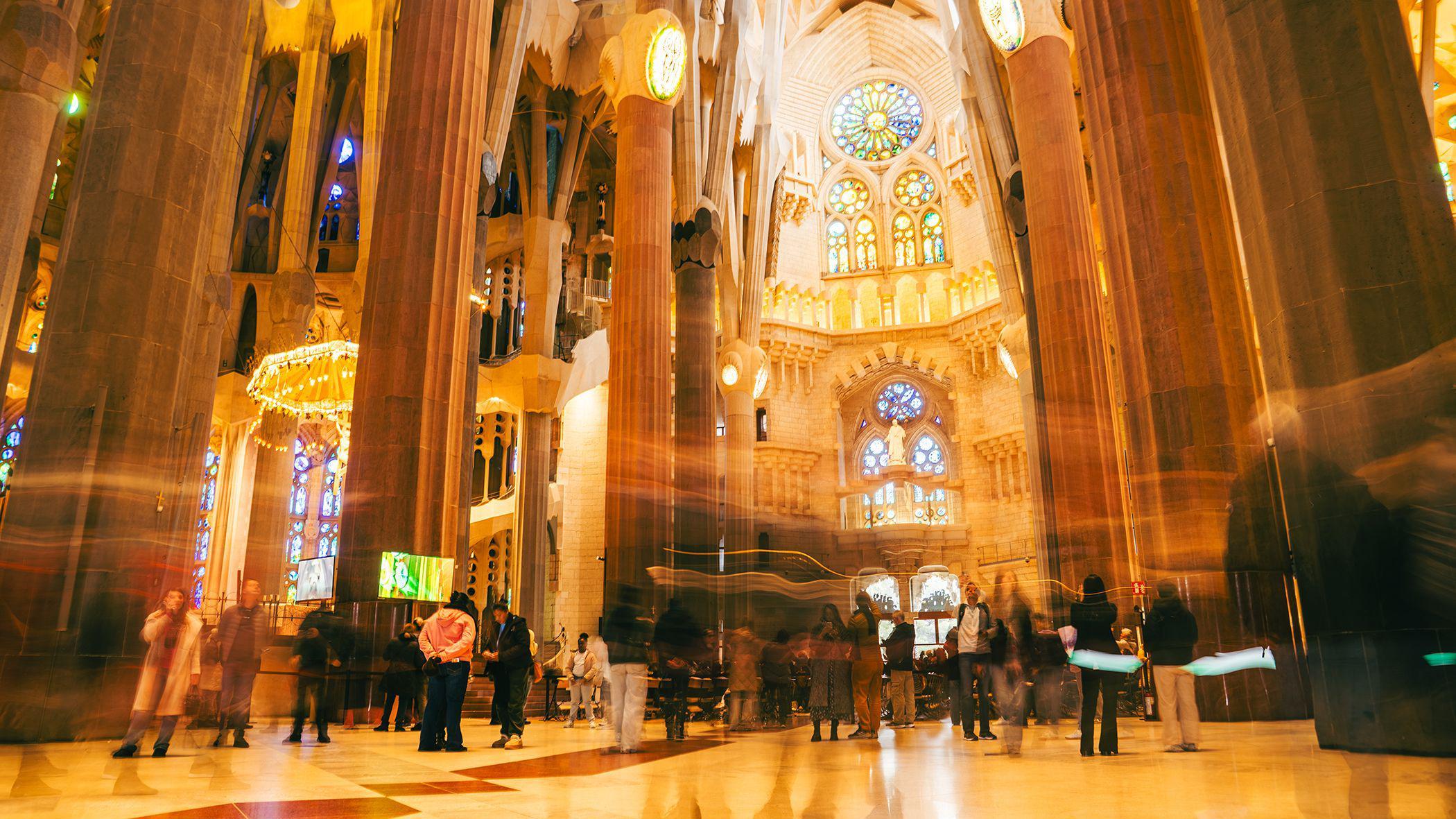
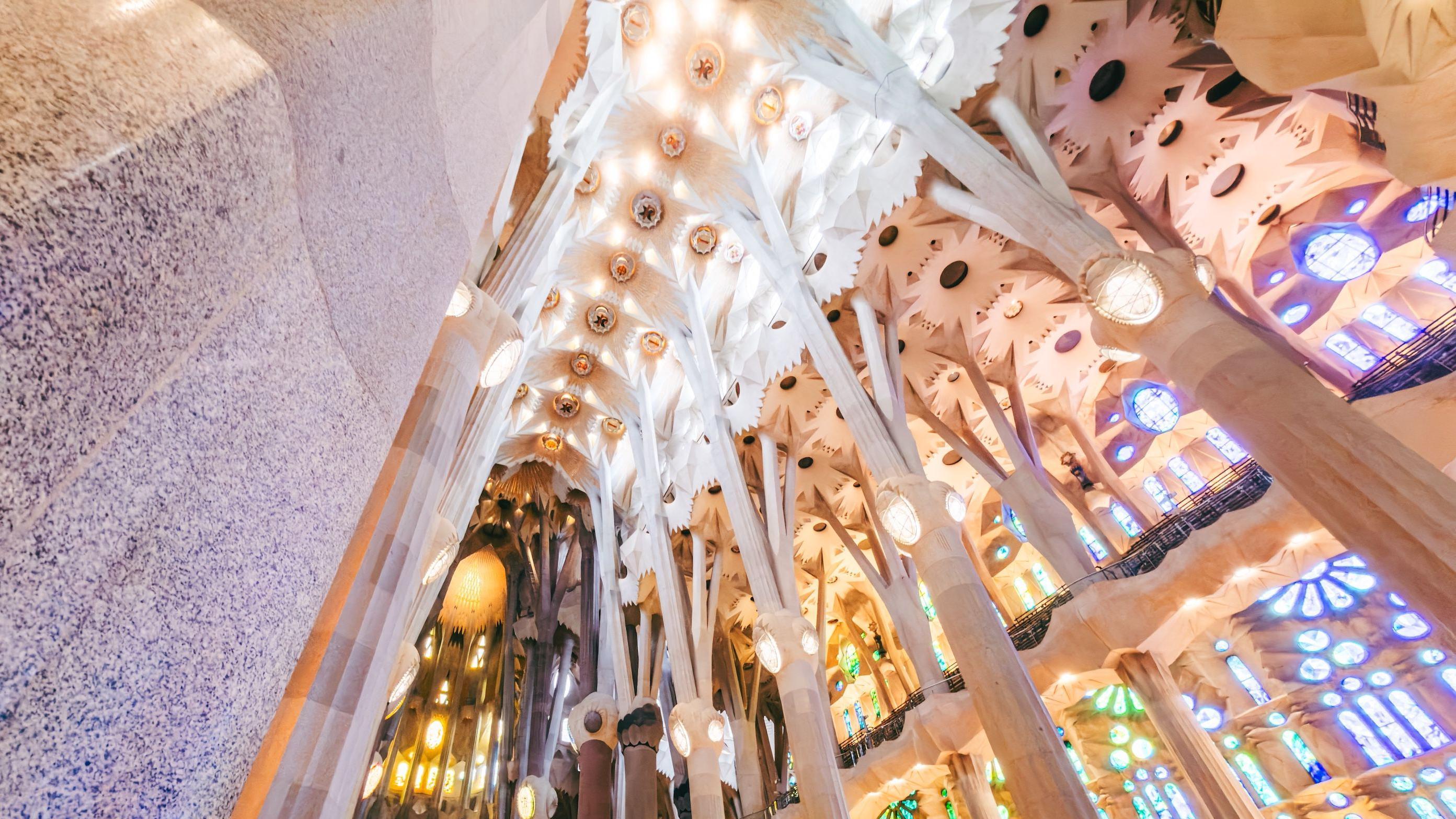
In the interior of the nave of the church, he used bare, branched columns.
Inspired by nature, he shaped them to resemble trees, whose branches rise to the top and take the load of the ceiling and towers above them.
As you stand in the nave of the church, illuminated by the orange and red casts that filter through the stained glass windows on the west side of the building, these tree-like columns create an almost unreal sense of weightlessness.
Heavy towers
Despite the reduced and rational project of the towers, during the construction of one of the higher ones, a big challenge appeared – it was too heavy.
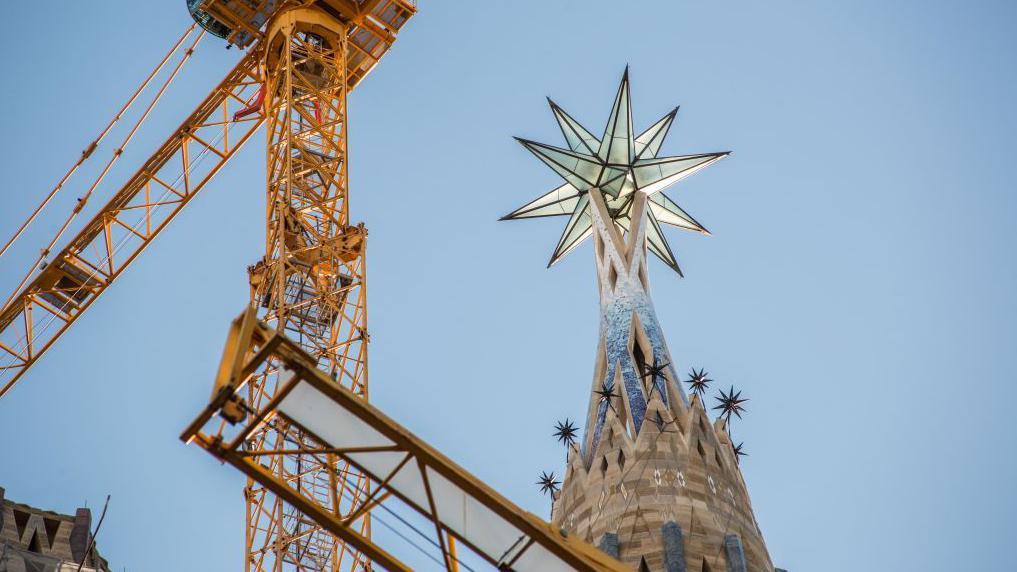
The tower of the Virgin Mary, 138 meters high, is the second highest after the main tower of Jesus Christ, which rises to 172.5 meters.
During construction, it was found that the columns under the tower would be overloaded by its weight if they were built using traditional masonry techniques or reinforced concrete covered with decorative stone.
One of the possible solutions for the tower support was to install an internal steel structure covered with thinner concrete panels to reduce the overall load.
For the realization of this plan, in 2014, a team of construction designers from the British company Arupe was hired.
“The Sagrada Familia is a legendary place, isn’t it?” says Steve McKechnie, a structural engineer at Arupi who has worked on the project since its early stages.
“It’s something you dream of working one day, and we got that opportunity.”
Engineers of this company have designed another solution for plow load capacity.
They proposed to completely abandon the steel structure and reinforced concrete.
Instead, they designed a thinner concrete shell to be prestressed with steel cables.
This was a significant departure from the original project.
“It was a big change,” says McKechnie.
“At one point we even thought that our services would no longer be needed and the project stopped completely for a while.”
Fortunately, the situation has changed, says McKechnie.
Prestressed concrete was chosen because it solves the problem of the poor tensile strength of concrete, compared to its good compressive strength.
When the wind blows directly into the tower and pushes it back, the side of the tower facing the wind is subjected to tension.
This tension increases the risk of cracks and damage to the stone structure.
By using a parabolic arch, the weight is evenly distributed throughout the entire structure, and the use of prestressed concrete additionally strengthens the structure.
Thanks to this solution, when the wind blows, there is very little tension on the side facing the wind.
By placing steel cables above and between the windows, prestressed elements that might otherwise be susceptible to cracking were further strengthened.
This was especially important because Gaudí’s project provided for a large number of windows to illuminate the interior of the basilica with natural light.
The prestressed stone technique was applied to the tower of the Virgin Mary and five other central towers, including the tower of Jesus Christ.
“Gaudi would be really excited about the possibilities” these new technologies provide, says van Hensbergen.
Gaudí experimented with different methods on the Nativity facade of the Tower of the Apostle Barnabas, which was completed during his lifetime.
In the lower parts, he used sandstone from the nearby Montjuic hill, whose shades vary from gray and beige, to green, ochre, gold, purple, and red.
He used portland cement at the top.
“At the time, it was new material in Barcelona,” says Duff.
His experiments proved successful.
“It’s impressive to see the quality of construction in Gaudí’s time,” says Fernando Villa, director of technology and innovation at the Sagrada Familia project.
Gaudí’s still unfinished church
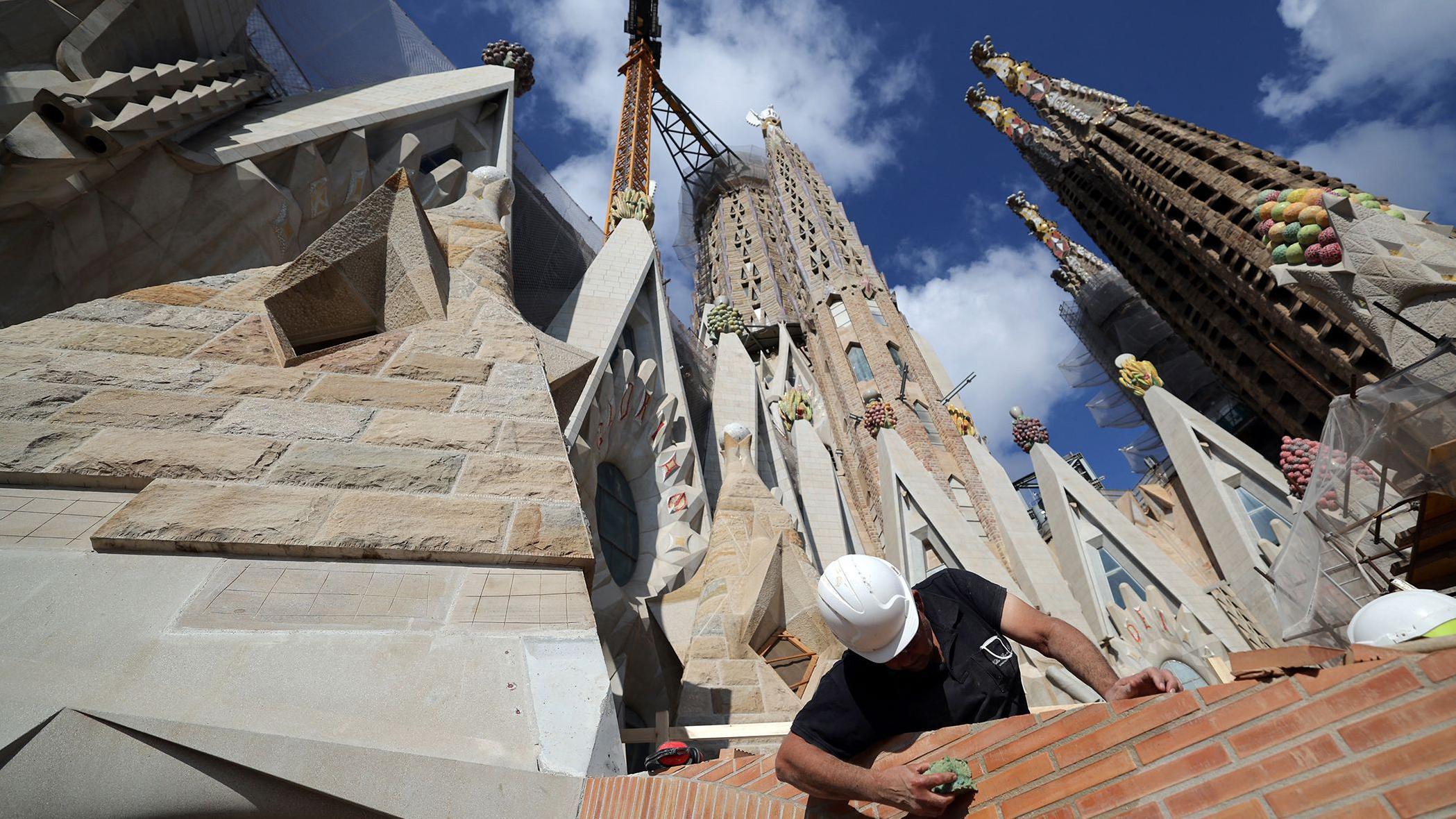
While distinguished guests, including Pope Leo XIV, arrive in Barcelona to mark the centenary of Gaudí’s death, the church is not yet finished.
Among other things, its main entrance facade – the Slava facade – has not yet been completed.
Once completed, modern technologies will play a key role in maintaining the building.
Changes in the strength of the wind, temperature oscillations and movements of the building itself over time can lead to the expansion of cracks in the interior and exterior parts of the church, Vilja explains.
Previously, climbers were looking for cracks and damage on the Sagrada Familia, and it took them as much as two years to inspect every part of the basilica in detail.
Today, drones and artificial intelligence are used to detect cracks that need to be repaired.
“Once we train artificial intelligence enough, it will be possible to inspect the entire basilica in just a month,” says Villa.
The Sagrada Familia is certainly not a stationary stone monument and therefore reacts to environmental influences almost like a living organism.
It is precisely this continuous movement and development that reflects Gaudí’s organic vision of the church, says Villa.
“Nature is his teacher”.
BBC is in Serbian from now on and on YouTube, follow us HERE.
Follow us on Facebook, Twitter, Instagram and Viber. If you have a topic suggestion for us, please contact bbcnasrpskom@bbc.co.uk
Download the application and follow the news


FOLLOW US ON

News