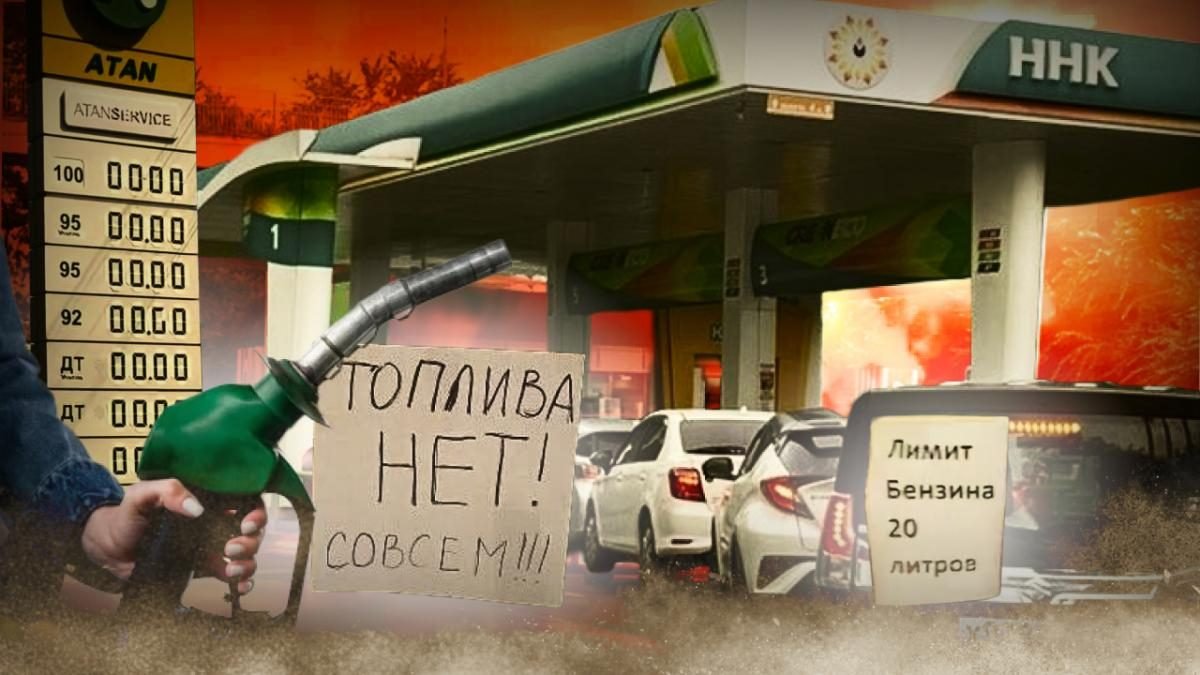
Russia has been experiencing shortages of gasoline and diesel fuel for several weeks now. For Tajikistan, this situation is directly important: the country receives most of its oil products and liquefied gas from Russia. Against the backdrop of disruptions in the Russian market and discussions of new measures to stabilize it, prices for gasoline and diesel in Dushanbe have already increased.
What is happening on the Russian fuel market?
Deputy Prime Minister of Russia Alexander Novak named the situation on the Russian fuel market “not easy, but controllable,” and the government has developed measures for additional fuel supplies to the regions.
Russian state media blame the outages on logistics, high demand, hype and the need to prevent speculation. At the same time, the possible consequences for countries that import fuel from Russia, including Tajikistan, are almost not disclosed in the official Russian agenda.
By according to Meduzagasoline production in Russia for the week from June 15 to 21 decreased by approximately 25% compared to the average daily level in June 2025. As of June 30, there is no new data that would confirm the restoration of gasoline production in Russia.

The publication associates this with the shutdown of a number of large oil refineries in Central Russia after attacks by unmanned aerial vehicles. Reuters also reported that gasoline production fell to 85 thousand tons per day, while consumption in the summer months reaches 110 thousand tons per day.
Against the backdrop of fuel shortages, the Russian government allowed oil refineries to produce gasoline and diesel fuel with reduced quality indicators for the domestic market. In addition, this month Russia plans to import gasoline by sea.
“New newspaper Europe” reported that by June 29, authorities in at least 36 Russian regions had officially introduced restrictions on the sale of fuel, and fuel shortages were recognized in another 23 regions. The publication also reported that large gas station chains are introducing restrictions at gas stations throughout the country.
The head of Rosneft, Igor Sechin, proposed to Russian President Vladimir Putin stabilization measures domestic fuel market. Among them are to temporarily suspend the standards for exchange sales of gasoline and diesel, give priority on the exchange to end consumers and oblige oil companies to process at least 30% of the oil produced within Russia.

Gazprom Neft has not given a public substantive comment on the current crisis, the blow to the Moscow Refinery and the possible consequences for exports to Central Asia. Company did not respond to requests Reuters on this matter.
How dependent is Tajikistan on Russian fuel?
According to the Ministry of Energy and Water Resources of Tajikistan, in 2025, the republic received over 1.2 million tons of petroleum products and liquefied gas from Russia as part of the indicative balance. This is 180 thousand tons, or 17.5%, more than in 2024.
The Ministry of Energy noted that Russian supplies accounted for more than 70% of the total imports of petroleum products and liquefied gas to Tajikistan.
In total, in 2025 the country imported about 1.7 million tons of fuels and lubricants.
Tajikistan’s own fuel production remains small. According to the Ministry of Energy, in 2025, the republic produced 2,109 tons of gasoline, 3,111 tons of diesel fuel, more than 4,587 tons of fuel oil, about 2,587 tons of bitumen and 350 tons of petroleum coke. Oil production amounted to 18,546 tons.
Gasoline and diesel prices have already risen in Tajikistan
On June 11, 2026, we reported that prices for gasoline and diesel fuel in Tajikistan increased by 40 dirams to 2 somoni 30 dirams.
On June 9, at a gas station in Dushanbe, a liter of AI-92 gasoline cost 11 somoni 30 dirams. A week earlier the price was 10 somoni 90 dirams, and three weeks earlier – 10 somoni 40 dirams.

Diesel fuel rose in price over the week from 11 somoni to 13 somoni 30 dirams per liter.
Gas station sellers in Dushanbe told Asia-Plus that they do not know the reasons for the rise in prices. At the same time, according to them, there was no shortage of gasoline and diesel fuel at gas stations.
The Antimonopoly Service of Tajikistan explained the rise in prices by the situation on the world market.
“Since these are imported products, they are directly dependent on the world market. Due to conflicts in the Middle East, its price is constantly changing,” the department reported.
According to the Statistics Agency of Tajikistan, in the first quarter of 2026, more than 325 thousand tons of petroleum products worth over $251 million were imported into the country. The average price of a ton of fuel was $772.
Compared to the same period in 2025, the volume of imports of petroleum products increased by 11.4%, and their cost by 8.6%.
What experts and think tanks say
Caspian Policy Center on fuel security in Central Asia writes that the dependence of countries in the region on Russian fuel varies. According to the center, Kazakhstan is the most self-sufficient in the region, Turkmenistan is protected by its own refineries and subsidies, and Kyrgyzstan and Tajikistan are “almost completely dependent on imports of Russian fuel and LPG.” The material also states that the markets of Kyrgyzstan and Tajikistan are sensitive to price volatility and supply disruptions.
RFE/RL in the material on the impact of Russian export restrictions on Central Asia wrote that Tajikistan imports almost all its fuel, mainly from Russia, and was among the most affected countries in the region.
Economist Nurgul Akimova, in a commentary to RFE/RL Kyrgyz Service, spoke about the situation in Kyrgyzstan, which is also heavily dependent on Russian fuel: “In the short term, there are few real alternatives to Russian supplies.” According to her, such alternatives require significant investment in infrastructure and will be more expensive than current Russian supplies.

S&P Global Energy writes that Central Asian countries are looking for alternative supplies fuel amid problems with Russian supplies. The head of PetroCouncil, Asilbek Zhakiev, according to S&P Global Energy, named Turkmenistan, Iran and Azerbaijan as possible alternative suppliers, but more expensive options.
What is known now
So far, Tajikistan has not officially reported a shortage of gasoline or diesel fuel at gas stations. However, high dependence on Russian supplies makes the situation on the Russian market an important factor for the republic.
The Ministry of Energy of Tajikistan told Asia-Plus that the issues of supplying fuels and lubricants to the country are constantly in the center of attention of the department. The agency reported on possible negotiations with Russia on the supply of fuels and lubricants, including gasoline and diesel fuel.
The authorities are also considering alternative areas of cooperation, in particular, issues of cooperation in the oil and gas sector, including possible supplies of crude oil for the needs of oil refineries in Tajikistan, were discussed with the Iranian side. But at the moment nothing is known about the results of these negotiations.