EDUCATION
WHAT started as an institution providing specialised training to public service employees in the country since 1953 has since gone under several changes and is now ready to become university in 2027.
Formerly known as Administrative College (Adcol), established in 1963, it is now known as the Somare Institute of Leadership and Governance (Silag).
It is the country’s oldest public service training institution, with roots dating back to 1954.
It is famously known as the historical birthplace of the Bully Beef Club—an informal group of visionary Papua New Guineans who gathered at the institute to plot the nation’s path to independence from Australian rule.
The Bully Beef Club the first informal political forum that eventually led to the formation of the political party (Pangu Pati) that is now entrenched in PNG’s political history and discourse.
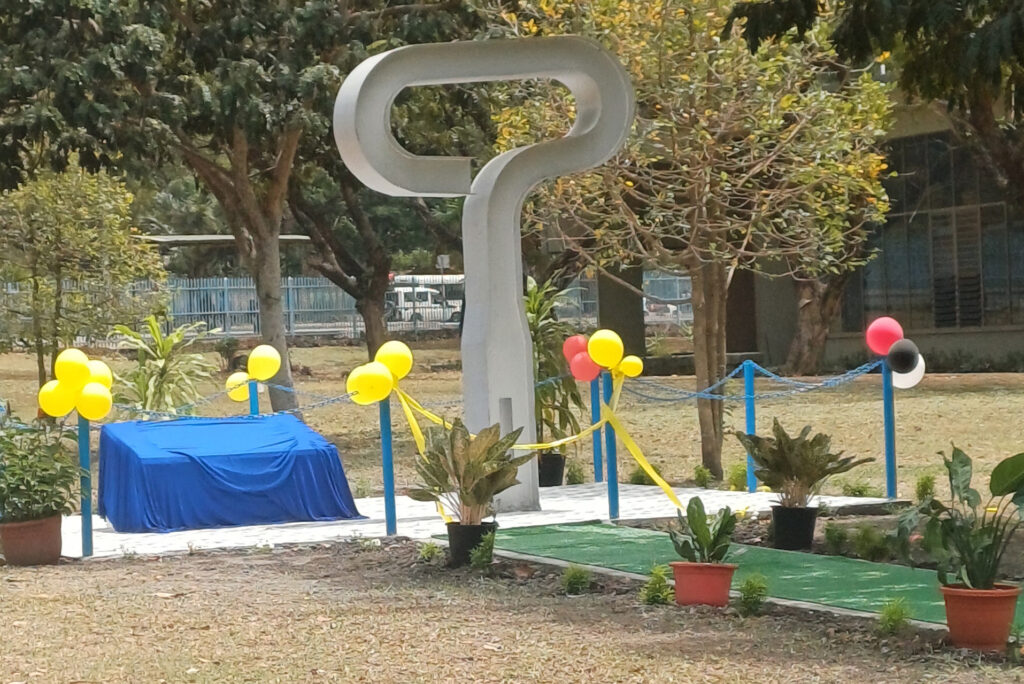
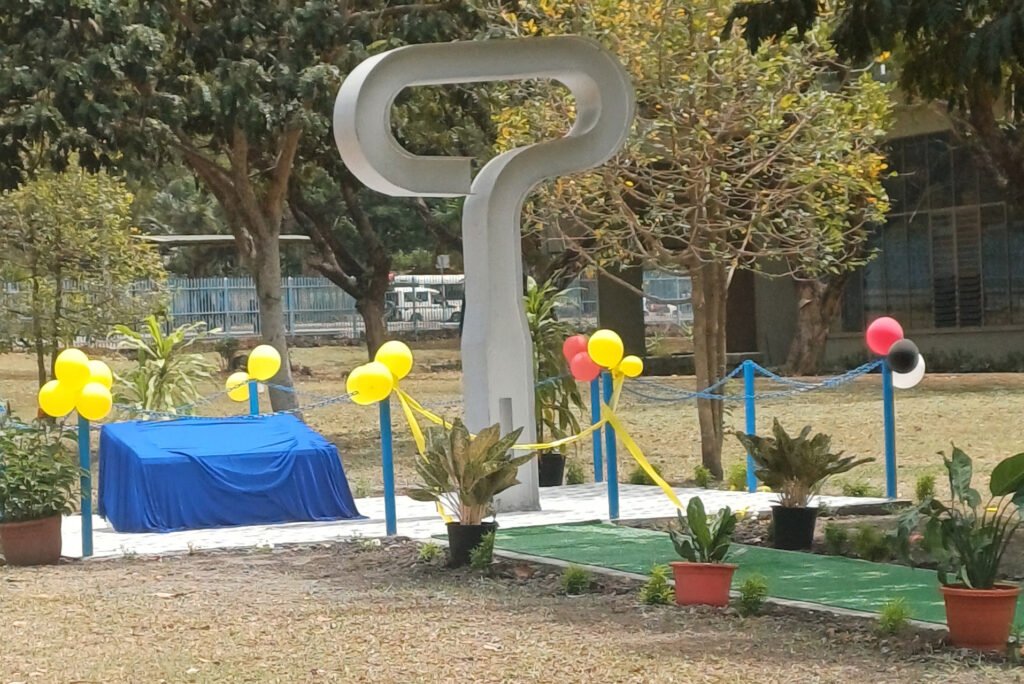
Located in Waigani, Port Moresby, Silag plays a direct role in shaping PNG’s administrative landscape by delivering targeted academic and vocational courses in certificates and diploma to government workers.
From its inception the institution offered courses at both sub-tertiary and tertiary levels, as many public service positions require persons with university degrees.
For years, the institution has trained many public servants who went on to become national leaders and public servants i the likes of late Grand Chief Sir Michael Somare and Sir Albert Makri Kiki who founded Bully Beef Club which would later become the party to lead PNG to independence.
Of the sub-tertiary courses, the Public Service Higher Certificate was the oldest. It provided training to matriculation level, the basic educational requirement for entry to college tertiary level courses.
At the tertiary level, the institution offered a number of Certificate and Diploma courses of up to two (2) years of full-time study. Short course programmes were also offered to meet specific training needs.
It acts as a vital resource for training officers. Silag continues to uphold the rich history and tradition of producing a cadre of strong ethical leaders in the public service today.
The institution is the only premier school of government that is mandated by law to design, develop, deliver and review all public sector training programmes to the 130,000-plus staff of the national public service.
Over the decades, the institution has evolved to meet the changing capacity and leadership needs of the country. In 1963 it was established as the Administrative College (Adcol) to train early national public servants.
Prior to the birth of the Adcol, the administrative training of national public servants in Papua New Guinea began about 1954, when the Public Service Institute was founded to provide in-service training for officers.
In 1993 the institution was renamed the PNG Institute of Public Administration (PNGIPA). In 2017, it was upgraded to the Pacific Institute of Leadership and Governance (Pilag) following infrastructure enhancements.
In November 2023, it was officially renamed the Somare Institute of Leadership and Governance (Silag) to honour Papua New Guinea’s founding father and late Grand Chief, Sir Michael Somare.
Currently Silag is undergoing a historic transformation and is on track to become Papua New Guinea’s first specialised public service university.
The institute continues to introduce rigorous new academic offerings, including the Government Degree in Public Administration, to equip public servants with ethical leadership and governance skills.
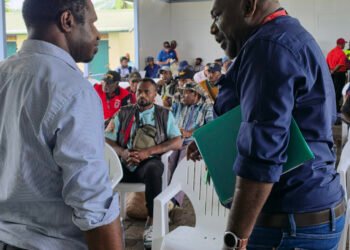
As part of the institution process to transition into university status next year, a validation workshop was held last week in Port Moresby to validate its newly developed Bachelor of Government in Public Finance and Accounting.
The workshop had brought together representatives from key government departments, agencies, education institutions and stakeholders to review and validate the curriculum content of the proposed three-year degree programme prior to its piloting and formal registration with the Department of Higher Education, Research, Science and Technology (DHERST).
Discussions focused on ensuring the curriculum reflects current professional standards, industry practices, and workforce capability requirements.

Developed in line with DHERST standards and compliance requirements, the Bachelor of Government in Public Finance and Accounting includes courses m accounting, taxation, auditing, business law, public sector finance management, public sector accounting and reporting, financial data analysis, management information systems, workplace safety, and diversity and cross-cutting issues.
Silag chief executive officer Michael Barobe, said the workshop marked another important milestone in its institutional transformation.
“Our overarching goal is to transform Silag into a fully-fledged public service university by 2027,” he said.
He said the development of undergraduate degree programmes was a critical enabler of this vision
Barobe said stakeholder collaboration remained essential to ensuring the curriculum reflects national priorities, workforce demands and the practical needs of the public sector.
“This programme would add significant value to the PNG national public service and support the Government’s commitment to effective, efficient, and equitable service delivery,” he added.
Under the Government’s Medium-Term Development Plan IV (2023-2027), Silag has been identified as one of four national institutions earmarked for conversion into a national university by 2027.
The institute previously developed the Bachelor of Government (Public Administration) in 2025 and continues to expand its academic offerings as part of its transition into a degree-granting institution.
Meanwhile, Barobe said Silag was on track to transition into a university by 2027, with two undergraduate degree programmes expected to commence in its first year.
Barobe said the institution was currently undergoing the final stages of meeting requirements set by the DHERST for university status. He said under the regulator’s requirements, institutions seeking university recognition must first develop at least two degree qualifications.
“As a regulator, DHERST requires institutions wanting to become a university to first develop two qualifications. That is why we are now working on the validation of a Bachelor in Public Administration and a Bachelor in Public Finance and Accounting.”
He said the two programmes would be the institute’s pioneer degree courses when the university begins operations in 2027.
“To begin our courses in 2027, we would go with the two courses, which are the degree in public administration and the degree in public finance and accounting.”
He added that more programmes would be developed in the future, building on Silag’s existing certificate and diploma courses.
“We already have courses in human resource management, local government administration, leadership and ICT, and these would all be developed based on the needs of the public service sector,” he said.
Barobe said while Silag’s primary focus was on training public servants, graduates would also have opportunities in the private sector.
“Our sector is mainly the public service but that does not mean others cannot come to Silag. Anyone who wants to be part of the public service can come and gain competency, and with that knowledge they can also join private sector institutions,” he said.
On infrastructure and staffing capacity, Barobe said the institution was well prepared to cater for the transition into a university.
“In terms of infrastructure, we already have classrooms available and we are refurbishing old facilities.
“In terms of staff, many of our lecturers have between 14 and 30 years of experience and hold master’s degrees, so we have the capacity to deliver undergraduate programmes,” he said.
Barobe said the institution planned to enroll around 40 students each for the two degree programmes in 2027 in line with DHERST requirements.
He said Silag has already passed 10 out of the 12 standards required to achieve university status and was now working on the remaining two standards.
“One standard is almost complete while the second is progressing well. We are also working on organisational and corporate structures, as well as the institution’s act and council arrangements.
“We are confident that by 2027 we will commence and produce our first graduates,” he said.
Many suggestions and recommendation were made during workshop and the Silag management has acknowledged and took note of them and would consider them as the institution progressed with the courses for next year.
Chief Secretary Ivan Pomaleu acknowledged the support and contribution from all stakeholders to the institution, noting that it was important and part of government’s plan to transform the public service in the country.
“It is fitting that this institution proudly carries the name of the founding father of our nation, the Grand Chief Sir Michael Somare,” Pomaleu said.
“Somare believed deeply in the values of leadership, humility, national unity, ethical governance, and service to our people.”
Pomeleu said the late Somare understood that the strength of any nation was determined not only by its resources, but by the quality of its leaders and institutions.
“Every programme delivered by Silag must reflect the principles that the late Somare stood for; he stood for integrity and leadership, respect for people and culture, national unity and inclusion, accountability in public office, and service over self,” Pomaleu said.