On July 2, 1942, in the middle of the war, the Jewish gymnastics teacher and physiotherapist Abraham Prins was on his way to a client in Nieuwendam. As a mixed marriage, he was exempt from deportation, but he had to wear a Star of David. Cycling through a park in Amsterdam North, he was suddenly stopped by the police: the park was forbidden to Jews. He received a fine and was allowed to go home, on the condition that he report to the police station in Amsterdam on July 12. Despite warnings and an offer to go into hiding, he complied – with fatal consequences.
Three days later, Prins found himself on a train from Westerbork to Auschwitz. Near Hoogezand (Groningen) he threw a postcard from the train. “Good luck, lady,” he wrote to his wife in Krommenie. “Sister would rather let herself drown than experience this. Thank goodness you are not here. Live well. See you soon. Good luck. Be kind to each other.” The note was found by a passerby along the track and posted. It was Prince’s last sign of life, he was probably murdered immediately upon arrival in Auschwitz.
Postcards and postcards
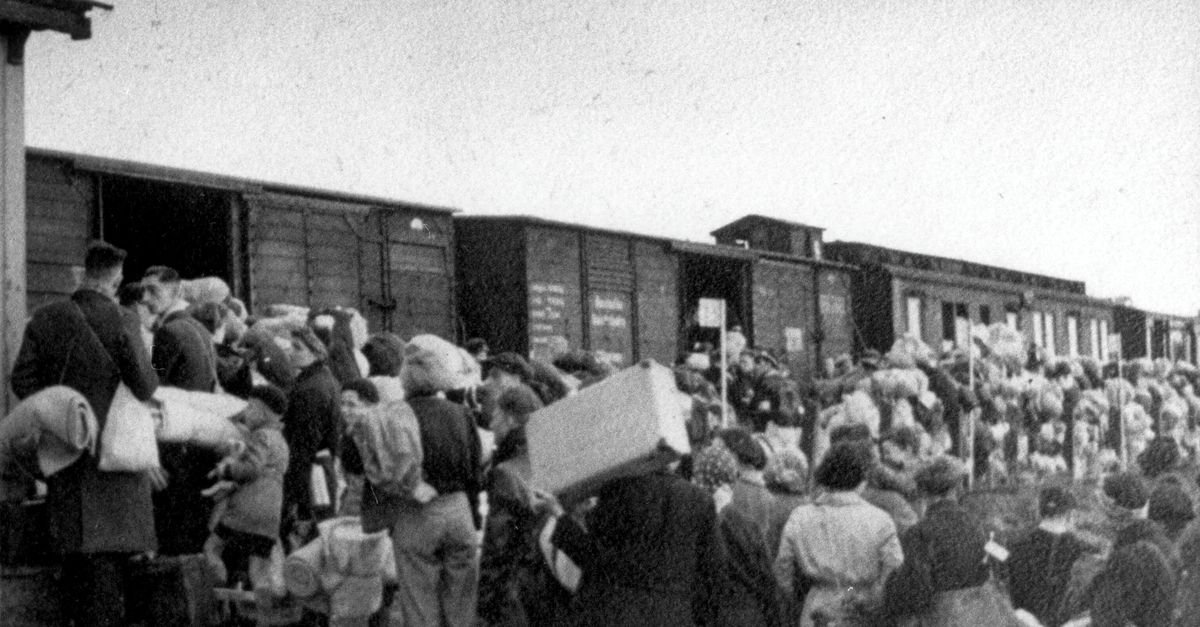
Prins was part of the first ‘Jeud’ntrain’, as the transports from Westerbork to Central and Eastern European extermination camps were called in Groningen dialect. 96 more would follow. And in all those transports, often freight trains packed with Jews, Sinti and Roma, people threw out notes just before the German border: a last message to those left behind, written on letter and postcards, but also on rolling papers, toilet paper or undefined scraps. There must have been around 15,000 in total, estimates journalist Lucas Ligtenberg, who, among other things, NRC works. Many were lost, but he managed to collect about three hundred and described them in his book Last greetings from here. They are all moving notes, especially because we now know that the vast majority of the senders only had a few days left to live.
Ligtenberg looks for similarities between the notes. The term that is undoubtedly the most common is ‘heavy’. Letter writers let the people back home know that they were being careful on the train, and they called for them to adopt the same attitude. “We are strong and mother must be too.” They also often wrote that they were in good spirits. They hoped to see acquaintances or relatives in the camps and to return to the Netherlands in the foreseeable future. Some even made it look like they were on some kind of school trip. “Nice company, plenty of food, so the mood was great,” wrote Herman Wertheim from the train to Auschwitz. Three months later he was dead.
:format(webp)/s3/static.nrc.nl/wp-content/uploads/2026/05/27120230/280526BOE_2033583711_1.jpg)
A note thrown from a train heading east during the war, with the words ‘I’m doing well’.
Image from discussed book.
According to Ligtenberg, postcard writers are a unique category of eyewitnesses to the war because, unlike diarists, they had no opportunity for reflection. They wrote from the emotion of the moment, and that is precisely why their messages could be important for one of the major discussions that has raged among war historians in recent years: what was known in the Netherlands during the war about the fate of the Jews deported to ‘the east’? Ligtenberg is certain: according to him, the notes show that nothing was known about the mass destruction, and that the deportees had virtually no accurate information about their destination.
‘Day Forever’
Indeed, there is much evidence that the deportees had no certainty that most would be gassed immediately upon arrival. But the notes cannot be interpreted unilaterally. Because unlike diaries, the messages were intended to be read by others. Many notes served to reassure those left behind – perhaps against their better judgment.
In addition, there are numerous examples of despair and hopelessness that are echoed in the notes. “Hannie, we will never see each other again,” Elly Lobe told her friend. And PU Bakker’s mother wrote to her son: “Goodbye forever.” It is precisely these types of announcements that show that a significant number of deportees were aware that they were heading to their death on the train.
Ligtenberg has meticulously researched the personal details and fate of the letter writers. That is commendable, because it removes them from the mist of history. The disadvantage is that this has given his book a somewhat summary character.
The last chapter has a different design, and is immediately the most impressive. In it, Ligtenberg talks to Rudie Cortissos (87) and Yvonne de Haas (83), both of whom never knew their mothers, but do have their farewell notes thrown from the train. Both speak candidly about their parents’ backgrounds and war stories. For example, De Haas tells how her mother sacrificed herself during the war for the well-being of her daughter. In the farewell note to her husband she wrote from the train to Auschwitz: “We do everything for one goal, right boy?” It is perfectly clear to De Haas that that was her own goal. And so the note, which is of inestimable value to the daughter, takes on a meaningful, but intensely sad connotation for the reader.