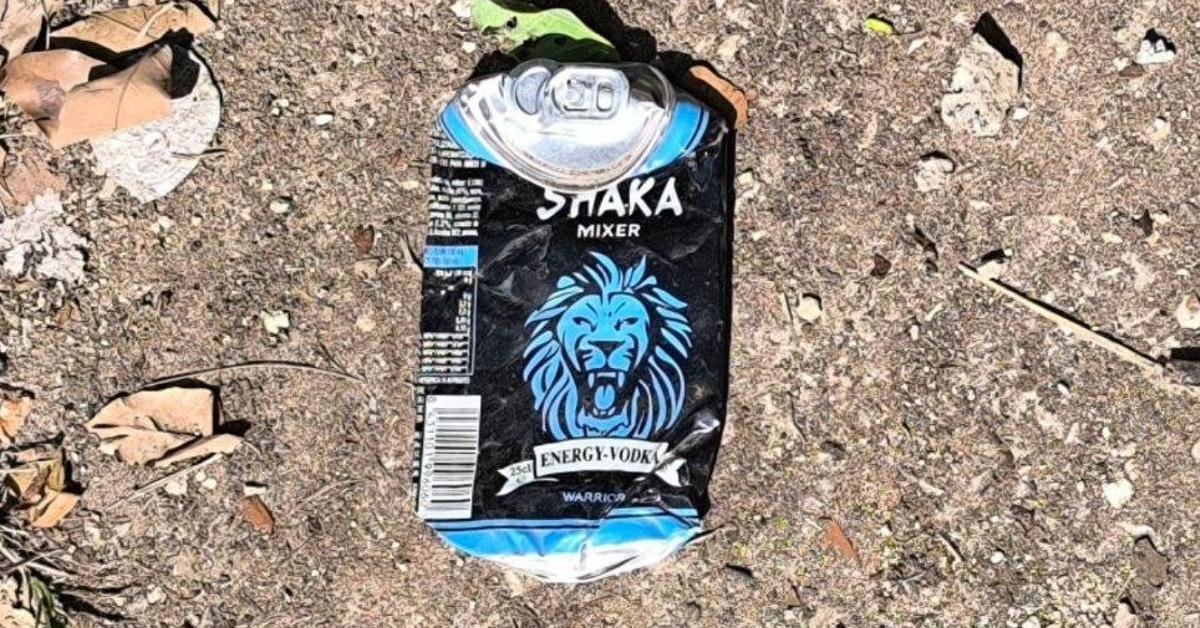
Havana/The Ministry of Public Health has ordered the suspension of the sale of Shaka and 14 other brands of alcoholic energy drinks throughout Cuba, given the risks of poisoning posed by the combination of vodka with stimulants such as caffeine and taurine. An internal communication dated October 20, to which he had access 14ymedioestablishes that the products must be retained for subsequent confiscation and destruction, although their owners may re-export them.
The document, signed by Dr. Mayra Martí Pérez, head of the Department of Food Hygiene and Nutrition, is addressed to state health inspectors. The visits will be carried out in coordination with the Commerce directorates and local governments, following a uniform procedure “in all provinces.”
“It is decided to proceed to the stoppage of the sale and the retention of the products,” states the instruction, protected by Ministerial Resolution 215. The inspections will cover sales and consumption establishments, as well as warehouses of importing companies.
“It is decided to proceed to the stoppage of the sale and the retention of the products,” states the instruction, protected by Ministerial Resolution 215.
An annex also obtained by this newspaper identifies the 15 drinks detected in Cuban commerce: Shaka Mixer, Pardus, Havik, Eko Mix, Ener Drink Evolution, Duclos, Imperator, Rocafer, Royal Blue, Black Fide, Cachaca, 5 SHOT, Chacal, Vod-K and Tigris Alco. The list warns that there may be other brands that contain alcohol.
The retained goods will initially remain in the custody of their owners, who will not be able to sell, consume or transfer them without health authorization. “The type of product that was retained and its quantities will be detailed in the inspection procedure,” the document states. A commission of representatives from Public Health, Internal Trade, State Inspection and the National Tax Administration Office will certify its confiscation and destruction. The inspectors must communicate every Thursday the amounts withheld and the businesses visited.
The order arrives after 14ymedio warned in September that Shaka, manufactured by the Spanish company Venerable Capital SL, could not be marketed in Spain due to its composition. With 18% alcohol and B vitamins, the drink does not comply with European Regulation 1925/2006, which prohibits adding vitamins to products with an alcohol content higher than 1.2%.
The order comes after ’14ymedio’ warned in September that Shaka, manufactured by the Spanish company Venerable Capital SL, could not be marketed in Spain due to its composition.
“We are the producers and distributors, but we do not sell in Spain, we only send product abroad,” a company employee confirmed then. In Cuba, however, Shaka circulated freely and had achieved great popularity among young people.
The ban, however, is still not enforced in several parts of Havana. This newspaper confirmed that a man bought a can of Shaka for 900 pesos on Amenidad Street, in the municipality of El Cerro, without finding any impediment. Also on Ayestarán Street, two establishments continued selling Shaka for 950 pesos. In a tour of four establishments in Regla and Guanabacoa, this newspaper found that three were still selling the drink.

/ 14ymedio
In Regla, a merchant had five cans that he offered for 850 pesos and, according to what he told an acquaintance, he intended to hide them under the counter to recover his investment. In La Cuevita, 14ymedio found abundant stocks of Shaka at just over 600 pesos.
In other businesses visited by this newspaper, the clerks claimed to be unaware of the new ban. Only two or three establishments did not have Shaka for sale.
The measure began to be applied in Mayabeque. This Friday, Milay Vega, a journalist from Radio Mayabeque, released information from the Municipal Administration Council of San Nicolás de Bari about the creation of a group of inspectors to visit private businesses and warehouses. The publication warns of fines, confiscations and possible criminal consequences for those who continue selling the drinks after 24 hours of notification.
Also on Friday, similar actions were made known in Güines, through a Facebook post by Indi Herrera, a local communicator who disseminated the official measures and reported controls in commercial establishments with the participation of inspectors and representatives of Public Health. The report identifies the municipal vice mayor Damaris Gómez and the director of Hygiene and Epidemiology, Lisandra Estanquero Ortega, among the officials who explained the measures.
In Santa Marta, Matanzas, communicator Christian Arboláez reported that Public Health personnel were removing Shaka and nitro salt from the kiosks, although he clarified that these were two actions for different reasons. Maribel Prieto appreciated the precision. Another user, Jessica Caridad, assured that in Matanzas the drink had also been ordered to be removed and attributed the decision to the health problems of those who consume several cans.
“First you have to tell me that it cannot be sold and, if I fail to do so, you will confiscate it,” criticizes a Cuban on social networks.
The announced seizures sparked criticism among the publication’s readers. User Javier Corzo Chaviano questioned the confiscation of products for which sellers had already paid: “First you have to tell me that it cannot be sold and, if I fail to do so, you will confiscate it.”
Miguel A. Fernández questioned customs controls: “Where they should not let him through is Customs, but it is okay for them to confiscate him.” He also warned that some merchants hide the cans and, “in order not to lose, they sell it secretly and at a higher price.” He also proposed investigating where the drink was purchased when an intoxicated person arrives at the hospital, “closing the business and fining” the seller.
The health warnings about Shaka They started months before. In August, five young people between 18 and 22 years old were treated for poisoning at the Camilo Cienfuegos Provincial Hospital in Sancti Spíritus. A girl who had consumed two cans arrived unconscious and required mechanical ventilation.
Its composition also presents a legal problem in the European Union: Regulation 1925/2006 prohibits adding vitamins to drinks that exceed 1.2% alcohol.