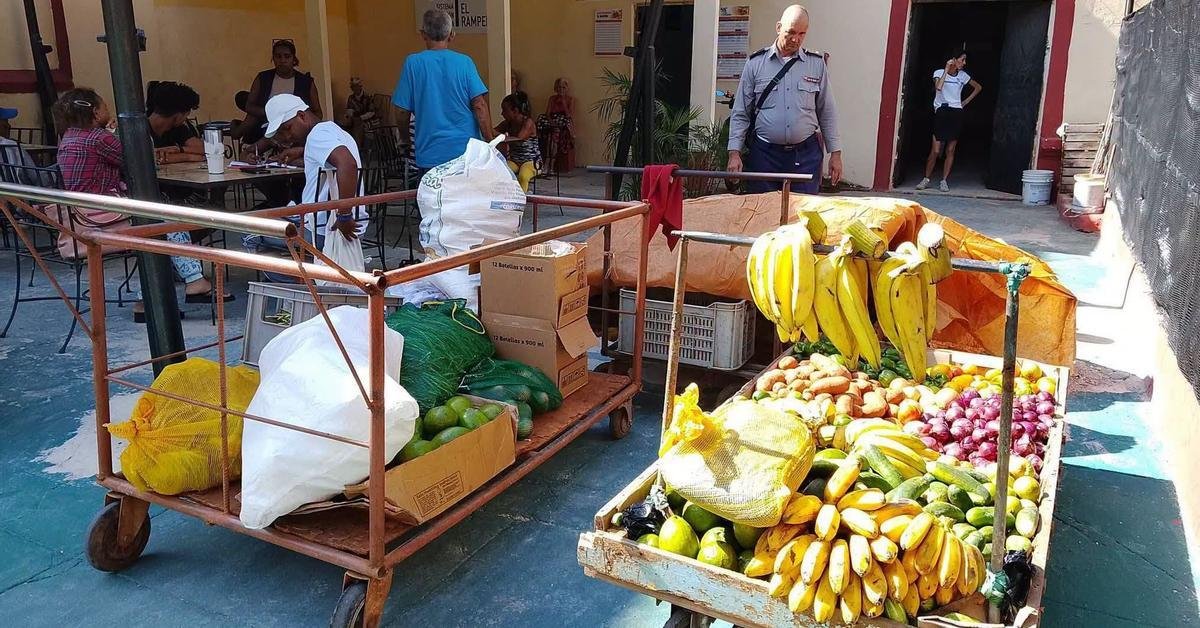
Havana/The Police and municipal inspectors returned this Friday to the surroundings of the 17th and K market, in El Vedado, Havana, where they seized food, hygiene products and digital weights from vendors accused of committing illegalities. They were not satisfied with just taking the merchandise: even the wheelbarrows in which the merchants transported their products ended up confiscated. The operation, headed by the president of the Rampa Popular Council, Pedro Lizardo Garcés Escalona, ended with eight fines for a total of 103,800 pesos.
According to he boasted on Facebook the Administration Council of Plaza de la Revolución, the police –self-titled “heroes in blue” on their official networks –, they inspected nine points of sale, of which only two were able to demonstrate their legality. The deployment also had its dose of persecution: four merchants fled when they saw the agents approaching, while two others were captured for selling products considered illegal, despite the fact that “they were already warned and circulated.”

/ Plaza de la Revolución Administration Council/ Facebook
The forklifts had already been targeted another operation in December 2025when the Police removed another four and imposed ten fines for 173,000 pesos. In March 2024, an inspection also headed by Garcés ended with the arrest of the market administrator after the disappearance of 1,293 pounds of potatoes destined for 431 consumers was discovered.
The inventory of seizures this time included, according to the official note, 16 bottles of 900 milliliter oil, 23 packages of detergent, 19 laundry soaps, 13 bath soaps, coffee, powdered soft drinks and agricultural products. Among the latter are almost 46 pounds of potatoes, 52 of red onion, 35.5 of lemon and 59 avocados. “During the popular control, several digital weights were also detected, turned on and marked in units less than the pound, which showed the intention to deceive the consumer,” the publication states.
According to the official version, the merchandise was destined for the Arturo Montory Céspedes and Orlando Pantoja Tamayo schools, as well as the El Rampeño Family Care System. They did not, however, publish documentary evidence to verify the deliveries.
According to the official version, the merchandise was destined for the Arturo Montory Céspedes and Orlando Pantoja Tamayo schools, and the El Rampeño Family Care System.
“The problem is now in the inventory of products delivered to these institutions, their monitoring and control, their final destination,” wrote user Rolando Carpio Crespo in the comments of the official publication. “I know what I’m talking about,” he added, convinced that the lack of control in these centers dates back years.
There is no shortage of precedents to fuel doubts. In September 2025, a state-owned company in Las Tunas lost 250 kilograms of meat productsincluding about 50 kilos of beef seized by the Police. Its director admitted that the confiscations spent hours without refrigeration before reaching the entity. The food, unusable after a 26-hour blackout, ended up incinerated.
But what users questioned most was the police deployment against those who sell food while concern about violent crimes grows. “And when will the thieves and robbers stop?” asked José González. Julio César demanded that drug trafficking and robberies be prosecuted instead of preventing the sale of food, because “the Government does not have food for the people.”
The figures from the Cuban Citizen Audit Observatory support this concern about insecurity. In 2025, the organization documented 2,833 crimes115% more than in 2024, including 1,536 thefts. For its part, Cubalex recorded 52 homicides in August this year, a significant increase from the 37 documented in July.
In Havana, during another offensive against the forklift driversAt the end of 2015, the confiscated fruits, meats and vegetables were subsequently sold in state agricultural markets and points of sale of the Youth Labor Army.
“Those things are not stolen. They are bought from suppliers who sell them very expensively,” commented one user.
Other readers questioned the official arguments. “Those things are not stolen. They are bought from suppliers who sell them for a very high price,” defended Yusmaris Fernández Lamoth. “We are killing each other,” he lamented. Ana Rosa Torres asked to act against the wholesalers to get better prices, because “they are all hitting us with the belt and also with the buckle.”
Daniel García Valdés went further by accusing the inspectors of keeping part of the confiscated products: “Add to that what the inspectors took,” he wrote. The complaint agrees with that of an MSME owner from Reglawho in February claimed that officials demanded money or goods in exchange for reducing fines. “Two or even three inspectors come together, and you have to give each one their share,” he said.
“And why don’t they also go to Comunales to see why the garbage is not collected every day?” questioned another user.
“And why don’t they also go to Comunales to see why the garbage is not collected every day?” asked Reinier Álvarez, who extended his criticism to the Health and Transportation services. The question has a close audience: Garcés, promoter of the El Rampeño project, which was to alleviate the accumulation of waste in El Vedado with 30 electric tricycles and a solar charging station.
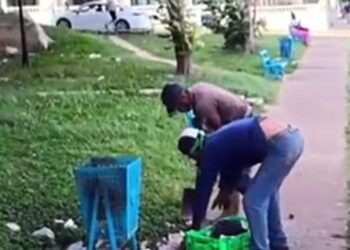
The official himself recognized in August that he had not been able to fulfill his promise. This same Friday, a checking 14ymedio showed two project workers collecting waste with their hands in the park at 19th and M, without brooms or dustpans. The fleet had grown to about 15 tricycles, still half of those advertised.