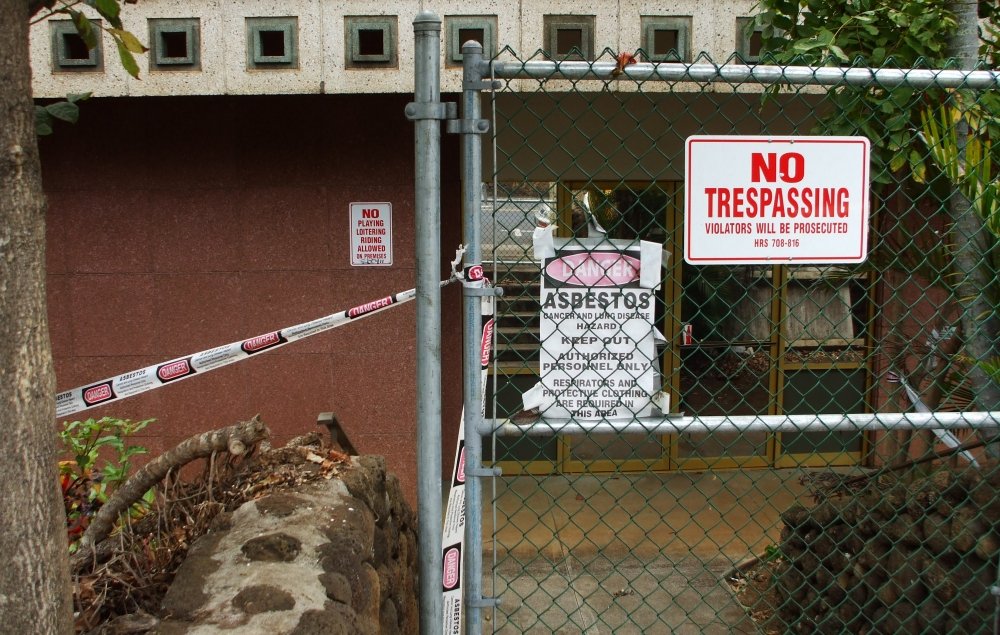

Asbestos-contaminated crushed stone has been covered with a layer of gravel on several streets in the Olad district of Szombathely (western Hungary), in the residential neighborhood known locally as the “Olad Plateau.” The presence of the harmful substance was confirmed by laboratory test results released on Monday, which showed concentrations in the samples that exceeded health limits by several times, the Vas County Government Office announced, adding that it had filed a police report for environmental damage.
At an extraordinary press conference held on Monday regarding the matter, Mayor András Nemény (Long Live Szombathely! Association) stated:
“There is a health emergency whose resolution exceeds the financial capabilities of the local government,” thus the mayor turned to outgoing Minister of Public Administration and Regional Development Tibor Navracsics, consulted with County Governor Zoltán Vámos, and also informed Róbert Rápli, Szombathely’s elected Tisza Party member of the National Assembly, all of whom promised assistance to protect the health of the more than one thousand people living in the area.
The mayor stated that the asbestos removal would be carried out at the expense of the state’s force majeure fund, and the affected streets—whose combined length exceeds 12 kilometers—would be paved with a solid surface; but depending on the results of future investigations, it may also be necessary to remove and transport the layer of contaminated gravel covering the area, which would significantly increase costs.
He added that, if necessary, as a temporary solution, the municipality would raise the necessary funds at its own expense by taking out an overdraft within the year to resolve the situation as soon as possible.
István Orbán, Director General of the Vas County Government Office, stated:
According to press reports, four mines in Burgenland, Austria, were previously closed due to high asbestos content; they suspect the contaminated crushed stone may have come from one of these, but they have not yet received a response to their inquiries from the Austrian side, hence they do not know where else the contaminated material might have ended up.
He noted that in Bozsok, near the Austrian border, asbestos contamination was also detected in a sample taken during the construction of a parking lot; upon noticing this, a resident of Olad had the crushed stone spread on the street in front of his house tested.
Since the highly hazardous substance detected in the samples was several times the permissible limit, a police report was filed for environmental damage. Mayor András Nemény indicated that he also plans to file a similar report.
Endre Jelinek, president of the Szombathely-Olad Plateau Water Utility Association, explained that the gravel layer was spread on the road back in 2019; along with the purchased material, they received a certificate and invoice stating that it fully complied with regulations, so they did not suspect it could be hazardous.
The gravel layer was intended as a road base, which they later planned to pave with asphalt; however, since there are currently several construction projects underway in the area, heavy vehicles would damage the asphalt, and they do not yet have the funds to construct the pavement.
Ildikó Király, Chief Medical Officer of Vas County, stated at the press conference:
Asbestos, consisting of microscopic, hair-like fibers, can cause illness if someone regularly inhales it, or lives in an environment where this otherwise natural mineral occurs in high concentrations and is released into the air.
An example of this is a street where vehicle tires grind up the material and stir up dust, which can then be carried into homes on shoes, clothing, or the fur of pets. This is why it is important to keep the environment clean, to use wet cleaning methods, and to avoid ventilation during windy, dry weather.
Via MTI; Featured image: Wikimedia Commons