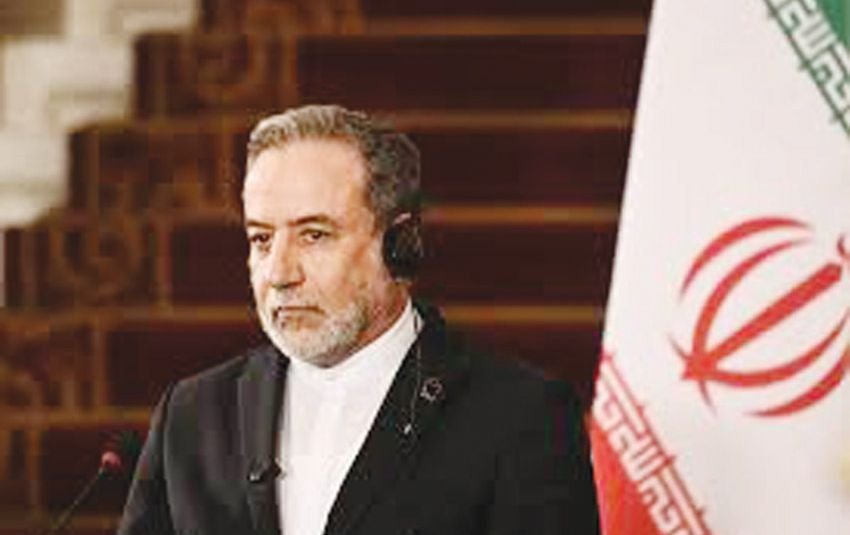
(Agencies): Iran presented a new proposal to negotiate with the United States via Pakistan, according to what the official media in Tehran reported yesterday, in light of the stagnation of discussions between the two parties following a single round held in April, which did not produce an agreement to put a final end to the war in the Middle East.
The official Iranian news agency IRNA reported, “The Islamic Republic of Iran presented its latest proposals for negotiations to Pakistan, as the mediator in the discussions with the United States, on Thursday night,” without additional details. !
In parallel, Iranian Foreign Minister Abbas Araqchi yesterday held a series of contacts with his counterparts in Saudi Arabia, Qatar, Turkey, Iraq and Azerbaijan, and discussed with them “the Islamic Republic’s initiatives to end the war,” according to a ministry statement.
In addition, a European diplomatic source reported that European Union foreign policy chief Kaya Kallas discussed with Araqchi in a phone call efforts to reopen Hormuz “and long-term security arrangements.” The European official also communicated with Gulf counterparts, according to the same source.
On Wednesday, US President Donald Trump urged Iran to be sensible and expedite the conclusion of an agreement to end the war, with US officials announcing that Washington is considering imposing a “months-long” naval blockade on Iran.
This was accompanied by press reports about the US administration’s rejection of an Iranian proposal to reopen the Strait of Hormuz and lift the US blockade on the ports, with the two countries postponing to a later stage the discussion of other controversial points, led by the nuclear file.
In parallel with the stagnation in negotiations, the two parties continued to raise the ceiling of their positions, the latest of which was yesterday’s confirmation by the head of the Iranian judiciary, Gholam Hossein Mohseni Ejei, that Tehran is open to discussion but refuses to “dictate” policies to it under threat.
Talk about a new Iranian proposal comes with the approaching end of the sixty-day deadline after which Trump must theoretically request authorization from Congress to continue the war, but the Republican administration has indicated that it will ignore this, while the Democrats find themselves unable to oblige him to it.
Under the US Constitution, Congress alone has the authority to declare war, but a law issued in 1973 gave the president the authority to launch limited military action in emergency situations, provided that he obtains delegation of legislative powers if the operation continues for more than sixty days.
This deadline expired on Friday, but Defense Minister Pete Hegseth said on Thursday that the count of days had been suspended due to the truce.
A senior official in the US administration told Agence France-Presse, “The combat operations that began on Saturday, the twenty-eighth of February, have ended, and no exchange of fire has been recorded between the American armed forces and Iran since Tuesday night, the seventh of April.”
The maritime tension in the Gulf and the closure of the Strait of Hormuz, through which a fifth of global oil and liquefied gas production usually passes, sparked a significant rise in the prices of fuel and energy resources in the world.
With no horizon for a solution, the repercussions of the closure of Hormuz on the global economy are increasing daily.
The Director-General of the International Energy Agency, Fatih Birol, said Thursday that the world is facing the most serious energy crisis in its history, at a time when United Nations Secretary-General Antonio Guterres warned that the closure of Hormuz would lead to “suffocation of the global economy.”