3,700-year-old royal seals rewrite the history of the Dilmun civilization
It was a cultural and commercial link between Mesopotamia, the Arabian Gulf, and the ancient world
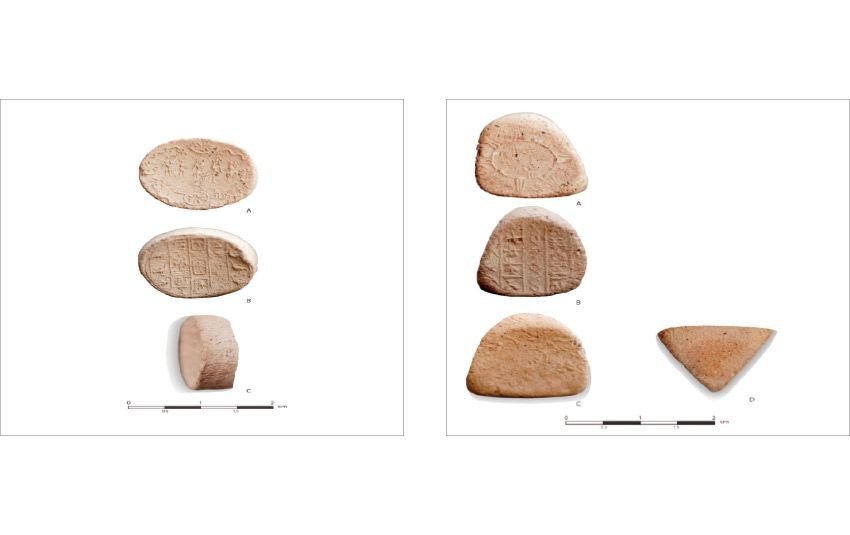
A scientific study published by the Near East Journal revealed new data related to the administrative and political structure of the Dilmun civilization, based on the analysis of three sealed clay pieces (TokensIt was found during excavations at archaeological sites in the Kingdom of Bahrain. The Bahrain Authority for Culture and Antiquities carried out excavations at these sites in cooperation with a group of international experts, led by the specialist in the Dilmun civilization, Dr. Stephen Terp Laursen, and these efforts resulted in the discovery of a distinctive antiquity in the Arabian Gulf region.
On this occasion, Sheikh Khalifa bin Ahmed Al Khalifa, Chairman of the Bahrain Authority for Culture and Antiquities, stated that the results of this study reaffirm the exceptional position that Bahrain occupies as the home of the Dilmun civilization and one of the most prominent archaeological sites in the Arabian Gulf region. It also highlights that Bahraini archaeological sites still have the ability to provide new discoveries that contribute to deepening our understanding of the region’s history. The study also shows the importance of preserving archaeological heritage, supporting scientific research, and enhancing cooperation between Bahraini institutions and international missions and universities. Such discoveries allow rewriting new chapters in the history of Dilmun, the civilization that formed a cultural and commercial link between Mesopotamia, the Arabian Gulf, and the ancient world.
This study contributes to enhancing the contemporary understanding of the history of Dilmun and consolidating its image as a civilization with central sovereignty and an independent political and administrative system and an important role in the trade link between the civilization of Indus, Mesopotamia and Magan, as the discovered pieces provide evidence of the existence of a kingdom with central sovereignty and an independent administrative system, and the finding of impressions of the king’s seal himself in two different sites, “Al-Muqsha’” and “Qal’at Al-Bahrain”, proved the existence of a royal administrative body that supervised organizational activities in different parts of the island during the past six months. The first of the second millennium BC (1700-1650 BC).
Regarding the scientific value of this discovery, Dr. Stephen Terp Laursen, an expert on the Dilmun civilization at the Al Ain Museum, said: “Holding an object stamped with the personal seal of Yagli-El, which was most likely used in his youth as a crown prince, is something that provides a direct connection with the mechanisms of power in the Bronze Age. “These inscriptions reveal a ruler whose authority was based on particular religious patronage, and whose administrative influence extended across the political and ritual landscape of Bahrain.”
The research focused on analyzing the royal titles mentioned in the seals, where the name of the king “Yagli-il” appeared (Yagli–el) coupled with the title “Servant of the Gods Banipa.” This discovery is important when compared to other inscriptions previously found in the royal hills of Ali, in which he was called “the servant of the god Anzac.” Researchers believe that this difference indicates different periods of time and positions that the king held during his life. Perhaps the title associated with the gods, “Banipa,” dates back to the period when he assumed the crown prince or a high religious position before his accession to the throne, which provides a chronology of a Dilmun royal figure.
The research also reread the geographical distribution of the Dilmun religion, as it proved that the worship of the goddess “Baniba” (the wife of the god Anzac) was a fundamental pillar in the capital, “Qal’at al-Bahrain” and in ritual sites such as “Al-Muqsha”, and was not limited to Failaka Island as was believed in previous studies. This interconnectedness indicates the existence of a cohesive religious and political unity linking the kingdom’s parties.
From an administrative standpoint, the study revealed a “multiple authentication” system in resource management, where clay pieces bear impressions of various seals, which suggests that they were used as authorization documents or permits allowing their holders to enter certain areas or receive rations from royal and temple warehouses. This level of bureaucratic organization reflects the maturity of the Dilmun administrative system and its ability to control the movement of resources and people through the use of cuneiform writing and seals.
It is noteworthy that this research intersects with the increasing historical importance of Bahrain’s antiquities, especially after the inclusion of the inscriptions of King Yagli-El in the UNESCO “Memory of the World” register in 2025. These discovered clay pieces remain material evidence that supports scientific hypotheses about the nature of governance and administration in one of the most prominent maritime civilizations in ancient history.