Among the people of Guayaquil there is expectation, divided opinions and specific requests derived from the proposed ordinance that establishes a differentiated charging system in the urban transportation of the Buenos Aires city.
The draft ordinance that regulates the rates of urban public transportation in the city of Guayaquil is being socialized, a stage prior to the arrival of the regulatory body to the Cantonal Council for debate and subsequent approval.
The approach contemplates the general, express, executive and preferential rates.
The values are between $0.30 and $0.50depending on compliance with established requirements such as air conditioning, Wi-Fi service, door locking system, uniformed drivers, current vehicle technical inspection and electronic collection system.
With this proposal, which proposes modifying the current rate of $0.30the issue returns to the center of the debate, although citizens have concerns about the quality of the current service and the state of the units that circulate in the Buenos Aires city.
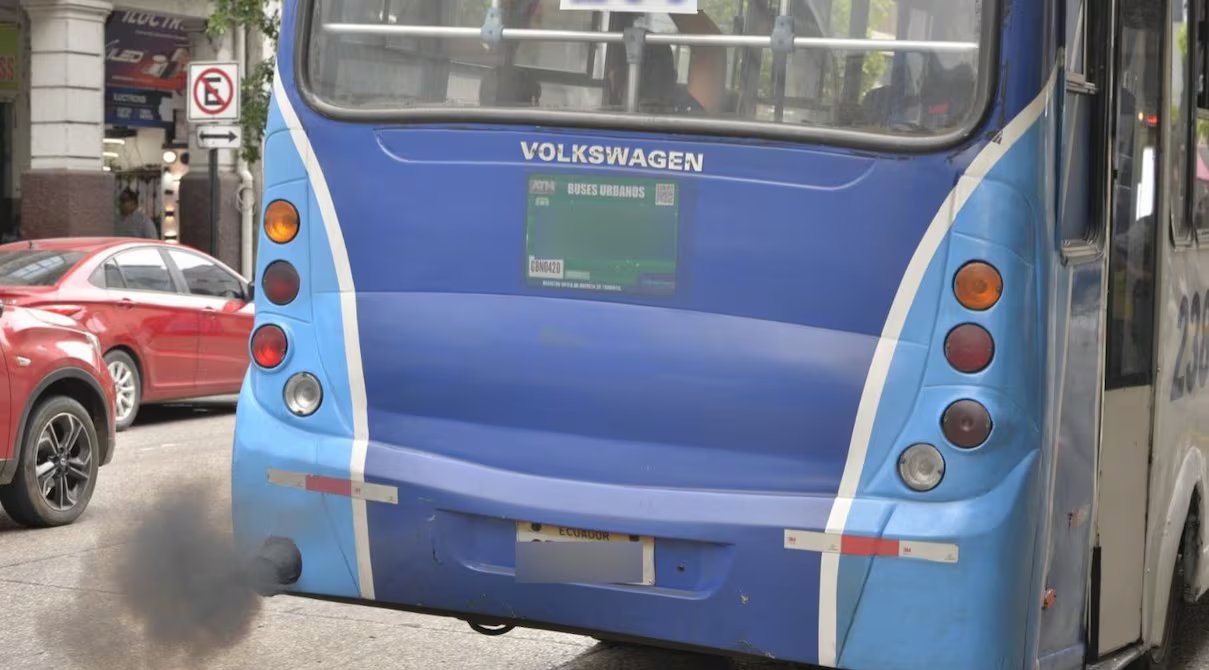
“We cannot pay more if the treatment will continue to be bad, the units are in poor condition, rusty or emitting a lot of smoke,” he said. Belen Penaa user.

She regularly moves on a line that runs between the north and the center. The buses on this route emanate black smoke daily, according to Peña.
Mariuxi Pilayanother user, explained that the most visible thing among the transport units is the excess of polluting smoke after starting the journey.
“I think more review is needed. They want to raise the fare, but they must solve what makes us sick, because that smoke makes us cough or burn our eyes,” he commented.
The problem of black smoke in buses
The research teacher at the Escuela Superior Politécnica del Litoral (Espol) Gladys Rincon explained that black smoke is the product of incomplete combustion of diesel, generally associated with mechanical failures or poor maintenance.
Among the pollutants emitted by vehicles are carbon monoxide (CO), sulfur dioxide (SO₂), nitrogen oxides (NOx) and carbon dioxide (CO₂). However, the particulate matter It is considered the most relevant indicator to measure air quality worldwide.
“They are extremely small particles, much finer than a human hair and are the most dangerous for health”, warned the researcher.

TMJ posture
The general manager of the ATM, Edgar Luperarecognized that this is a persistent problem, linked mainly to the lack of vehicle technical inspection and maintenance in a large part of the fleet.
For this reason, he added, it becomes necessary to give way to the change of rates, as established in the draft ordinance that is being socialized.
According to official figures, only 30% of urban buses comply with the technical inspection in Guayaquil, while 20% carry it out in other cantons – where, he assured, rigorous controls are not always applied – and the remaining 50% does not have this requirement.
“This directly influences compliance with regulations and problems such as the issuance of black smoke“Lupera explained.
The official attributed part of this situation to a legal change approved in August 2021 which allows vehicle technical inspection to be carried out anywhere in the country. This, he argued, has weakened local controls over the actual status of the units.
Added to this is an economic factor: the rate, which has not been updated in almost a decade. “In order to have maintenance, resources are needed. And those resources are linked to the rate,” he indicated.
The new ordinance on the way
To solve the issue of pollution from bus smoke, among other new developments, the ATM is promoting the draft ordinance.
The proposal proposes requiring the vehicle technical inspection as a mandatory condition to operate and access an eventual rate adjustment.
“The objective is to improve the quality of service and reinforce road safety”Lupera noted.
He added that, once the regulations are approved, the units must immediately comply with this requirement.
The plan contemplates that only buses that meet all standards, not just the technical review, can benefit from an initial rate of $0.40with the possibility of progressive increases according to additional improvements in the service.
Currently, nearly 2,000 urban transport units mobilize more than 1.5 million daily passengers in the city.
The vehicle technical inspection includes gas measurements through specialized equipment, Lupera explained. If a unit exceeds the permitted limits, it cannot operate until the faults are corrected.
In parallel, the ATM seeks to promote the modernization of the fleet, including incentives for the incorporation of electric buses.
Currently, one of the few experiences along this line is already operating in the city—the line 89 (from Saucinc)—, while other cooperatives have shown interest in joining.
According to Lupera, the new tariff scheme would also include the electronic payment control and route monitoringwhich would improve system management and facilitate access to financing to renew units.
“Public transportation must be synonymous with progress. What we are looking for is a sustainable system that benefits both the user and the carrier,” the official concluded.
Citizens, for their part, indicated that they remain expectant of the commitments that the transporters will assume. “If it touches pay morethen there must also be sacrifice on the side of the bus owners,” the users pointed out. (YO)