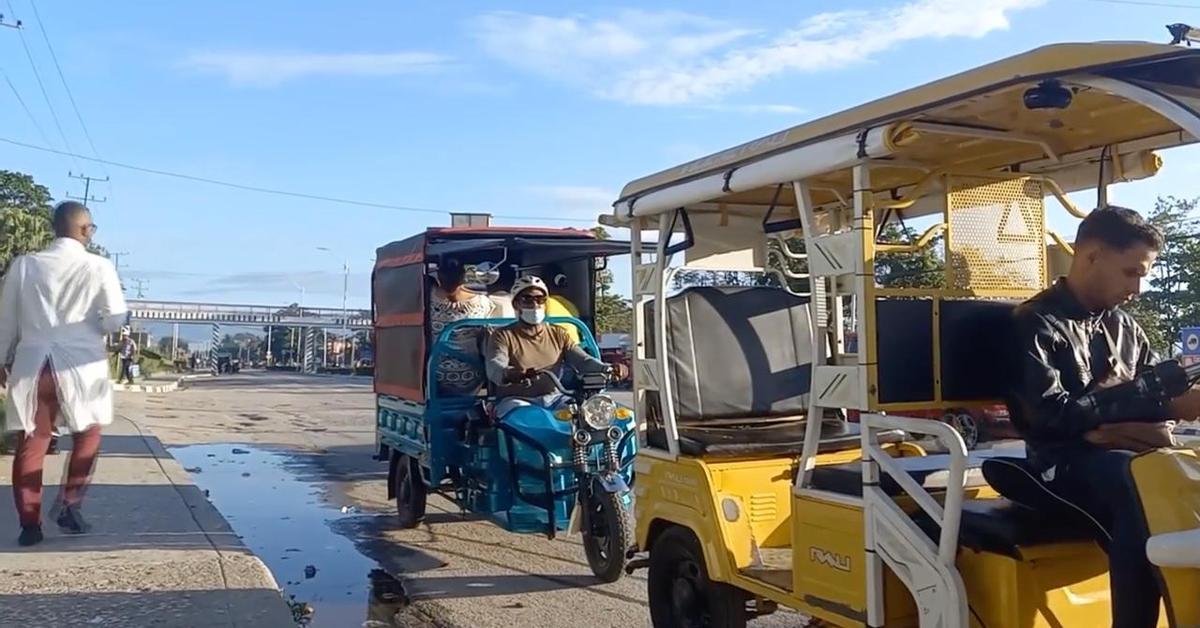
Guantanamo/On the outskirts of the Guantánamo bus terminal, where previously the traveler looked for the bus route that would bring him closer to his municipality, now he is waiting for an electric tricycle, a private car, a motorcycle or, if the destination and the distance allow it, even a horse-drawn carriage. There are passengers who ask questions, drivers who negotiate and small vehicles where every seat counts.
“The price of a liter of gasoline here is above 2,500 pesos and diesel is 1,900, so that drives up all the prices of these cars,” he explains to 14ymedio the driver of an old Ford who makes the route from the station to other towns in the province. “People depend on this because state buses no longer leave from here to get to those little towns.”
The transportation crisis, serious within the city of Guantánamo, takes on another dimension when looking towards the municipalities and rural communities. There it is not just about arriving late to work or walking several stops: the lack of vehicles conditions attendance at school, a doctor’s appointment and even the possibility of removing a crop from the field before it spoils.
Juan Carlos, 59 years old, has been doing the math for days. He has a daughter admitted to a provincial capital hospital and needs to visit her daily. “A tricycle costs you 500 or 600 pesos,” he laments. In addition to seeing her, you must bring her food. “Every day you have to bring him food, so it’s 500 pesos there and 500 pesos here, no pocket can handle that.”
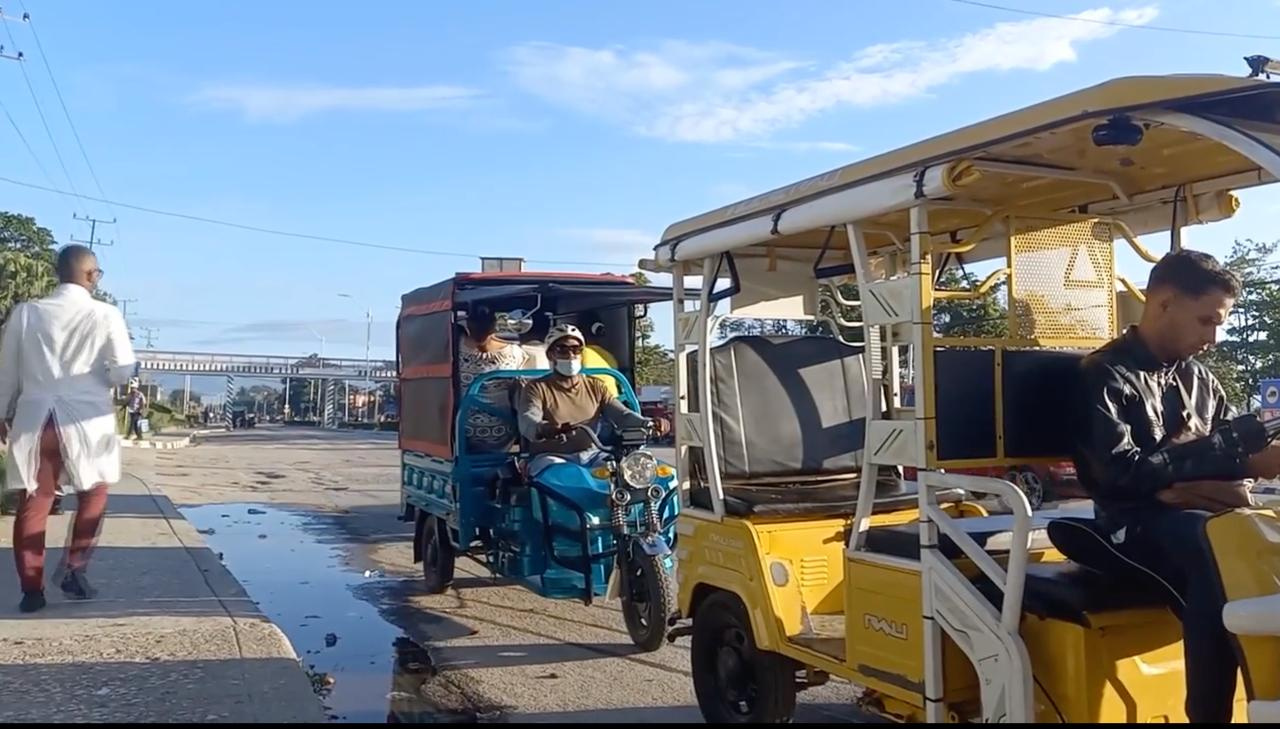
On the streets of Guantanamo, electric tricycles have become an essential mode of transportation. There are blue ones, black ones, with awnings to protect passengers from the sun and adaptations made on the fly. Small groups form around them waiting for a seat or asking the price before boarding. The scene is repeated while the state bus routes have practically disappeared and mobility is left in the hands of private transporters.
For those who live outside the city, the problem begins much earlier. Ramona resides in Cuneira, a rural community in the municipality of El Salvador located 23 kilometers from Guantánamo, and must travel regularly to the provincial capital to receive treatment related to her diabetes. Each move has become an operation that requires money, time and luck.
“I have a wheelbarrow with a mare and I pick up passengers, but I also transport food and fruit to Guantanamo, where my brother has a sales cart.”
“Before we had the train but now we don’t even have that, we depend all the time on tricycles,” he says. For students in these areas, especially those who must travel to educational centers far from their homes, the lack of transportation also turns the school day into an obstacle course. Getting to the classroom often depends on finding a vehicle, having money to pay for it, or walking part of the way.
But the crisis does not only affect the movement of people. It also leaves products that should end up in the city markets stranded in the fields.
“I have a wheelbarrow with a mare and I pick up passengers, but I also transport food and fruit to Guantánamo, where my brother has a sales cart,” explains a resident in El Salvador. The animal-drawn vehicle, associated for decades with short journeys and rural areas, is once again gaining prominence due to the lack of fuel.
“The peasant who does not have something like this or has not bought an electric tricycle has his food rotting in the countryside because there is no oil to extract it,” he summarizes.
The consequence ends up reaching the consumer as well. If transporting a bag of food costs more, that expense ends up incorporated into the sales price. Expensive fuel, the lack of state transportation and the need to resort to private alternatives form a chain that begins in the furrow and ends in the pocket.