While several attempts by members of the Davis administration to defend record overspending at the Bahamas Public Parks and Beaches Authority have referred to the authority’s mandate to stimulate the economy through contracts to small Bahamian businesses, that claim is contradictory to a 2021 Office of the Prime Minister (OPM) statement in reference to a review of the authority’s spending under the previous government.
The statement, which was read at a weekly press conference by Clint Watson, who was the OPM’s press secretary at the time, noted: “In the executive summary, the auditors say, ‘We did not identify the exact need for extra budgetary allocations, and there is speculation that it was fueled more by the demand and requests for economic stimulation than by any real needs on the ground.’
“In other words, contracts were awarded not because there was a genuine need for the work to be done, as required under the act of Parliament which created the authority in 2014, but for some other reason.”
Watson, in the same statement, noted “extraordinary spending” by the authority — $25.9 million in the 2019/2020 fiscal year and $28.9 million in the 2020/2021 fiscal year.
Watson said the findings led the government to commission an audit of the authority, which remains unpublished more than four years later.
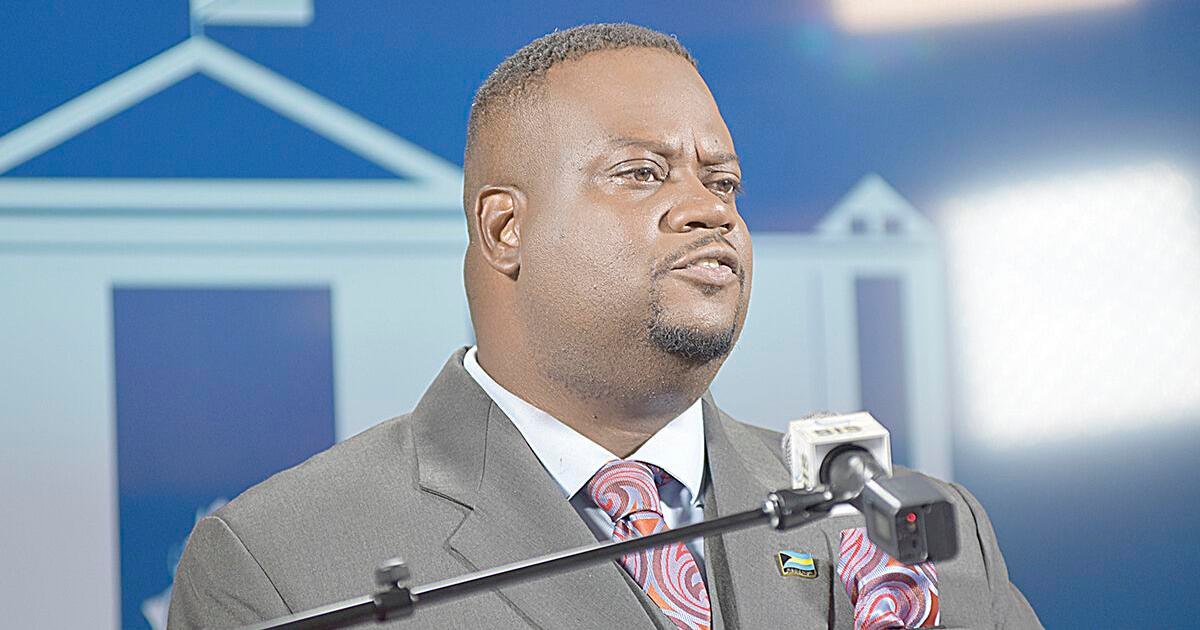
The management of Beaches and Parks under the previous Free National Movement (FNM) was a lightning rod for criticism by the current government, with Prime Minister Philip Brave Davis labeling it a “slush fund” and the authority’s current chairman, McKell Bonaby, claiming it was used for “electioneering”.
In the four years since, however, the authority, under the watch of Bonaby, has spent more than $141 million.
In the 2021/2022 fiscal year, it spent $24,697,497. In the 2022/ 2023 fiscal year, the authority spent $27,499,087, and in 2023/2024 it spent $33,236,200. Up to March 2025, it had spent $31,044,898, with expenditure tallies for the last three months in that fiscal year still not made public.
In the first half of the current fiscal year, up to December 31, 2025, the authority had already spent $25,178,694.
Reporting on the spending, which exceeded the allocated budget every year, was met initially with silence from Bonaby and others in the Progressive Liberal Party (PLP) government.
But lingering public frustration led to several statements in recent days.
OPM Director of Communications said on Sunday that the authority has simply been “subsidizing small and medium-sized businesses” to “stimulate the economy”.
Bonaby has also, when asked about the authority’s expenses, provided little details in the way of investments at any particular parks or beaches, but has instead focused his narrative on the authority’s awarding of more than 1,200 contracts.
“More than 1,200 Bahamian contractors benefit from the work of the Bahamas Beaches and Parks Authority every single day and every single month,” he said in a statement issued on Wednesday.
“These are Bahamian workers, small business owners, tradesmen, landscapers, truckers, service providers, and families who depend on this work to earn an honest living.
“So when people discuss the authority’s spending, they must also understand what that spending means in the life of this country. It means opportunity for Bahamians. It means jobs for Bahamians. It means support reaching communities across our islands.”
The Bahamas Public Parks and Beaches Act, passed in 2014, notes that its purpose is “to provide for the property rights and liabilities of the public parks and public beaches authority and to identify, regulate, maintain, develop and conserve public parks and public beaches and for connected purposes.”
None of the functions of the authority as listed in the act makes mention of subsidizing small businesses.
The poor state of many public parks on New Providence, as documented by The Nassau Guardian last year, led many to question how the authority has been spending its money.
Watson said in 2021 that there had been a “culture of reckless disregard” at the authority, citing a lack of effective controls and “no attempt to document why there was a need to engage in such excessive spending”.
“Instead, a select group of people, operating under different identities, received multiple contracts and paid huge amounts of taxpayer money to carry out work which was at best unnecessary, at worst, not carried out at all,” he said.
Bonaby has claimed that many of the issues noted by Watson have since been addressed, noting that financial controls have been implemented with proper record keeping and vetting of vendors.
He also pledged that every dollar spent by the authority has been accounted for, but he has provided no details on which companies hold the 1,200 contracts with the authority and for what purpose.