The mechanization of Dominican crops is one of the objectives that top the agenda of the Ministry of Agriculture.
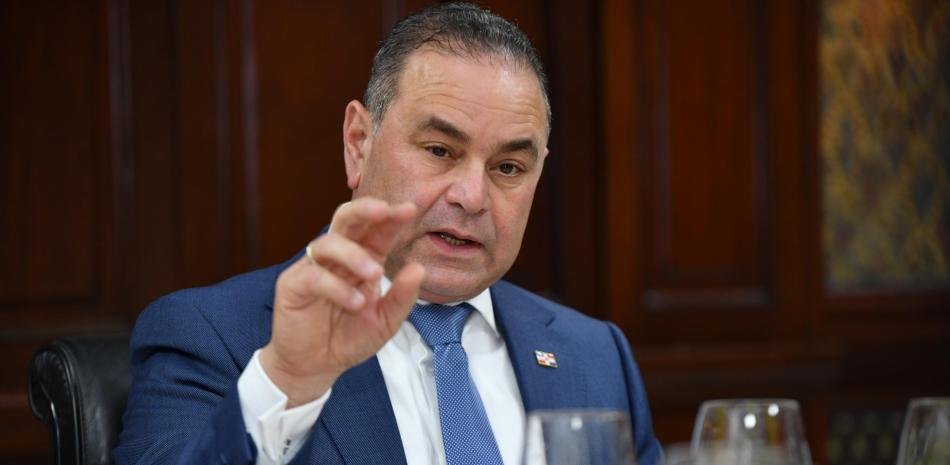
The minister, Francisco Oliverio Espaillat Bencosme, announced at a LISTÍN DIARIO breakfast, headed by its director, Miguel Franjul, the implementation of the National Mechanization Program (Programec).
Espaillat Bencosme was accompanied by the vice minister of agricultural production and marketing, Juan Antonio Gómez Williams; the administrative and financial vice minister, Herminia Reyes Abreu; the vice minister of scientific and technological affairs, Rafael Ortiz Quezada; the director of plant health and safety, Emigdio Gómez, and the chief of staff, Larissa Castillo.
The official explained that the program that will begin in July 2026 seeks to modernize the field, reduce costs and reduce dependence on foreign labor.
“We have the option of mechanization and all crops are mechanized. There is mechanization for everything and it is a process. The equipment must be adapted to the crop; not the crop to the equipment,” said Espaillat Bencosme.
He highlighted that, together with Programec, they will also relaunch the National Extension Program, which existed a few decades ago.
The Minister of Agriculture explained that with the combination of both programs they intend to bring technology and better crop management to the countryside.
“We want to update agriculture. We are looking for young technicians, so that this message reaches all farmers,” he said.
Espaillat Bencosme also explained that Programec will be made up of five pilot projects located in the provinces of Monte Cristi, Valverde, Constanza, Barahona and San Juan.
He indicated that there are three types of technologies: the first is mechanical, which is where equipment is used for agricultural work; genetics, used to increase performance; and nutritional, which also collaborates with production performance.
Neighborhood roads
The Minister of Agriculture also announced the intervention of 240 kilometers of local roads, which will be prioritized in the next three months.
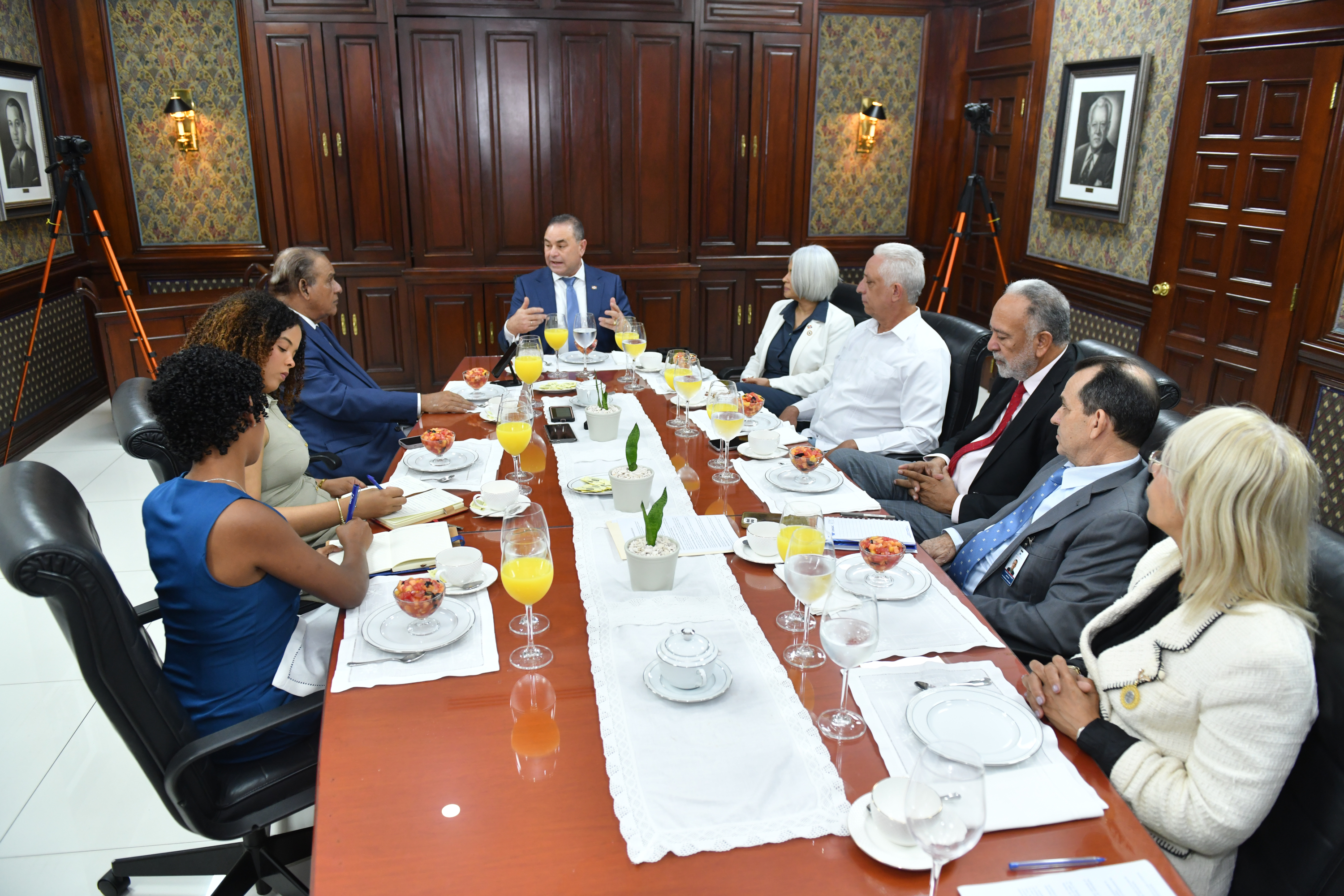
Listín Diario Breakfast Table held in the Ricart room.
He specified that this will be part of the initial stage, and then, together with the Ministry of Public Works and Communications (MOPC) and the National Institute of Hydraulic Resources (Indrhi), intervene another 1,200 kilometers.
“That is the main problem. That is the complaint at the national level. The priorities, the local roads that will be intervened, have already been identified,” he said.
He pointed out that the roads that will be intervened are located in the Bajo Yuna, Bajo Yaque, La Vega and Valdesia region.
“The priorities are more urgent every day,” he said.
Fertilizer subsidies
Espaillat Bencosme reported that in the first fertilizer subsidy agreement, which occurred between March 13 and May 31, the State invested RD$1,061 million.
However, in the second agreement that began in May and will extend until August, some RD$1,161 million will be invested in subsidies.
In total, some RD$2,220 million pesos have been invested from March 15 to August 30.
Exports
The official reported that agricultural exports are contributing more than RD$3.6 billion to the national economy.
“Agriculture grew more than any other activity,” said Espaillat Bencosme.
He said that the country produces RD$430 million of eggs monthly, and about RD$80 million are exported to Cuba in a month.
agricultural insurance
Likewise, he announced the reactivation of the Aseguradora Agropecuaria Dominicana SA (Agrodosa), an insurance that will help mitigate the effects of crop losses.
“So that the Government does not always have to come to the aid of the producers, but if they lose a harvest, the insurance is responsible for paying for that harvest and economic activity continues the same. We are promoting that. We are going to see what needs to be done so that the insurance is updated as it was again and that it fulfills its role,” assured Espaillat.