What began as an informal meeting in Tivoli in 1976, has today developed into Greenland’s largest cultural gathering outside the country’s borders.
To understand the success behind Greenland in Tivoli, Sermitsiaq has had a chat with two veterans who have had their fingers right down to the engine room. Former chairman and co-founder Sidsel Møller and conference host for 18 years, Carsten Siegstad, takes us behind the scenes at the traditional cultural event.
It is a special steering group that stacks Greenland in Tivoli on its feet, while Tivoli sets the outer framework for the event. Today, chairman Kim Falck-Petersen heads the steering group.
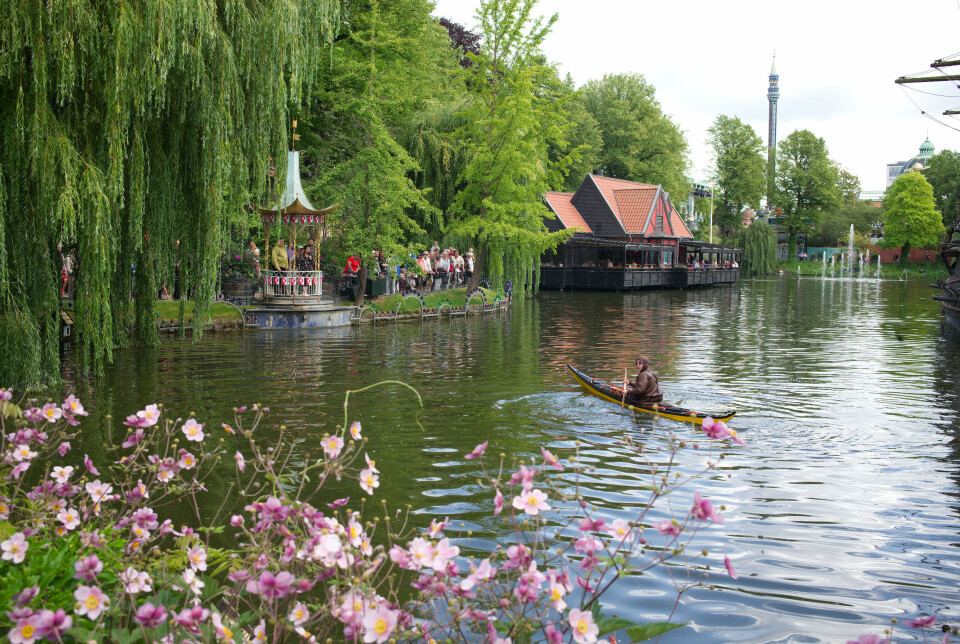
The beginning
The massive cultural event originally began as an intimate cure for homesickness. When Sidsel Møller and her classmates finished secondary school in Nuuk in the mid-1970s, they were faced with having to move to Denmark to study. In order to hold on to the close bond and soothe the coming loss, the group of friends decided to create a fixed point of support.
– We had a fantastically good friendship, and when we had to disperse to Denmark to study, we wanted to find a place where we could see each other again.
– It had to be a place that everyone knew, and everyone knows Tivoli. Some were in Jutland, some on Funen and others on Zealand, but back then you always had to go via Copenhagen if you were going home to Greenland. It became a date and a place that you could easily remember – It was therefore 1 August in Tivoli, says Sidsel Møller over the phone.
Sidsel Møller is co-founder, former leader and the original prime mover who transformed the informal student meeting in the 1970s into the structured and official Greenlandic cultural event we know today.
When the event approached its 25th anniversary in 2001, Sidsel Møller took the initiative to professionalise the setting. She contacted Tivoli with a vision to expand the program and show Greenland’s rich talent and culture.
– In 2001, around the 25th anniversary, I got together a group of representatives from Greenland Tourism, the House of Greenland and the Greenland Representation, so that together with Tivoli, we could organize the days. It gave us much more influence.
– The official collaboration was a huge financial help, because as a private person I didn’t have a big wallet to put out for artists and hotels. The first year the budget was tight because Tivoli had already booked the big names. I had to persuade the other artists to perform for a small fee in exchange for a promise that if it was a success, Tivoli would give us a bigger budget the following year. They all agreed to that.
– It was an exciting few years when we started with very little money and where an incredible amount of new things arose, says Sidsel Møller.
Kulturfesten’s conference manager
In 2006, Carsten Siegstad joined as a presenter, after initially refusing due to stage fright. He had been discovered because he voiced a male character in Norsaq’s flight safety video. Since then he became a regular part of the event, and in 2019 he also joined the steering group itself.
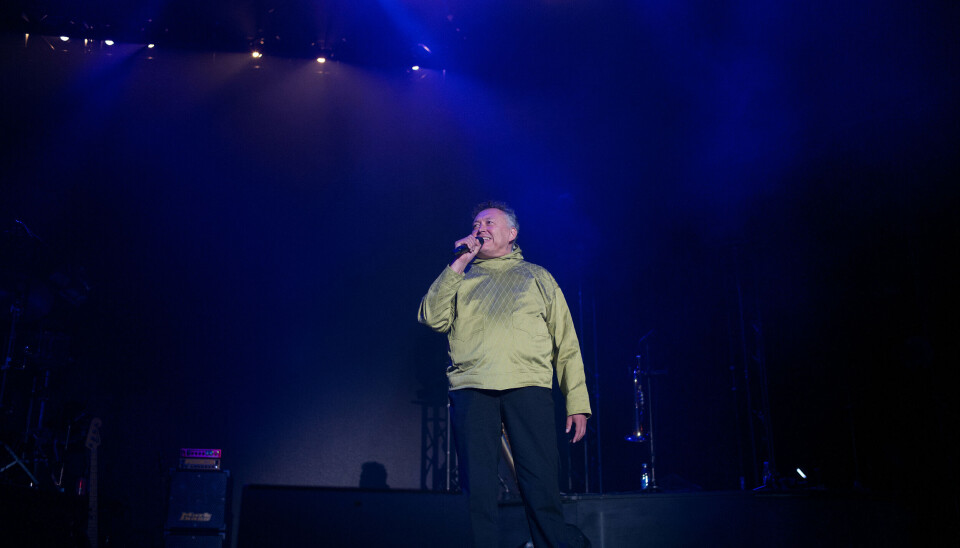
– It started somewhat randomly in 2006, when I was asked if I wanted to be a conference speaker. My first reaction was a clear no because I had stage fright. They asked me because I voiced the male speaker in Norsaq’s safety video – the animated ‘safety on board’ film – and they thought my voice worked well. After some reflection, I said yes, and I have done so for 18 years now, says Carsten Siegstad.
Until then, actor Vivi Nielsen and later TV host Hans Otto Bisgaard had controlled the microphone on Plænen. But when Bisgaard had to cancel one year due to the cycle race PostNord Danmark Rundt, Sidsel Møller instead headhunted Carsten Siegstad and his colleague Maja Motzfeldt. Sidsel knew that the two worked together as cabin crew at Air Greenland Norsaqand that Carsten was an exceptionally entertaining colleague, whom many passengers already knew from the Greenland flights.
Their debut became legendary due to a true fog drama. The main name, Ole Kristiansen, was stranded in Ilulissat due to dense fog and landed in Copenhagen at the absolute last minute. To save the derailed programme, the two new presenters came up with a brilliant idea: They pulled on their cabin uniforms and entered the Lawn with rolling trolley suitcases, side by side with the belated rock band, as if they had just stepped off the plane. It caused wild cheers in the garden, and with that kind of improvisation and Carsten’s thorough preparation of always bringing bonus facts about the artists, a new, regular conference player was born on the stage.
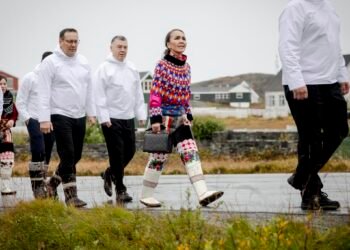
Over the years, the program has moved from primarily being a music festival to being a broad and nuanced cultural event. Today, the festival includes everything from political talks, art exhibitions and theater to sporting celebrations of Greenlandic champions as well as displays of kayak turns, drum dancing and mask dancing.
The event serves as an important cultural meeting place for the thousands of Greenlanders who travel to Copenhagen from all over Denmark and Greenland to participate. The event is currently financed through income from the stalls, business partners and cultural funds from the Danish Parliament’s Cultural Agency.
– It is the stalls that provide the money that finances fees for our artists. In the past two years, we have also received support from the Danish Agency for Culture through the Danish Parliament’s cultural funds. This is where the bulk of the economy comes from. The Self-Government of Greenland does not contribute financially. In addition, we have a number of partners who help finance fees, plane tickets, hotel stays and other expenses in Denmark, says Carsten Siegstad.
The program is put together based on what is happening on the Greenlandic music scene. The goal is to present artists that audiences in Greenland are listening to right now.
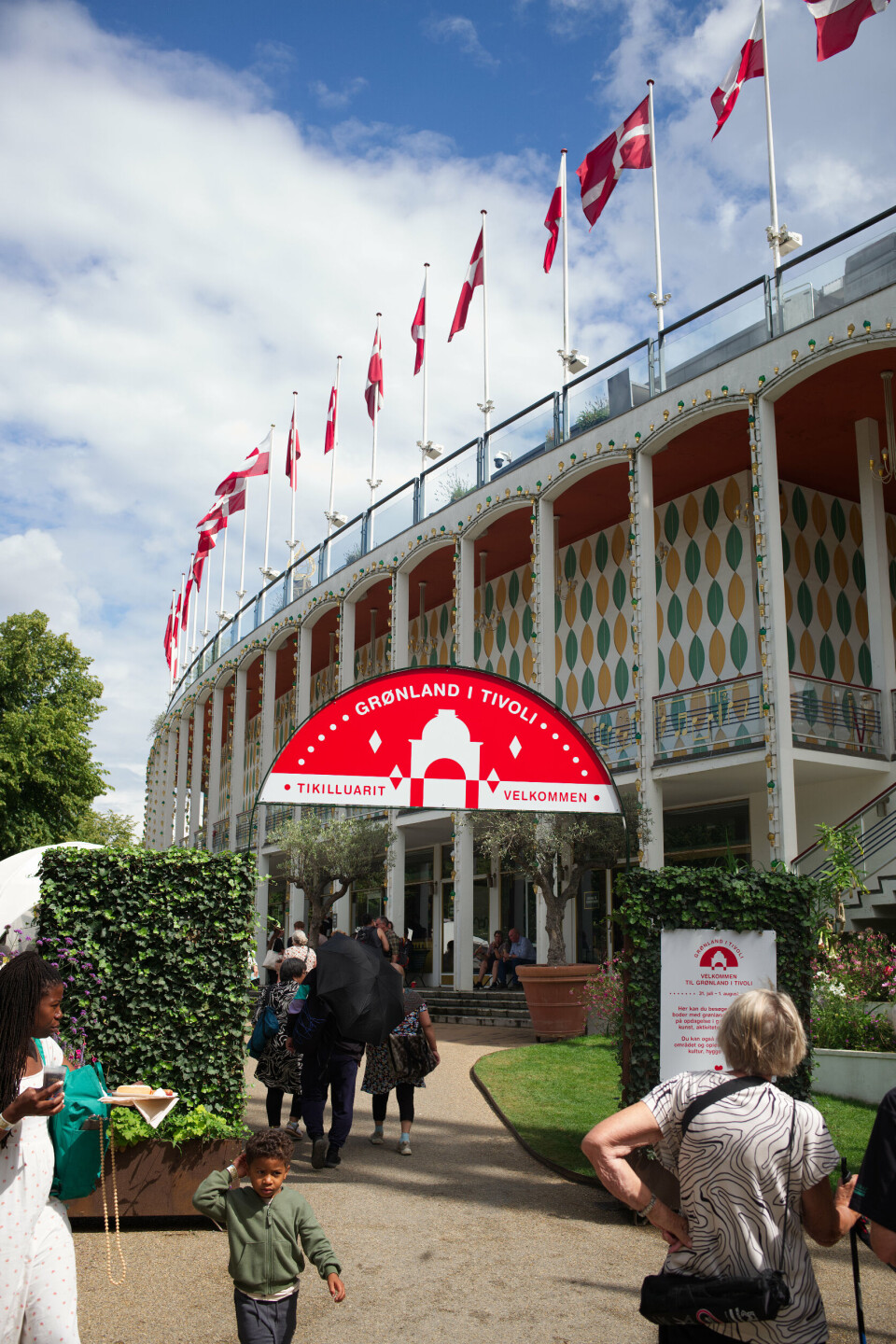
– I usually look at what is popular up in Greenland and what people want to hear. So that’s mainly what I choose based on. For example, for our 50th anniversary, we have chosen not to have permanent bands in the same way. It is one of the examples of something I intend to do differently, says Carsten Siegstad.
50th anniversary
When Greenland marks its historic 50th anniversary in Tivoli this year, it will be with a packed program and a tight logistical schedule. Carsten Siegstad explains that the biggest challenge is to make the cultural festival’s program fit in with Tivoli’s other permanent features, such as the Tivoli Garden, and comply with noise requirements. Because Tivoli has to close at exactly 10pm on Sunday for the sake of the neighbours, the entire program runs by the minute to avoid delays.
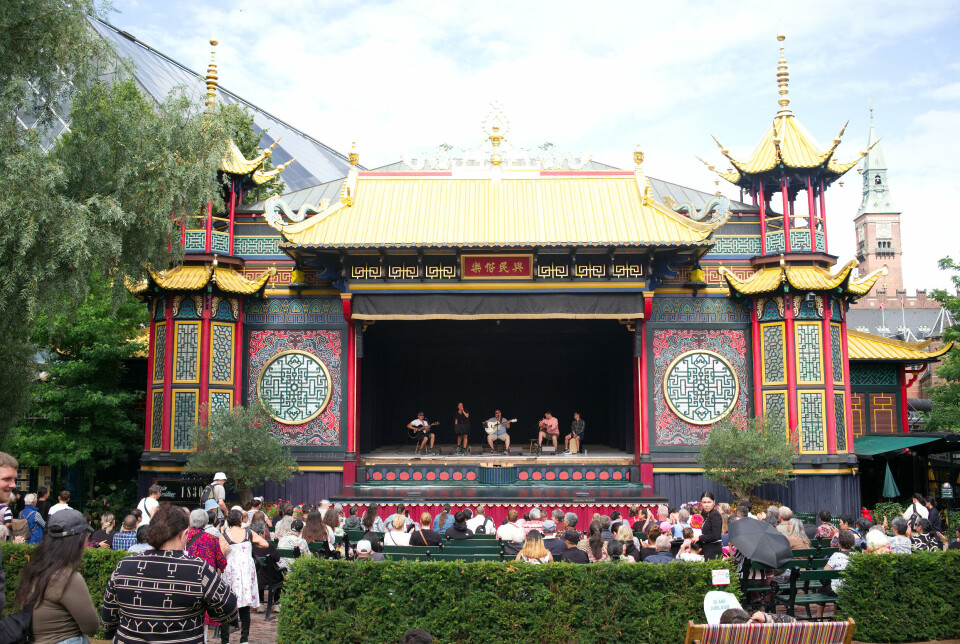
– The challenge is that Tivoli has their events and we have ours, and they have to fit together. This year, Tivoli Garden comes with fixed playing times, which we have to plan ours events and artists outside.
– In addition, Tivoli has an agreement with the neighbors to close at 10pm on Sundays, so everything must be finished on time. There is no room for delays. It’s like making TV – the schedule has to stick. It is a big logistical challenge, but also what makes the work exciting. The entire program is planned down to the minute from start to finish, says Carsten Siegstad.
In order to optimize the logistics and avoid the time-consuming stage changes between entire bands, Carsten Siegstad has introduced a new concept for the anniversary: a permanent four-piece house orchestra will accompany seven of Greenland’s popular soloists this year, including Frederik Elsner, Kimmernaq, Mariina, and Enok Poulsen.
– We have chosen that we want a house orchestra. Four men who sit and play, and then we get seven great Greenlandic singers to perform as soloists. So the people who are in Greenland in Tivoli that day will perhaps get to see their biggest idols, says Carsten Siegstad.
Transforming an amusement park in the heart of Copenhagen into a Greenlandic cultural center requires both heart blood and historical awareness. For Tivoli, the round anniversary marks a milestone that is not just about entertainment, but about forging close ties across the Atlantic.
– That Greenland can celebrate its 50th anniversary in Tivoli is something quite special. For half a century, together with Greenlandic cultural actors, we have created a meeting place where all Tivoli’s guests gather for concerts, art, food and stories about Greenland. Some participate because Greenland is part of their personal history, while others come out of curiosity about the culture.
– The anniversary is an occasion to pay tribute to Greenlandic culture, and to be happy that the event has helped bind Danes and Greenlanders together over generations. We are proud to be part of that. Greenland in Tivoli has become one of Haven’s most traditional cultural events. It reflects Tivoli’s ambition to be a meeting place for culture, community and experiences and has over generations helped to build a bridge between Danes and Greenlanders, writes Tivoli’s managing director, Susanne Mørch Koch, in a written reply to Sermitsiaq.
After 50 years, Greenland in Tivoli has grown far beyond the idea that arose among a group of young students in 1976. For Sidsel Møller, who resigned from the organizing group in 2012, the anniversary brings out a deep personal pride.
– It has been a great pleasure and a great joy in my life, and a way in which I have been able to give something back to what I come from and to what I love so much… Now I am completely moved… I am proud that I have helped drive it up to what it is today, she says with a lump in her throat.