In the past, says Doris Bingler, when a man came to her boutique, she usually intuitively asked if he was looking for something for his wife. Bingler is the owner of Amour Infini and sells high-priced second-hand designer bags and accessories through her shop on Vienna’s Köllnerhofgasse and through her company’s social media account. Pieces of Bottega VenetaChanel, Louis VuittonCeline or Hermes find new owners at Amour Infini. Bingler knows better than few others which brands and models are currently particularly popular – and also who the people are who buy them. In any case, the expert says she hasn’t asked the question mentioned at the beginning for a while. Because it is increasingly the men themselves who are looking for handbags from her.
She just gave a young man one Gucci-Vintage bag sold with monogram pattern. Not a men’s bag, but one that was once designed for the fashion house’s women’s line. “He was there with his girlfriend and had a bit of an argument. The two then left, but shortly afterwards the customer came back and bought the bag because it was just good for him.”
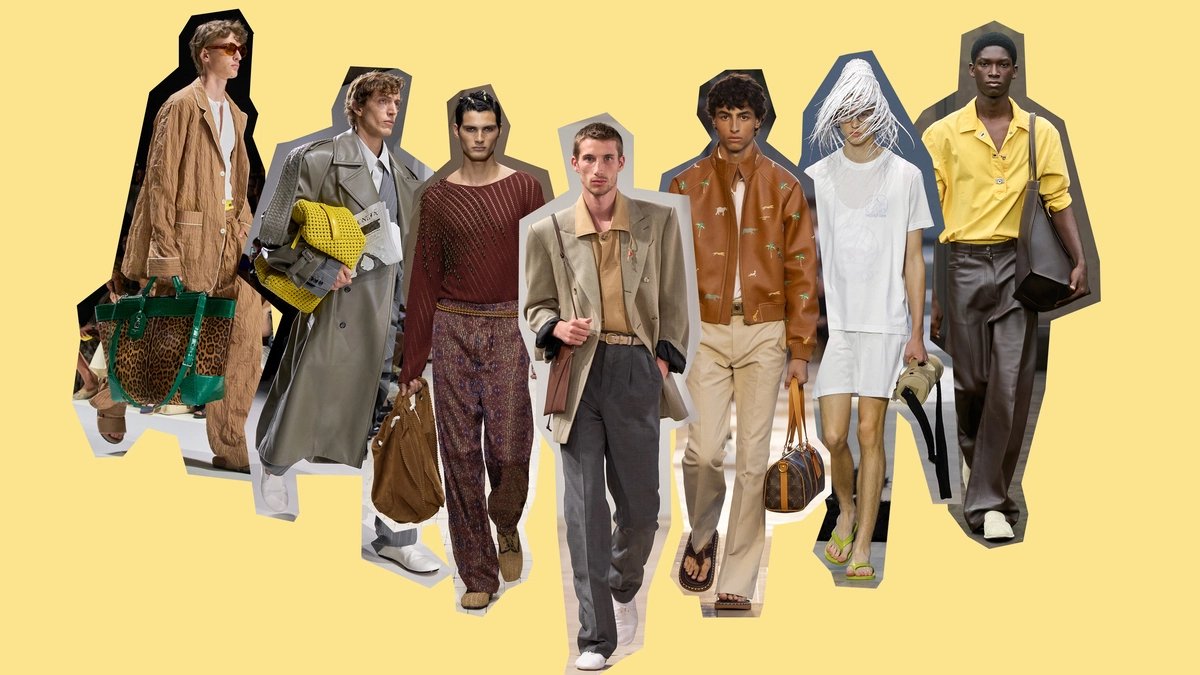
When you think of men and bags, you probably first think of backpacks and laptop bags. Possibly a weekender, a small travel bag that can also be converted into a sports bag. However, they are all practical companions, visually as inconspicuous as possible, just not too extravagant. The fact that just over 250 years ago there were (wealthy) men who couldn’t get enough of accessories and dressed themselves up lavishly was soon forgotten after the French Revolution. Wallets and keys now had to fit in a jacket and trouser pocket. The handbag became a woman’s exclusive affair and men who ignored fashionable gender segregation were often ridiculed and devalued. The glacier mummy Ötzi was already found with a small leather bag (and, as an ear piercing revealed, was also said to have been wearing jewelry, but that’s another story). It is quite remarkable that representatives of the young Generation Z in particular are now often reaching for handbags and seemingly unimpressed by clichés of masculinity. But where does the new desire for statement accessories come from?
Mike York is a fashion editor, stylist – and a passionate handbag carrier himself. Large bags from brands like Prada are his daily companions. If you look for the origins of the trend, you have to look into the world of professional sports and rap, says York. The designer bag has been part of the standard equipment there for many years. For athletes, the route to training sometimes resembles a dazzling catwalk. No matter whether you are active in football, Formula 1 or basketball. “Football professional Travis Kelce comes to his games with a huge Louis Vuitton weekender. British racing driver Lewis Hamilton is also known for his designer bags.”
Over the years, professional athletes, as well as rappers, have fought a real battle when it comes to who has the more exclusive accessory under their arm. “Musician and Louis Vuitton creative director Pharrell Williams is a handbag fan and rapper A$AP Rocky made the Chanel bag relevant for men, even though the fashion house doesn’t design menswear at all,” says the stylist. In addition, actors and style role models such as Jacob Elordi and Pedro Pascal or pop superstar Harry Styles would pick up his handbag. Elordi and his collection of Bottega Veneta bags are popular paparazzi fodder. Pedro Pascal, in turn, helped create a real hype around a boxy shoulder bag with a flap from the first collection of Matthieu Blazy to trigger for Chanel. Timothée Chalamet appeared on the Internet last year with a small Hermès bag in bright orange that was worn diagonally around her upper body. He probably borrowed it from his partner Kylie Jenner’s handbag collection.
»Your pocket is no longer enough to carry everything a modern life needs.«
Fashion-conscious men like David Beckham were called metrosexual in the noughties; their interest in trends and elaborate styling was interpreted as excessive vanity, weakness and a penchant for the feminine. For young men, these gender stereotypes often no longer seem to play a role. Probably also because classic status symbols are often financially unattainable, female and male representatives of Generation Z express themselves equally through their clothing. Doris Bingler observes that bags from the Hermès brand in particular are extremely popular, regardless of gender: “Models like the Birkin 40 are also popular with men and are not only considered a fashion statement, but also an investment.” It is well known how difficult it can be to get your hands on the coveted bags from the French luxury manufacturer. All the more so since the clientele now seems to have expanded to include men with pocket savvy. Maybe, says Amour Infini founder Bingler, it’s a new form of masculinity: doing what you like, unimpressed by what a man is supposed to be like.
Of course, there are also very banal reasons for men to reach for a handbag. “Many people go to the gym in the morning, then to the office, and maybe meet up with friends in the evening,” says Mike York, and concludes: “That means, of course, the bag also has advantages because I can store everything in it. A trouser pocket alone is no longer enough to transport everything a modern life needs.” But the stylist knows from his own experience that there is sometimes a gap between the social media-influenced ideal of the man who reaches for his handbag in a completely impartial manner and the reality of a subway ride through Vienna. “I know enough about the bad looks myself. So there is still a way ahead of us,” said York. At least the beginning has been made. Doris Bingler also says that she feels that more and more men would like to play with fashion, but are still worried about how they will look. “I really hope that these doubts will be completely dispelled at some point.” And possibly end up in a Chanel “Maxi Flap Bag”, one might add at this point.

Actor and style role model Pedro Pascal with a Chanel handbag at the brand’s fashion show. Imago/Marechal Aurore