SERIOUS!? / Ivan Cairo
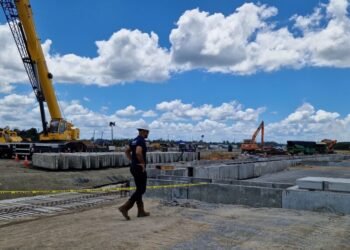
There are images that say more than a stack of policy papers. The photos taken by the Suriname Police Force Tuesday’s release of the recent operation in the Sarakreek area is an example of this. Makeshift basins, probably for the use of cyanide in gold mining, are located a few meters from the shore of the reservoir. You don’t have to be an environmental expert to understand the danger that lies there.
It’s the gold rush in its most reckless form. For some, the hunt for the precious metal seems more important than the consequences for people, nature and future generations.
“It especially requires political and administrative courage not to always look away when economic interests come into conflict with environmental protection”
Mercury and cyanide are used to extract gold, while the water courses that cross the interior are polluted with these toxic substances. What happens today at a remote gold camp could tomorrow have consequences for communities that depend on clean water and a healthy environment.
And yet we continue to lag behind the facts. A police operation is carried out, illegal camps are dismantled, machines and weapons are seized and suspects are arrested. This is followed by research.
Sometimes, however, a suspect is released the same day after paying a large amount, as in this case. In the Sarakreek area, this involved SRD 1 million for a Brazilian operator who was involved in a location where cyanide was probably used improperly.
The question arises: what signal are we sending out with this? That environmental crimes are a financial consideration? That anyone with enough money can buy off the consequences of their unlawful and disastrous actions?
A fine alone is not a deterrent when the proceeds from illegal gold mining can be many times higher. Why is there not much more emphasis on prison sentences, higher fines and confiscation of machines and other equipment? Where permitted by law, destruction of goods used exclusively for illegal activities should also be possible.
This obviously requires a solid legal basis, conclusive evidence and consistent legal proceedings. If those laws don’t exist, why aren’t they being made? Above all, it requires political and administrative courage not to always look away when economic interests come into conflict with environmental protection.
The interior is not a sanctuary where everyone can exploit raw materials at their own discretion and leave the waste to nature. The reservoir is not a chemical laboratory. Our rivers are not a sink for the gold industry.
We now know what is at stake. The question is not whether we can take strict enough action, but why we still do not do so (consistently). Why isn’t there better enforcement of legislation?
It’s five to twelve. Soon we will not only lose the gold we extracted from the ground, but also our clean water. And that loss may be irreversible. The consequences will be felt for years to come, especially for people who are unwittingly exposed to the unconscionable recklessness of others.