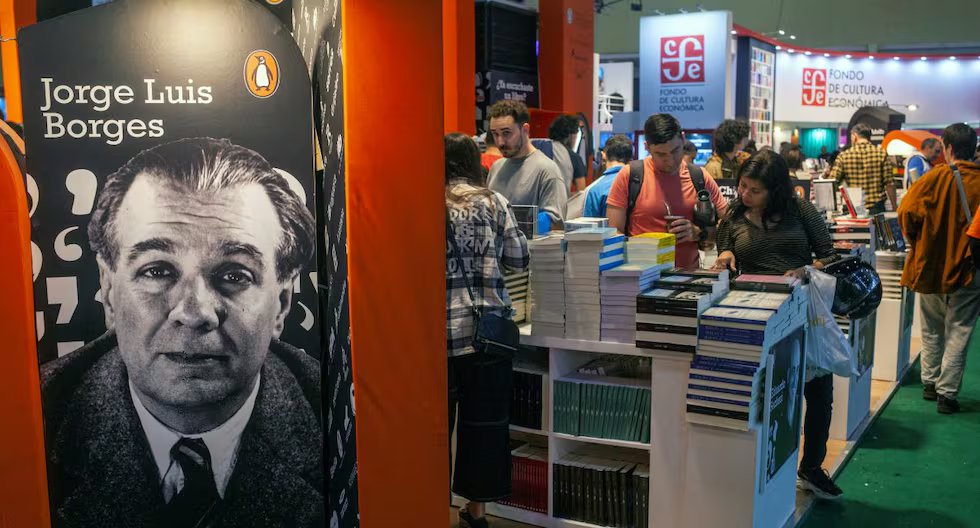

The loneliness of activities like writing and reading is offset by book fairs. It is not surprising that the Buenos Aireswhich I just visited, occupies a prominent place. The cult of reading is part of the city’s neighborhoods. For every one hundred thousand inhabitants there are 25 bookstores, with a total of 450. According to the Cultural Cities Forum, this figure exceeds that of Berlin, Amsterdam and Madrid.
With Peru as a special guest, the fair received a large delegation of writers, editors and cultural managers. We must thank the organizers of the Ministry of Culture (among them Jade Garcia and Carina Moreno) that our presence was rich and varied, including musicians as notable as Maria Elena Pacheco. I can say the same about the activities of Penguin Random House and the Vargas Llosa Chair. In the tribute to Mario Vargas Llosa, passages from his life were read with great emotion, from his testimony of when he learned to read until he received the Nobel Prize. In the introduction to the event, Alvaro Vargas Llosa he referred to a poem by WH Auden about the death of Yeats. In those lines, regarding the great Irish poet, Auden stated that “the words of a dead man – are modified in the bowels of living beings.” Each of Vargas Llosa’s readers continues to dialogue with him, only now in the intimacy of each rereading. A standing ovation from the public sealed the presence of the story of a life.
In tribute to Alfredo Bryceon the other hand, the conversation revolved around humor (Cervantino, Renato Cisneros said) as a coda of irony to the previous generation of novelists. Bryce’s voice also appeared telling some of his stories again. According to one of them, when he was young he went to the Drive-In cinema, which was on Javier Prado Avenue. The cinema’s ecran was, however, in very poor condition. That’s why, according to what he said, although romantic or action films were shown, in reality all the films were suspenseful: no one knew when the cinema ecran was going to collapse.
Walking through a city is an endless adventure. You can see the faces of such diverse people, from the approaching beggars to the men and women in suits sweeping the sidewalk with an impeccable briefcase. I walk on a warm sunny day through the Belgrano neighborhood with two dear and admired friends, the Argentine writers Pablo de Santis and Guillermo Martínez. There are the distinguished houses with stone facades, the Castelli square where the Motherhood Monument is located. Guillermo recommends a story book by Luis Sagasti that he bought in a neighborhood bookstore, Kaleidoscopio. In the story, Manta Boreal, an old philosophy professor, learns that the miller’s son, almost on the outskirts of the city, “had found Being.” What a discovery told in such a suggestive story.
In the middle of the celebration, hard news appears: the death of Adolfo Aristarainthe great Argentine film director. To a question about his film “Martin H.”, he once said: “My film talks about the fact that it is worth living for the people we love.” It is the same reason why books are read and written (and fairs are visited).