The lifelong dream of José, a Mexican immigrant, has been to attend a World Cup soccer match. When he found out that Los Angeles would host several meetings, he was excited about the possibility of holding it, but his immigration situation has grounded him in reality: “I will have to watch them on television.”
The 46-year-old man, who only identifies himself by his first name for fear of immigration authorities, says that he has been a soccer fan for as long as he can remember.
He wears the Mexican national team shirt every time he can, and one of the greatest gifts he gave himself is attending an El Tri game in Los Angeles, a city where he emigrated more than 25 years ago.
“Going to the stadium is an emotion that has no comparison,” he tells EFE.
That’s why he began saving years ago to see if he could buy at least two tickets, one for himself and one for his ten-year-old son, to go to a World Cup match, even if it wasn’t a match for the Mexican team.
But their dreams were dashed by the likelihood that Immigration and Customs Enforcement (ICE) agents would be in the stadiums.
“I know that they are not going to ask for papers from all the fans who attend, but I am sure that they are going to go for those who have dark skin like mine and I don’t want them to deport me,” says the immigrant.
A World Cup from home
José will follow, together with his son and his friends, the meetings from his home. He hopes that El Tri will pass as first in their group, because if they pass as second they would play their fourth game in Los Angeles. “That would make me even more sad, having them here and not even being able to go to the rally,” he adds.
The precautions that the Mexican takes respond to the warnings of immigrant defenders: “We are recommending extreme precautions, especially in the vicinity of the stadiums,” Francisco Moreno, spokesperson for the Council of Mexican Federations in North America (COFEM), told EFE.
In April 2026, more than 120 organizations, led by the American Civil Liberties Union (ACLU), issued an alert warning that fans, players, journalists and visitors to the World Cup could be “at risk of serious rights violations,” as President Donald Trump’s Administration intensifies its immigration agenda.
Jamil Dakwar, director of the ACLU human rights program, charged against FIFA, claiming that the organization has limited itself to rhetorical statements about human rights while strengthening ties with the White House.
“Already It’s time for FIFA use your influence to drive meaningful policy change and binding guarantees that allow people to feel safe traveling and enjoying matches,” Dawkar insisted.
But the calls had no effect. The Secretary of Homeland Security, Markwayne Mullin, did not rule out operations against suspects of criminal activities, a premise similar to that which has driven the raids in large Democratic cities such as Los Angeles, which left thousands of detainees.
The Mini World Cup and the cards against hate
The United States will host 78 World Cup matches in eleven stadiums, most located in cities with a high concentration of immigrants and those of Latin American origin, which provide a good portion of the fans.
Faced with the veto on undocumented immigrants imposed by the Trump Government, community organizations have responded with several campaigns to rescue the feeling of brotherhood woken up by the football match.
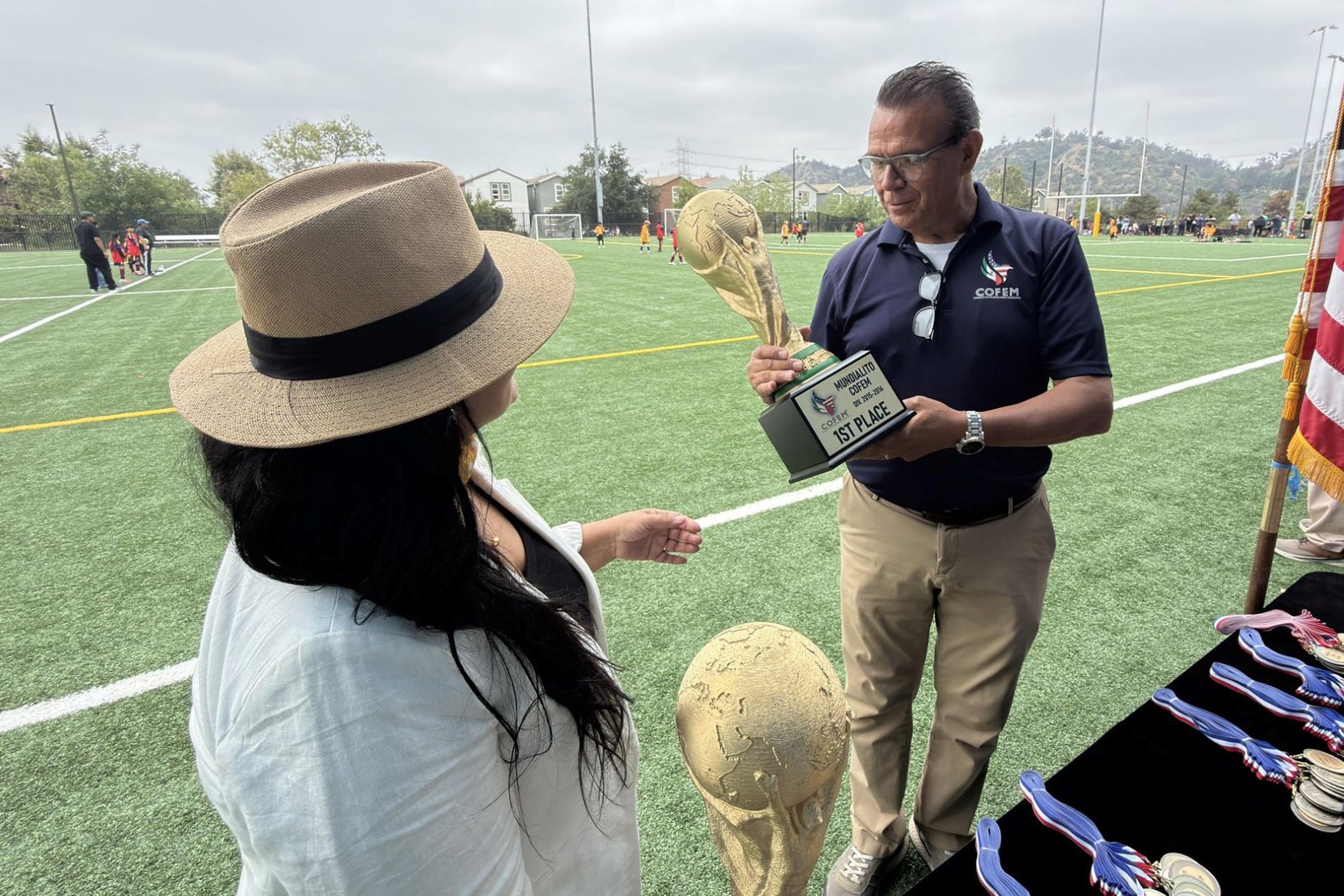
For example, COFEM held a championship in Los Angeles between teams of children representing 16 of the qualified countries. “This is an example of coexistence, that we can wear our shirts for each other,” Moreno said.
The Coalition for the Human Rights of Immigrants (CHIRLA) launched the “Take the Card to Hate” campaign, which seeks to educate communities about hate incidents and how to report them.
The campaign supported by the city of Los Angeles implements red and yellow cards, like those used in soccer, to encourage the public to condemn incidents, which although they do not amount to hate crimes, perpetuate discrimination and racism.