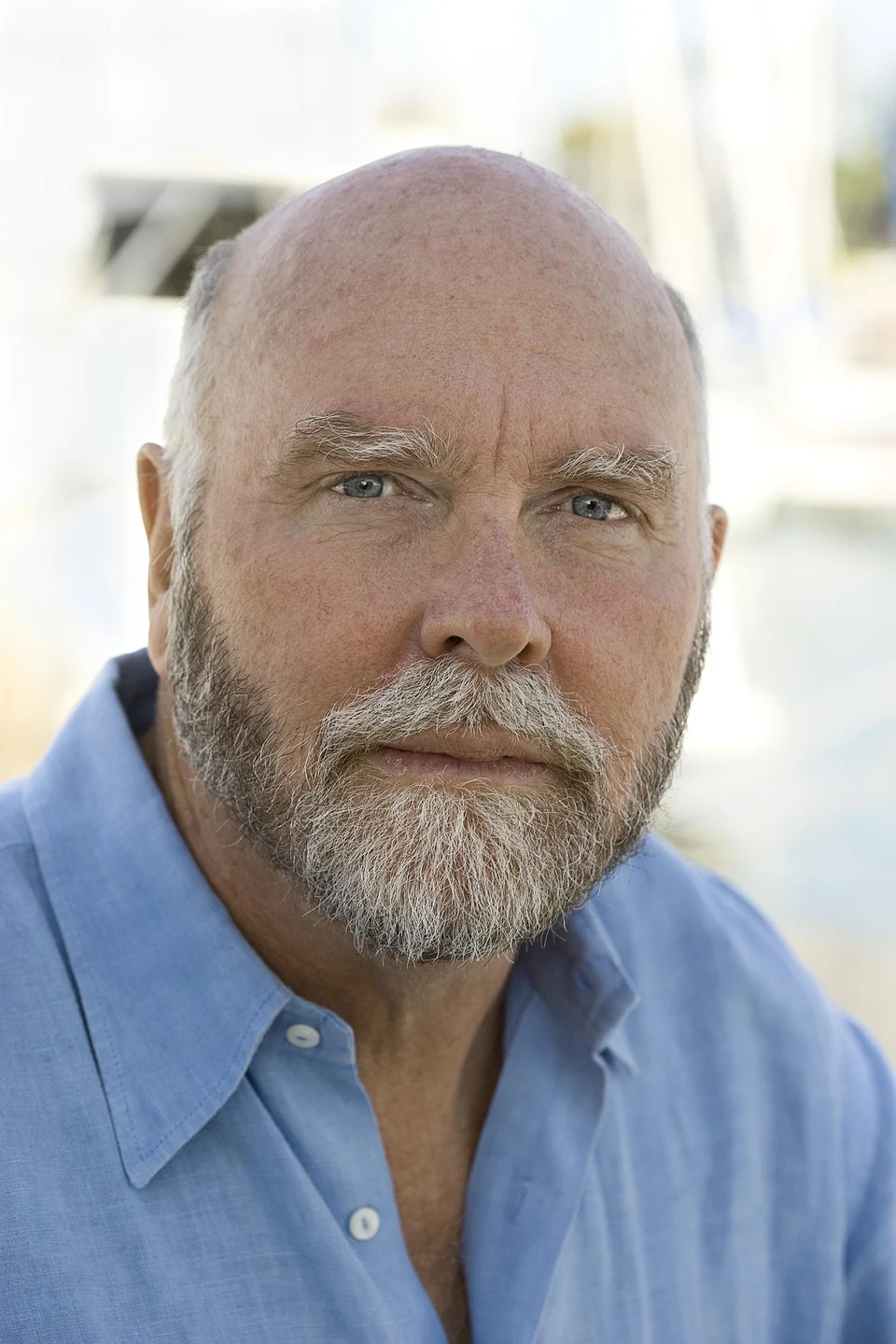
The man who cracked the Venter code was the key figure in the race to decipher the human genome. He transformed biology from a discipline of slow observation into a large-scale, data-driven science. When in 2010 his teams created the first synthetic bacterial cell – functioning entirely on the basis of an artificial genome – he proved that life could be ‘programmed’. This earned him the nickname “the bad boy of science”, but also the respect of the entire world community.
Venter was never satisfied with what was achieved on Earth. In 2013, he set his sights on Mars with one of his most eccentric ideas, the creation of a “digital biological converter” (or biological fax).
His concept was astonishing – transferring biological information through computer code to “imprint” an organism in a distant location (like Mars). Venter believed that the genetic code could be stored and transmitted just as easily as any other digital information. Although his idea sounded like science fiction, tests in the Mojave Desert showed that his ambitions had a real scientific basis.
In the last years of his life, Venter turned his efforts to the greatest challenge facing humanity, aging. Via Human Longevity Inc. he sought to create the largest global database of genetic variation.
His goal was not simply the treatment of disease, but the prevention and maximum prolongation of health.
He planned to map tens of thousands of human genomes, combining them with data on the microbiome (all the microbes living with us) and the metabolome (the chemical processes in our body). For Venter, the human body was a complex system that could be optimized by knowing its every molecule.
Craig Venter wasn’t just doing science, he was challenging the status quo. He believed that boundaries exist only to be crossed. With his daring designs and relentless drive for innovation, he left us a world where biology is a tool yet to allow us to cure the impossible and explore the unknown.
Science has lost its greatest dreamer, but his code will continue to write the future of medicine and biology for a long time to come.