Recently the Trumps stated special envoy to Greenland, Jeff Landry, told Fox News that Greenland could start oil production within 10 months and that 2 million barrels of oil per day could be exported.
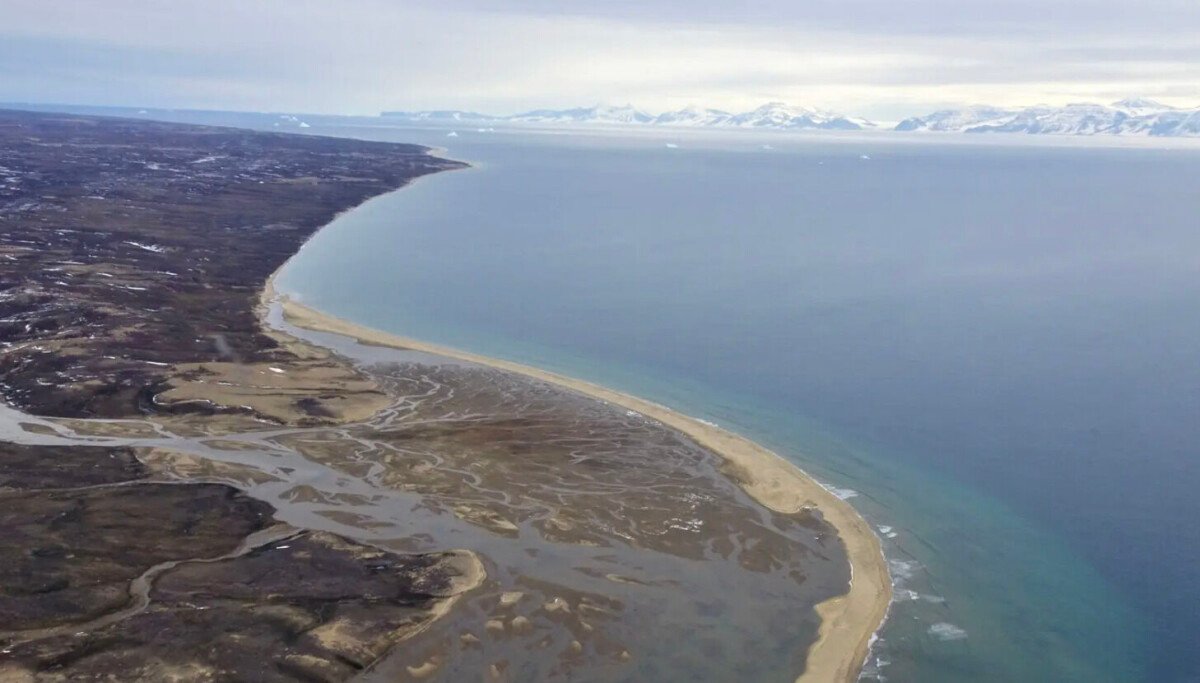
The oil potentials that Jeff Landry talks about are based on announcements from the American company Greenland Energy Company, which together with British 80 Mile via White Flame Energy sit on the only three oil licenses in Greenland – In Jameson Land.
Recently the Trumps stated special envoy to Greenland, Jeff Landry, told Fox News that Greenland could start oil production within 10 months and that 2 million barrels of oil per day could be exported.
The oil potentials that Jeff Landry talks about are based on announcements from the American company Greenland Energy Company, which together with British 80 Mile via White Flame Energy sit on the only three oil licenses in Greenland – In Jameson Land.
According to the two companies, the area is potentially the 13th largest remaining oil reservoir on Earth, with oil equivalent to 13 billion barrels.
However, there is a long way from a potential based on the interpretation of existing data for a real commercialization of oil in Jameson Land.
And therefore the companies must initially investigate the underground further. They have applied to the mineral authorities for permission to carry out so-called stratigraphic studies and carry out two geological boreholes down to a depth of 3.5 kilometres. The Ministry of Mineral Resources informs Sermitsiaq.
The potential must be investigated
In other words, the company will find out with the investigations whether there are the potentials that the surface geology suggests. There is thus no question of drilling for oil.
Geologist with 25 years of experience in oil and gas production, Stig-Morten Knutsen, who has also been associated with Greenland’s state-owned company Nunaoil as exploration manager from 2010 to 2013, knows the Jameson Land potential very well, and he explains that it is with oil exploration as with mineral exploration that you have some estimates, which you then confirm or deny with field activities.
– We know that there are the right geological conditions on Jameson Land to find oil and gas, but that does not mean that it exists, and you cannot determine that until you have drilled in the area, says Stig-Morten Knutsen and adds:
– And even if you drill and perhaps find some oil somewhere, which can happen, as there are often pockets of oil here and there, it is not certain that there is enough for commercialization.

Logistical challenges
But if the company finds oil in quantities that are commercially interesting, then the next challenge will be to get it up and out of Greenland in a safe way.
– There is a logistical problem. And logistics is always the dilemma in the Arctic and other remote areas. Typically, the companies make a calculation of how much oil is needed to be able to develop the project over a value chain from underground to market, i.e. including ships, must pick up the oil and ship it out for further processing.
– In relation to the time perspective, it is very difficult to say, but it may take a few years, but it depends somewhat on what the oil is like, how you want to extract it and how you find solutions.
– In the past, it was primarily off-shore that companies such as Chevron, Exxon and Equinor looked for oil in Greenland. Now there is again an international company with international money that wants to explore a licence, this time on land. And this means that the authorities must of course consider how they follow up on the company’s activities, says Stig-Morten Knutsen.