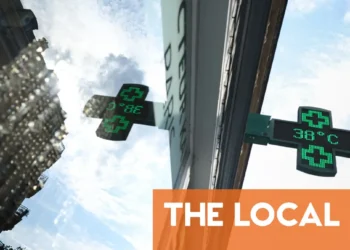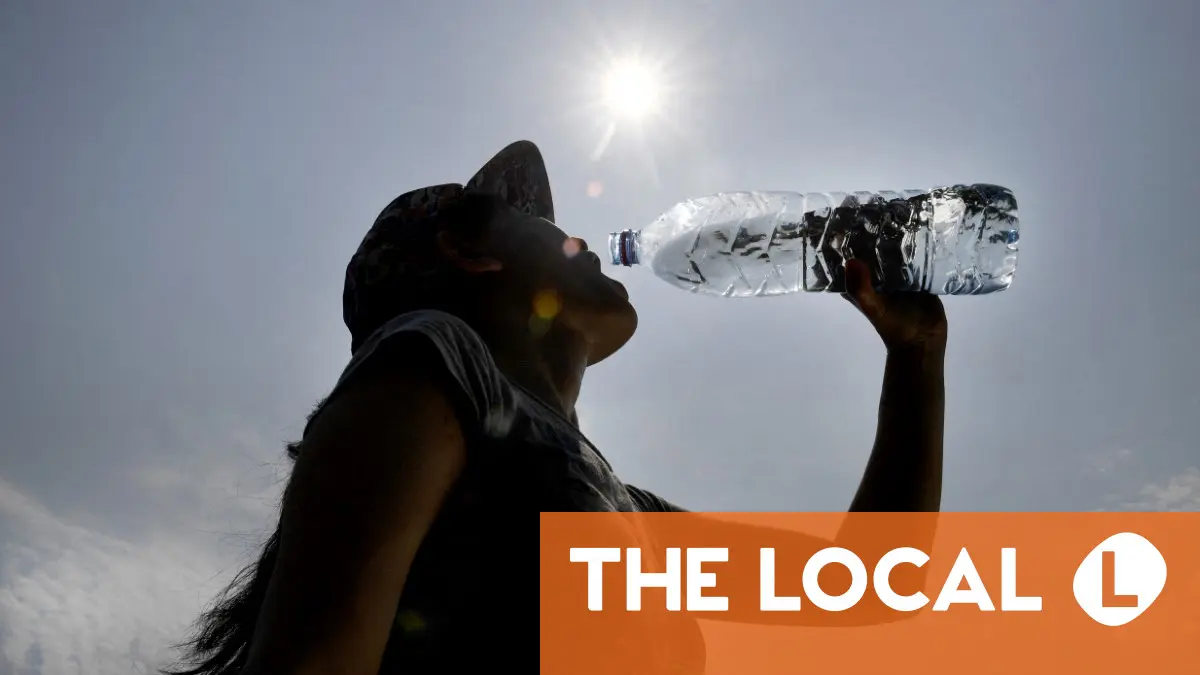
France regularly issues weather alerts when heatwaves strike – but how dangerous are sizzling days in France? And how can you keep yourself safe?
It might seem like a bit of an overreaction to issue warnings about hot weather in summer, but high temperatures bring with them serious risks to health.
During periods of heatwave alert, local authorities often cancel major events due to the health risks of heatwaves, especially for outdoor events and sports events.
Mercury rising
Temperatures in France are getting higher and the country has endured a series of record heatwaves in recent years.
The all-time temperature record for Paris is 42.6C, set during a heatwave in 2019. It’s entirely possible this record won’t last long – 2026 has already seen two heatwaves and it’s not even July yet.
Vérargues, in the southern Hérault département, holds the highest recorded temperature in France – 46C set on June 28th, 2019.
The highest national average temperatures in France were recorded later in the year: August 5th, 2003, saw an average national temperature of 29.47C, followed by July 25th, 2019, when the average daily temperature was 29.4C.
And remember – air conditioning is not standard in French homes.
Health risks
There is no question that heatwaves can be fatal – some 400 people died in France in a two-week heatwave in August 2023 when new local temperature records were set around the country, according to public health data.
Some 5,000 excess deaths were recorded between June 1st and September 15th 2023, of which 1,500 were attributed to the heat.
Over the same period, nearly 20,000 heat-related emergency calls were recorded, according to a report by Santé Publique France, and 10,600 additional hospitalisations followed a visit to the emergency department during periods of high temperature.
READ ALSO How to keep your home cool during France’s heatwaves
The risk is highest among the elderly or people with chronic health conditions, but also at risk are outdoor workers and people exercising – including hiking – during the hottest part of the day.
In the heatwave in May 2026 – the first time that a heatwave warning has even been issued so early in the year – two people died while taking part in outdoor sports events.
The government issues weather warnings – ranging from yellow (be aware) to red (potential risk to life) during heatwaves and we would strongly advise people to take notice and follow the advice, even if you come from a hot country.
Climate trends
It seems that the situation is not going to get better soon, even if the response has improved.
“By the end of the century, heatwaves will be more frequent, more intense, and spread over a period from May to October,” warned France’s Haut Conseil pour le climat (High Council for the Climate) in a report in 2021.
Around 80 percent of the French population will experience 16 to 29 abnormally hot days each year over the three decades to come, as climate change takes hold according to a 2022 study by national statistics institute Insee – with Auvergne-Rhône-Alpes, Bourgogne-Franche-Comté and Occitanie the most affected regions.
READ ALSO ‘Avoid iced water and air-conditioning on max’ – How the French stay cool in a heatwave
It estimates that more than 9 million people will have to endure more than 20 extremely hot days each year in the years to come. Nighttime temperatures will also rise, with some areas seeing up to 19 abnormally hot nights each year, compared to seven between 1976 and 2005.
The phenomenon of ‘tropical nights’ – where the temperature does not drop below 20C even at night – is linked to sleepless nights and heat stress, as the body does not get the chance to cool itself.
Meanwhile, Santé Publique France’s figures underline the impact of high temperatures during heatwaves, it said, and confirmed the need for measures throughout the country, and for a reinforced strategy of adaptation to climate change, to reduce the impact of heat on health.
The unusual Pentecôte public holiday in France, when many people work ‘for free’ by donating that day’s salary to a government ‘solidarity fund’ for the elderly, was introduced in 2005 following the disastrous 2003 heatwave, when more than 15,000 French people, most of them elderly, died in the sweltering temperatures.
READ ALSO How to keep your home cool during France’s heatwaves
Heat islands
The particular problem with Paris – and other major conurbations – is that it is a noted ‘urban heat island’, where temperatures can be up to 10C warmer than in the surrounding countryside, due to a combination of human activities, concrete surfaces that reflect heat, and heat pollution such as air conditioning units and cars.
The phenomenon also leads to significantly warmer nighttime temperatures, as heat accumulates during the day but cannot escape in the same way it might in a less dense environment – making for sticky nights that make it hard to sleep and increase the effects of heat stress, especially among the elderly or ill.
READ ALSO MAP: Which parts of Paris region are most vulnerable to heatwaves?
Emergency plans
One thing that has improved in recent years is how France deals with its heatwaves.
After 2003’s fatal summer, the French government introduced new protocols to protect the public whenever the temperature rises above a certain threshold.
Today, when the temperature soars, the government issues health advice on staying safe, which includes: drinking plenty of water to stay hydrated, staying indoors during the hottest part of the day (afternoon and early evening), keeping in the shade, exercising only during the coolest parts of the day (early morning and late nights) and eating regular meals.
Most cities now have heatwave plans. Parks stay open at night and ‘cool rooms’ open up to give those in at-risk groups a chance to be taken somewhere they can cool down.
READ ALSO ‘Don’t sleep naked’ – How to get a good night’s sleep in a French heatwave
Local authorities also have the power to order the cancellation of events during heatwaves, and an increasing number are using their powers as the heatwaves become more intense.
Fire risk
Extreme temperatures and long periods without rain also increase the risk of wildfires.
The year 2022 was the worst on record for wildfires in France. In total 72,000 hectares, or an area seven times the size of Paris, burned over the summer.
READ ALSO Do heatwaves cause wildfires in France?
Overall, 90 percent of fires are caused by humans – either deliberately or accidentally. But while casually throwing away a cigarette is objectively dumb, heatwaves can – and do – increase the risk of fires.
Where weather conditions have a major effect is in turning what would perhaps have been a containable fire into a wildfire that devours thousands of hectares of ground and prompts evacuations.
High temperatures make it more likely that fires will start, but drought conditions cause these fires to spread – parched vegetation with no moisture catches extremely easily. In the height of summer, large parts of the south of France are particularly at risk of wildfires.
This is far from a new phenomenon. It’s why there has always been a wildfire ‘season’ in the hottest months of the year and why wildfires are much less common – though not unheard of – in winter.
In October 1970, 11 people died in a wildfire near France’s far southeastern border with Italy and in 1985 an inferno in the same area killed five volunteer firefighters.
Deaths are more unusual today, thanks to improved techniques and technology, but the fires themselves are getting more common, bigger and occur over a wider geographical area.
Poor air quality resulting from wildfire smoke can be a serious health risk to those with respiratory conditions.
If you live in an area where wildfires are common, make sure you sign up to the government emergency text alert system so you get the latest advice on whether you need to evacuate. You can also keep track of the risk of wildfire in your area by checking the government’s forest fire map, which is updated daily.
And you have legal obligations, too, relating to keeping your property as clear as possible of fire hazards during key wildfire periods.
READ ALSO Wildfires: The new legal requirements for French property owners