Madrid/A new and extensive circular antenna network built in Bejucal, south of Havana, is already completed and “most likely” began operating, according to an analysis of satellite images published this Thursday by the Washington Center for Strategic and International Studies (Csis).
The installation, made up of 32 antennas, would be the most important and probably the one with the greatest capacity of its type observed so far by the Csis in Cuba. Its main function would be to intercept high-frequency radio transmissions and determine the location of the emitters, a capability that would allow sensitive US activities in the Caribbean and the US southeastern coast to be monitored.
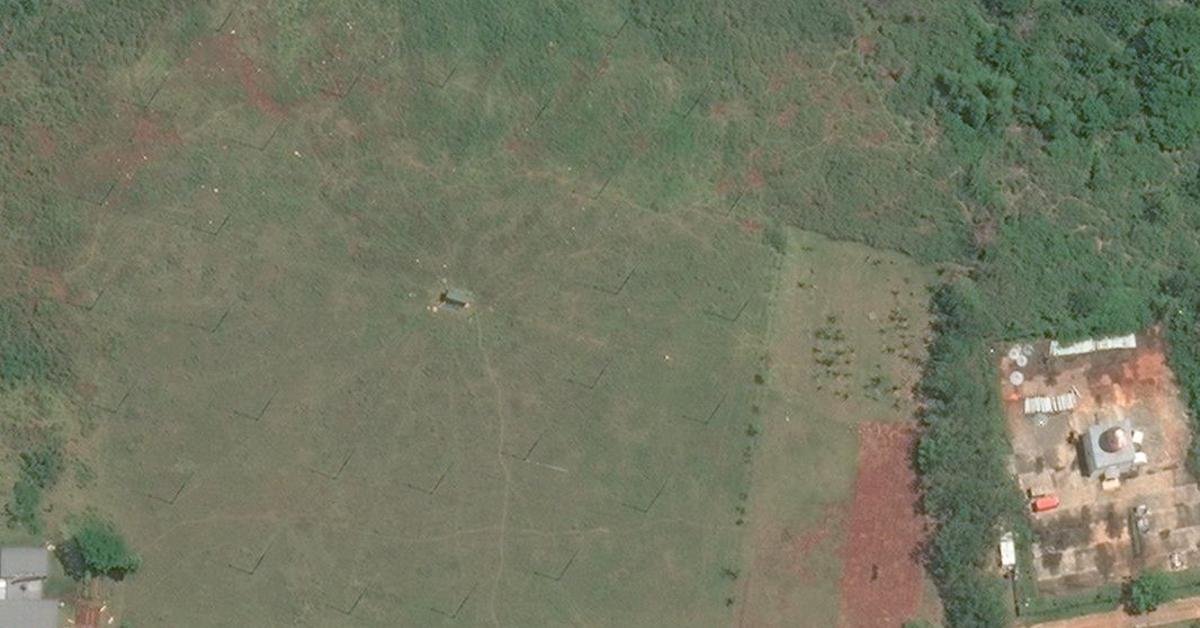
During the last two years, an old linear antenna field located at the northeast end of the Bejucal complex was replaced by a circular array, known as CDAA. In April 2025, work to install cables between the antennas and the control center was still visible, but the most recent images indicate that the work has been completed.
The new network has an outer ring of 19 antennas and an inner ring of 13. According to Csis, its size suggests that it has greater capabilities than any other Cuban circular system previously observed by the US center.
The Csis relates the growing relevance of the facility to the increase in Washington’s military activity in the Caribbean
From its location in the province of Mayabeque, near Havana and the former Soviet base of Lourdes, the system could increase the ability of the island’s authorities, or that of its foreign partners, to observe US naval and air operations in the region.
The Csis relates the growing relevance of the facility to the increase in Washington’s military activity in the Caribbean, after Donald Trump’s Administration placed the Western Hemisphere among its priorities.
Bejucal has been linked for years with China in journalistic reports, appearances before the US Congress and statements by Washington officials. The center considers it likely to be one of three Cuban complexes that, according to US officials, are operated by Beijing.
The report, however, admits that there is no clear public evidence demonstrating Chinese involvement. Satellite images allow us to verify the construction and characteristics of the infrastructure, but they are not enough to determine who operates it.

/ CSIS
The study also examines another facility located in El Salao, near Santiago de Cuba, whose works began in 2021 and are practically paralyzed.
By 2024, the central control building, the bases for an inner ring of 16 antennas and part of the service conduits had been built. However, no antenna has been placed and vegetation has begun to cover the ground again.
Images obtained in May 2026 show few changes. The only thing visible is the repaving and modification of an access road that now heads towards the center of the planned network.
For Csis experts, this change indicates that the works could continue slowly and that the place has not been completely abandoned, although it also raises doubts about its fate. If completed, El Salao could complement the Bejucal facility and expand coverage to the southeastern Caribbean. The joint operation of both centers would strengthen Cuba’s ability to triangulate signals from Central America and the western Atlantic.
The expansion of these facilities could become a new focus of conflict between Washington and Havana, as the Trump Administration increases pressure on the Cuban regime.
In the executive order issued in May to impose new sanctions on the island’s government, the White House cited the presence in Cuba of “foreign adversary” facilities intended to obtain sensitive information for US national security as evidence of “malign influence.”