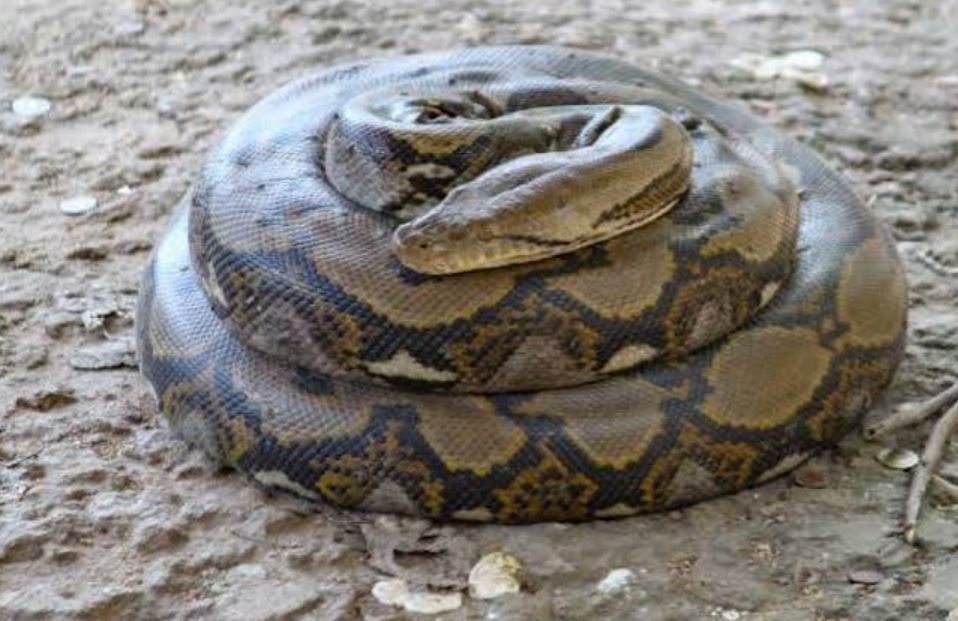
They kill non-venomous snakes, causing disruption to the natural system
After years of awareness, a new phenomenon has become a cause for concern, and environmental specialists and activists are making efforts to combat it, after it has turned into a recurring behavior in the summer, which is the phenomenon of killing harmless wild animals that appear in the summer due to thirst, especially non-venomous snakes. And defaming this behavior on social media platforms, causing environmental imbalance, exposing themselves to physical dangers.
Many people believe that every snake represents a danger, and that every wild creature must be killed immediately upon sight, despite continuous awareness campaigns, scientific publications, awareness videos, and field interventions by forest governorates, which seek to correct the human relationship with wildlife and convince people that nature is not an enemy. But ironically, part of this awareness began to deviate in another, more complex direction.
Sanusi: They claim to protect wildlife by showing off hunting and killing wild animals on TikTok!
After fear used to drive killing, excessive reassurance and the search for fame now push some people to approach, chase, and catch wild animals, and photograph them for quick content on social media platforms, in scenes that have become repeated in recent years.
How many pictures and videos on various social media platforms have we seen showing people carrying snakes, chasing them, taking selfies with them, or live broadcasting the moments of catching them as if it were a challenge to courage and not an interference in the life of a wild creature. Although many of the snakes that appear in summer are non-venomous, they also have an important function in maintaining environmental balance by hunting harmful rodents.
Many social media users denounce the widespread videos of people catching snakes and other animals in their forest habitat, under the pretext that they are dangerous…!
Unfortunately, many of the citizens’ comments encourage the owners of these videos to kill these snakes, such as writing comments to him such as: “The bale is eating” or “You are a man and a half.”
“Non-toxic” does not mean “safe to handle”
One of the most misunderstood concepts in recent years is the idea that a non-venomous snake is a snake that can be held or played with.
Radwan Senussi, who is interested in protecting the environment and preserving biodiversity, confirms in a statement to Al-Shorouk that this belief is wrong and dangerous.
According to him, the non-venomous snake does not inject poison, but it remains a wild animal with natural defense methods, including biting, turning around, and trying to escape under pressure.
He added: “Also, snake bites may cause wounds and infections as a result of bacteria present in the mouth or on the skin, in addition to the fact that some people may develop varying allergic reactions to the infection.”
The danger, according to Sanusi, is not limited to humans only, but also extends to animals themselves.
He stressed that random grabbing, pressure on the body, and constant exposure to stalking, lighting, or sounds while filming are all factors that cause severe pressure on the snake, which may lead to injuries, exhaustion, or the death of some wild animals.
Communication platforms… creating a fake championship
Our interlocutor notes that part of the spread of these behaviors is linked to the culture of fast content, or the search for digital fame, saying: “The more exciting the scene is, the greater the chances of spread and views, for some people obsessed with fame, and between their desire to appear and prove their boldness, the wild creature turns into a tool for entertainment.
The person interested in protecting the environment regrets the spread of many clips that begin with the title “Non-venomous snake,” but end with an implicit message that says: “Come closer… try… touch…” And here, according to him, lies the problem, because the observer does not always see the experience or the surrounding circumstances, but rather will imitate the behavior directly. Over time, exception turns into a general practice, especially among children and adolescents.
Respecting wildlife does not mean dealing with it
Our speaker concludes that true environmental awareness does not mean completely removing natural fear, but rather replacing it with respect and knowledge. Wild animals must be viewed from a safe distance, because their environmental role does not require human intervention. When we chase or catch it, we take it out of its natural function and turn it into a source of stress and danger, he says.
He adds that some beneficial species, including snakes that feed on rodents, play an essential role in environmental balance, and that an imbalance in the relationship with them ultimately leads to disruption of the natural system.
The success of awareness campaigns, as he put it, “is not measured by the number of people who dare to touch wild animals, but rather by the number of those who learn to leave them in their environment,” because the message of those concerned with protecting the environment and forest governorates was never “come close to snakes,” but rather “do not kill them… and leave them alone.”
He confirms that wildlife is not a garden of shows, nor content for challenges, nor a background for a picture seeking likes. Rather, it is a delicate system that requires a distance of respect. “In a time when the camera accompanies everything, perhaps the new lesson we need to learn is that the best picture with wildlife is the picture in which we do not get close to it at all,” as our interlocutor put it.