
Cairo – Mustafa Emara
A severe crisis erupted between Egypt and Iran after statements by Iranian officials about the Arabian Gulf and its status in the Persian Gulf. A high-ranking diplomatic source revealed to Al-Zaman that Egypt sent a strongly worded protest to the Iranian side over those statements, stressing that the Arabian Gulf will remain Arab and will never be Persian. Journalist Mustafa Bakri and a member of the House of Representatives commented on those statements in a conversation we had with him about those statements, stressing that despite Egypt’s efforts to spare the region a possible war against Iran, the Arabian Gulf will remain In the Arab world, it is part of Egyptian national security, and Egypt is committed to preserving it. This comes as Mujtaba Ferdowsi, the head of interests in Cairo, praised the Egyptian role in the current crisis, stressing that although Pakistan plays the main role in mediating between America and Iran To reach an agreement that will spare the region a devastating war, Egypt has an effective role in ending this crisis through its role in the Quartet, which includes Egypt, Saudi Arabia, Pakistan and Turkey. There are also ongoing contacts between Egypt and Iran within the framework of consultations conducted by both parties to reach a solution to the current crisis.
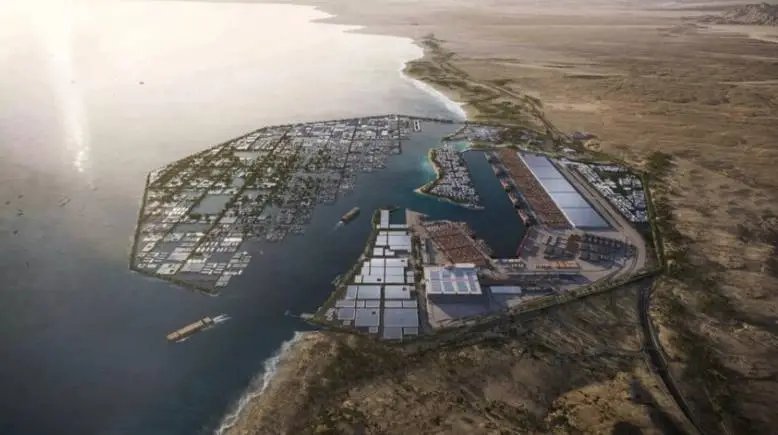
In the same context, with the world preoccupied with the blockade imposed on the Strait of Hormuz, a responsible government source confirmed to Al-Zaman that Egypt and Saudi Arabia recently conducted intensive negotiations to establish a new logistical corridor linking the heart of Europe with the ports of Damietta and Safaga, and from there to the city of NEOM, located on the Egyptian-Saudi border.
The source confirmed that billions began to flow through this corridor, which dropped the Iranian pressure card on the Gulf states and turned the Red Sea into an outlet for Gulf trade.
While Major General Pilot Dr. Hisham Al-Halabi, Advisor to the Military and Strategic Academy, doubted the effectiveness of the American project, which it called Project Freedom, which is based on escorting warships to commercial ships to secure their passage through the Strait of Hormuz, stressing the success because the short sailing distance in it increases the difficulty of any military operations to secure it.
While experts considered the closure of the Strait of Hormuz to be one of the reasons for the UAE’s withdrawal from OPEC. Ahmed Al-Anani, an international relations expert, confirmed that the UAE’s decision carries political dimensions and sends a message to all parties of the necessity of taking action to end the crisis.
On the other hand, Dr. Yusra Abu Shadi, the chief expert of the International Atomic Energy Agency, warned in a call against the destruction of the Iranian Yoshahr reactor, stressing that its destruction will cause a disaster and will lead to the region’s waters becoming unusable. Abu Shadi called on the Arabs to withdraw from the Treaty on the Non-Proliferation of Nuclear Weapons.