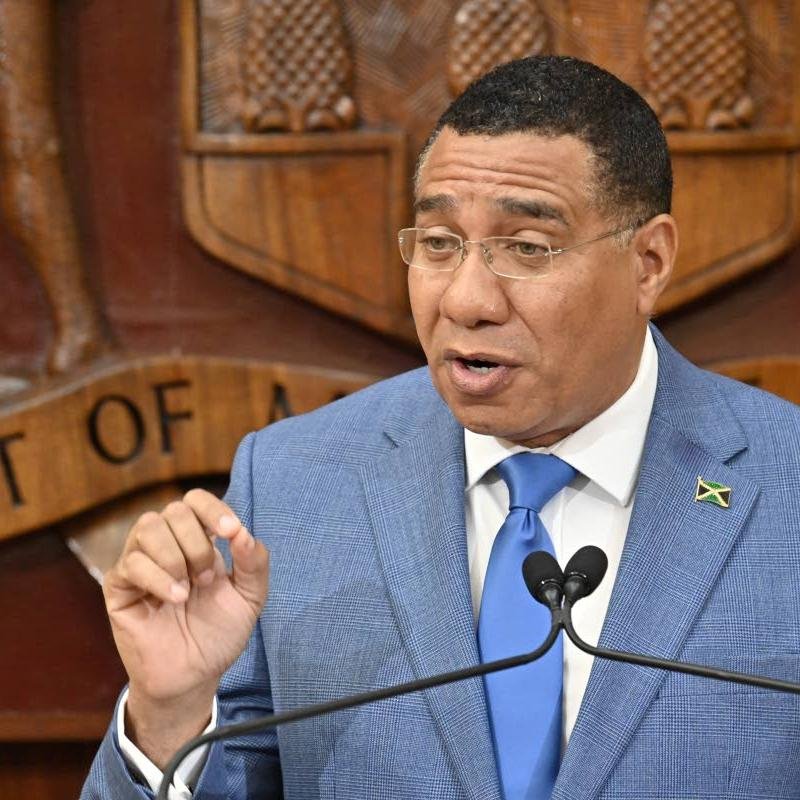
Prime Minister Dr Andrew Holness’s recent claim that his government’s programmes are being “sabotaged” by public servants should not be dismissed, as many of his critics have done, as rants of a fevered imagination or a cynical precursor to weakening oversight of, or accountability by, the administration. In other words, some people fear an attempted politicisation of the public service.
What, instead, must be demanded of Dr Holness and his ministers is that, where there is evidence of the alleged misconduct, it should be brought before the appropriate disciplinary or criminal tribunals for airing and assessment, and those who are found guilty should be penalised. Any such process must be fair and transparent, with the accused persons afforded due process.
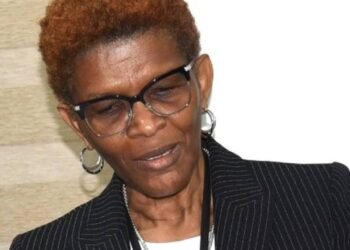
Indeed, an entire class of workers, or segments thereof, should not be tarred and feathered by innuendo. In that regard, The Gleaner’s Editorial Board shares the sentiment of Jamaica Civil Service Association (JCSA) President Techa Clarke-Griffiths that a distinction has to be made between “deliberate misconduct and legitimate professional advice”.
The Gleaner takes this matter seriously, the prime minister’s allegation and the burden of proof that it places on him, because of the importance of the centrality of the public bureaucracy to the fulfilment of government policy and the general functioning of the State, and how the bureaucracy is expected to behave in the context of the Westminster-style parliamentary system under which Jamaica operates.
JARRINGLY SURPRISED
Additionally, many people were jarringly surprised at Dr Holness’ allegation, given that his administration has held power for more than a decade, across three electoral cycles.
Under Jamaica’s system of government, largely in common with other Westminster-style arrangements, elected politicians set policy. A permanent, professional, largely anonymous civil service, which exists regardless of which party is in office, carries out those policies.
The non-political and administrative head of a ministry is the permanent secretary, who is its chief accounting officer, the person who is not only responsible for the line oversight of policy implementation but also for ensuring that taxpayers’ resources are deployed in accordance with law. Notably, the prime minister has a significant hand in appointing permanent secretaries.
Senior civil servants are expected to offer their best advice to ministers with respect to the formulation and execution of policy. Ultimately, with officials having tendered their advice, it is the minister who decides.
There are inherent tensions in this accountability chain. Ministers, often with the support of the increasingly ubiquitous, politically appointed special advisers (SpAds), chafe against the advice of civil service technocrats, who insist on following accountability rules. This can test relationships between ministers, with eyes peeled on election cycles, and the technocrats keen to do their jobs in accordance with the rules.
It is not known what the specific cases of malicious obstruction of government projects are that Prime Minister Holness and his ministers have encountered, or from what level of the public sector the blockages and hindrances have come. However, addressing a press conference last week on the eve of the first anniversary of Hurricane Melissa, the category five superstorm that devastated western Jamaica, and facing complaints that his government has been slow in recovery efforts, Dr Holness launched an assault on people in the public sector.
In the circumstances, it couldn’t be “business as usual”, the prime minister said.
“I don’t usually speak in extreme terms, and there are some subjects that it is better not to speak about them,” he said. “But more and more I’m coming to the conclusion that there are persons in the public sector who are determined to, again, to use the very harsh word, sabotage.”
“And I don’t say it lightly,” he added. “They delay, derail policies, programmes, and initiatives of the government. I see you, [and] I’m preparing the country to expect these changes, as it cannot be business as usual.”
DEMURRED
Obviously, this is a matter to which Dr Holness has given much thought. Indeed, he returned to the issue at the opening of the rebuilt Black River, St Elizabeth, hospital, which was damaged by last year’s storm, but demurred on the use of the word “sabotage”.
He accused elements of the public bureaucracy of frustrating the hurricane recovery efforts.
“As a people, and I’m speaking to you now as my family, we have developed a kind of public administration that is inflexible,” said Holness. “It is ultimately rules-based, which it must be, but it is at risk now of becoming irrelevant to the needs of the people. In other words, it is at risk of serving itself rather than serving the people.”
The health minister, Christopher Tufton, picked up the theme, with a tongue-in-cheek apology “to those who I may have been very forceful with”, apparently in a bid to circumvent some rules. “… If we had followed some of the procedures to restore this facility, we probably would be [just] halfway there today.”
The hollowing out of the State over the last three decades has indeed left the government short of capacity, which contributes more to the delay in projects than procurement rules aimed at ensuring against shortcuts. In that regard, while an agency like the post-hurricane National Reconstruction and Resilience Authority (NaRRA), with its ability to bypass existing procurement rules, might deliver some projects faster and may even be necessary in the current environment, its methods are not what is necessary in the long term for good governance and accountable government.
By all means, hold sabotaging civil servants to account. But the allegations must be real, not a pretext for adjusting rules.