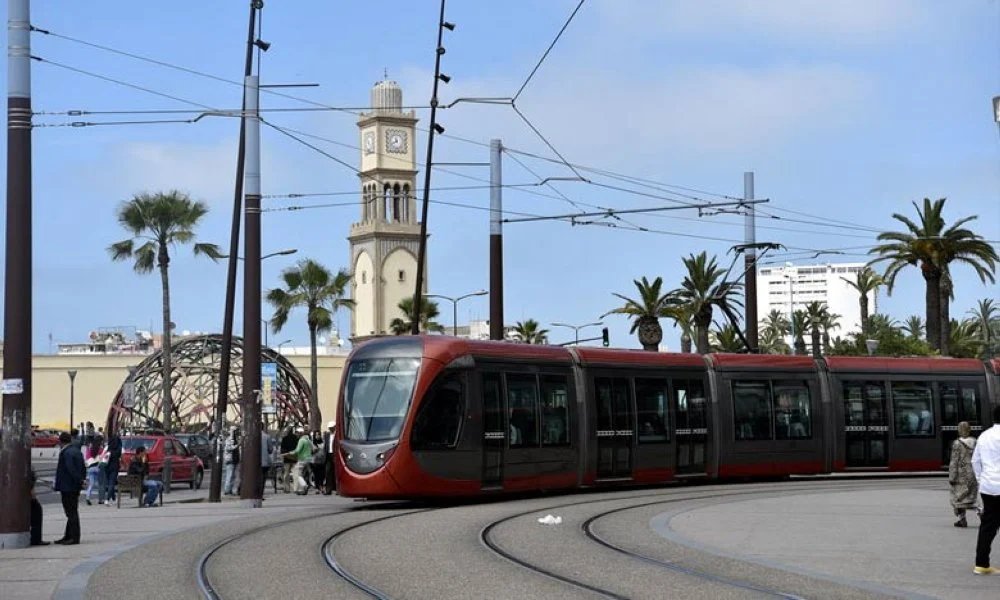
There German development cooperation (GIZ) and the department of Energy transition are working on a study to strengthen the national system ofenvironmental observationby integrating an advanced mechanism for monitoring the sustainable mobility. This project is part of the continuity of the priorities defined jointly by the Moroccan and German governments, which make the ecological transition a major axis of their partnership. Targeted sectors include renewable energy, water resources management, environmental governance and sustainable economic development.
At the heart of the project is an ambition that is both technical and institutional: to provide Morocco with a system capable of collecting, analyzing and using data related to travel and their environmental impact. The objective is twofold: improve the quality of monitoring of environmental indicators and integrate sustainable mobility as a key lever of the ecological transition. Concretely, this involves strengthening national capacities in terms of monitoring, in particular through innovative tools for data collection, analysis and public decision support.

Beyond the technical dimension, this project reflects a more profound evolution: the rise of data in environmental management. By strengthening the national observation system, the Kingdom should have more efficient tools to guide public mobility policies, anticipate environmental impacts and meet international requirements in terms of Climate reporting.
Due to the constraints weighing on its economic development, with GDP growth reduced to an average of 1.25% between 2020 and 2023 (compared to 2.3% in 2019), Morocco is faced with the challenge of making its transport and mobility sector more sustainable and more inclusive. This sector represents the leading national consumer of energy (38% of total consumption), depends up to 98% on imported fossil fuels, which negatively impacts the balance of payments, and is among the leading emitters of CO₂ (30% of total emissions).
“In this context, in order to improve the conditions for the development of sustainable mobility at the national level and in Greater Agadir, the Department of Energy Transition is supported by GIZ through the implementation of the Moroccan-German cooperation project “Sustainable mobility based on renewable energies in Morocco – DKTI VI”, mandated by the German Federal Ministry of Economic Cooperation and Development (BMZ), in partnership with other public and private actors concerned,” explains GIZ.
The objective of the project is to support Morocco’s efforts to achieve the objectives of its sustainable development policy and gradually decarbonize the transport and mobility sector, in particular through an operational translation of certain orientations of the new development model (NMD), as well as a contribution to the achievement of the objectives of the National Sustainable Development Strategy (SNDD) and the contribution determined at the national level.
Faced with growing challenges linked to urbanization, congestion, pollution and inequalities in access to transport services, sustainable mobility is emerging as a strategic priority for cities and territories. In this context, strengthening monitoring and analysis tools becomes essential to guide public policies towards an effective reduction of environmental impacts and support the transition towards more sustainable, inclusive and efficient transport systems.
From a perspective of decision support and assessment of the state of the environment, the planned Observatory thus asserts itself as a central tool for monitoring, analysis and management. It must be based on a robust system of indicators making it possible to assess the environmental pressures linked to mobility, to measure their developments and to inform the actions to be implemented to mitigate them, while integrating the technical, social and economic dimensions.