Since the Labour Party was elected to government in 2013, there has been a clear strategy of centralisation, particularly when it comes to government projects across a varied spectrum of sectors.
The examples of centralisation are wide-reaching: things which used to be the responsibility of local councils were gradually shifted to become the responsibility of central government authorities. For instance, waste collection used to be coordinated by local councils which meant that different towns and villages had different waste pick-up patterns. Now, the whole country operates under the same system.
Local infrastructural projects used to fall under the remit of local councils, but the creation of Infrastructure Malta put a stop to that, with all road projects – even those in residential roads – fell under the centralised arm of this new government entity.
This setup has its advantages: it allows for a more unified approach in the general direction of that sector which should make planning in the broader sense a lot easier, and it alleviates the cost burden of development and services from the local council and allows councillors – who are not full-timers – to focus on other things which would be for the betterment of the lives of their residents.
The flipside though is that in certain aspects, the local council is left either in the dark or somewhat powerless to do anything when things go wrong or take a turn which inconveniences residents.
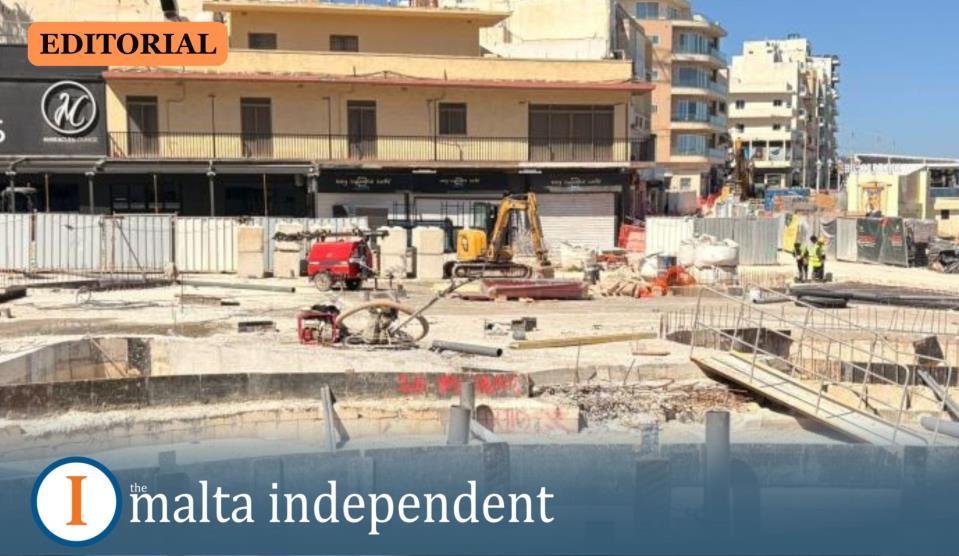
We have seen an example of this in Bugibba, where the ongoing Bugibba Square regeneration project has caused significant disruption for residents and businesses in the area.
Shop owners reported a significant decline in customers, with some struggling to remain open. Employees have also been affected, with reduced working hours becoming increasingly common. One worker from a shop along Dawret il-Gżejjer explained that she has gone from working full-time to just 15 hours a week due to the lack of customers visiting the area.
In comments to The Malta Independent on Sunday, St Paul’s Bay mayor Censu Galea noted that prior to the commencement of works in late 2024, efforts were made to ensure the involvement of the St Paul’s Bay Local Council in planning discussions.
He said he represented the council in a number of meetings, where he consistently pushed for faster progress, although these meetings later became less frequent.
Galea also said that the project had been extended beyond its original scope to include the replacement of drainage and water mains in Triq ir-Rebbiegha and the expansion of works to surrounding streets. According to him, these changes were necessary to avoid leaving critical infrastructure issues unresolved.
Addressing public frustration, Galea acknowledged the significant disruption faced by residents and businesses, noting that the council receives daily complaints regarding the works. While minor issues are often resolved, he admitted that more serious challenges on site are difficult to address due to the council’s lack of direct control.
“Contractors do not take orders from the local council,” Galea stated, adding that although he maintains regular contact with the main contractor, the council’s influence is limited. He stressed that councillors have been kept informed throughout, and that the issue has been discussed multiple times within the council.
The mayor recognised the negative impact of the prolonged works, particularly on the business that have experienced reduced activity or have been forced to close temporarily.
It is good that there appears to have been a good sense of collaboration between central authorities and the local council – however this also exposes one of the greater disadvantage of centralisation: those who have been affected the most by this inconvenience have nobody to turn to.
The council is there to represent the residents, but if the council can do little to nothing about inconveniences that the residents face, then it means that the residents themselves have no way of seeking redress for what they are facing.
Residents affected by delays to public works should have a way of seeking redress for the inconvenience that they are facing – be that through the local council, or otherwise.