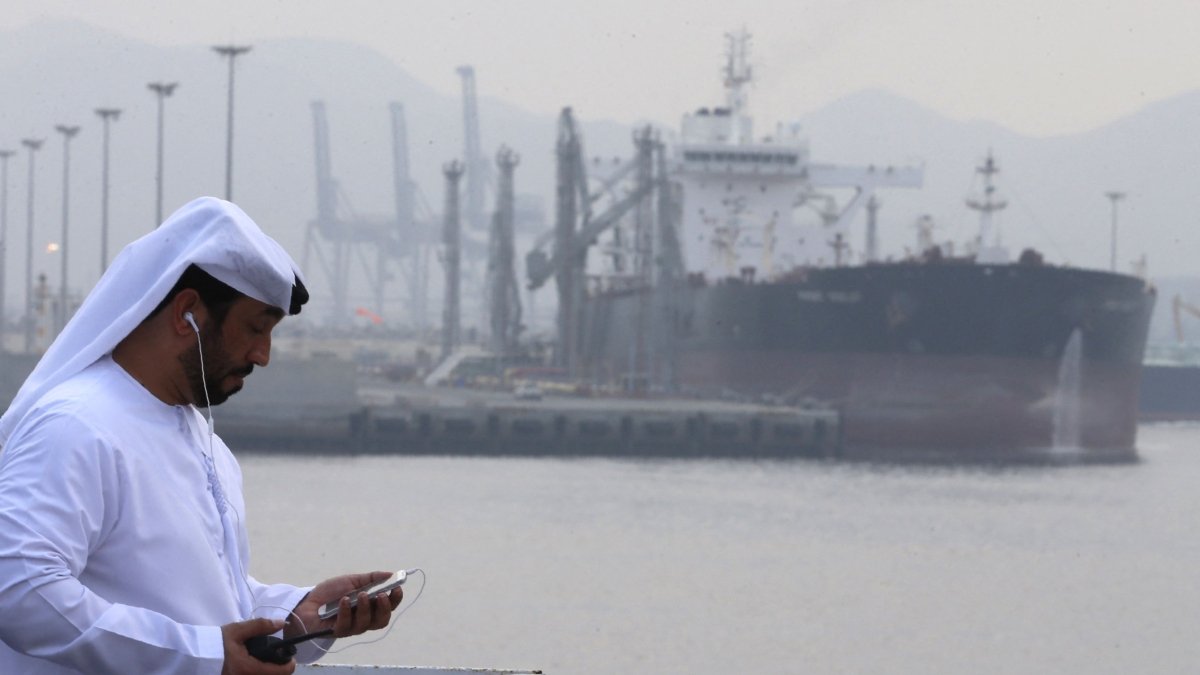
THE’United Arab Emirates exit from OPEC deals a tremendous blow to this organization, which could once be defined the oligopolistic cartel of oil-producing countries. The Emirates officially do it to recover full freedom of maneuver on the production and sale of crude oil: in theory, in fact, those who belong to OPEC must agree with other members on production cuts or increases (the discipline was not always respected in practice). But this sensational exit has many faces. The Middle Eastern conflict has something to do with it: OPEC remains one of the last important organizations I belong to both Arab countries and Iran are members. But it was a cartel in decline because the center of gravity of energy power has moved elsewhere: towards America since the fracking and shale gas revolution returned the world record of production to the United States, which are certainly not members of OPEC: the importance growing of producers such as Mexico, Brazil and Canada (and net of the crisis in the Venezuelan extractive industry). OPEC had tried to defend its role by expanding to OPEC+ with the inclusion of Russia, but it was not enough. The Emirates’ exit also confirms the disagreements with Saudi Arabia: Riyadh and Abu Dhabi have often had disagreements and even public clashes over the production and pricing policies to be pursued.
To understand the historical significance of the Emirates’ announcement it is good to take a step back in history, to 53 years ago: when Westerners “discovered” the power of OPEC all at once, because they ran out of petrol. In an energy crisis which, due to its immediate consequences, was much more serious than the current one (although perhaps the consequences of the Iranian conflict will be felt after a delayed outbreak). It was on that occasion that suddenly in the collective imagination the figure of the “Arab sheikh” lost the picturesque connotations it had had, to become synonymous with strong power: energy, financial, geopolitical.
The Arab-Israeli conflict fought from 6 to 25 October 1973 it took its name from the Jewish holiday during which it began, not surprisingly. The armies of the Arab coalition led by Egypt and Syria (in which contingents from Arabia, Algeria, Morocco, Tunisia, Libya, Jordan, Iraq, Sudan, and even Cuba participated) initially prevailed also thanks to the surprise effect linked to the religious holiday. Afterwards Israeli forces managed to recover. On a strictly military level there was no clear victory for one of the two camps, but the war was experienced as a redemption by the Arab world after the humiliation suffered in the 1967 war (the Six Day War, which ended with a flash victory for Israel, was also the beginning of the decline in the political parable of the Egyptian dictator Nasser). The Middle East confirmed itself as an epicenter and a stake of the Cold Warwith tension at its highest between the United States and the Soviet Union: the latter supported the Arab coalition.
Some of the most profound and lasting consequences involved the energy and economic spheres. OPEC successfully used economic sanctions by rationing crude oil to several Western countries accused of arming Israel. The increase in fuel prices created serious difficulties for advanced economies (remember the “walking Sundays” and other austerity measures in Italy). It was the beginning of a substantial transfer of financial resources from old industrialized countries to emerging nations that hold the largest fossil energy reserves. A transfer of wealth from North to South, therefore. With results, in retrospect, that are worse than disappointing. The river of petro-dollars (the proceeds from the export of oil, a raw material paid in dollars) enriched the ruling classes of the Arab world who proved incapable of investing in the modernization of their countries, in education, in well-being. In that period, one of the least catastrophic cases was Iran’s modernization experiment under the Shah of Persia, Reza Palhevi: however marked by enormous inequalities, arbitrariness, despotism, abuses of power. Furthermore, the forced secularization and female emancipation in that country triggered obscurantist reactions. Until the overthrow of the Shah and the arrival of a theocratic regime directed by a priestly casteeven more corrupt than those who preceded her.
The easy wealth obtained from oil gave rise to hasty and simplistic theorems on the “curse of energy income”. In truth, there is no mechanical connection between a country’s abundant supply of natural resources and its plunder by a predatory elite: otherwise we would have autocracies and oligarchs in power in Norway, Canada, Australia.
Six years after the first energy shock came the second with the Iranian revolutiona new surge in oil prices, a further transfer of wealth from North to South. For fear of ending up like the Shah of Persia, the Saudi monarchy (who had suffered terrorist attacks at home) made an unholy pact with the Wahhabi clergy. A competition began between Iran and Arabia to see who had the most virulent hatred towards the West. Petrodollars financed mosques and madrassas around the world where jihad was preached. Anti-Westernism also spread to divert the growing frustration of Muslim populations, robbed of the benefits of oil revenues by their rulers, towards external enemies. Part of the hatred towards external enemies was directed against the Soviet Union, the “atheist superpower” guilty of having invaded Afghanistan in 1979. America contributed in that case to adding fuel to the fire, training the Afghan mujahideen in the resistance against the Red Army: today’s Taliban are the descendants of those Islamic guerrillas. The majority of the September 11, 2001 hijackers were Saudi citizens; the head of Al Qaeda, Osama Bin Laden (also Saudi), had sworn revenge against America ever since US soldiers had “desecrated” the sacred lands of Islam during the military intervention to drive Sadam Hussein back from Kuwait (1991).
Half a century of terrorist and bloody massacres were perhaps about to end before our eyes, on the eve of October 7, 2023. Behind the diplomatic thaw between Arabia and Israel there was also this: Prince MbS seems committed to freeing himself from the influence of the Wahhabi clergy and is pursuing a cautious secularization of the country on the Dubai model. The rivers of Saudi petrodollars that financed the jihad are tending to dry up. Furthermore, the reopening of diplomatic channels between Iran and Arabia – through the mediation of China, in this case – could calm another outbreak of tension that was spreading from the Gulf to other parts of the world. All this positive scenario remained frozen, first due to the horror of October 7, 2023 with the slaughter of Israeli civilians, the children massacred, the women raped by Hamas; then with the counteroffensive of the Israeli armed forces and the terrible toll of innocent victims in Gaza. MbS has not given up on the project of normalizing relations with Israel. But everything has become more difficult, at least the times have gotten longer.
Another balance sheet of this half century concerns the energy and environmental issue. When the Yom Kippur war broke out and then the oil rises began, the West was already under the influence of a Gospel of Scarcity and Degrowth. The first report on the “limits to development” signed by the Club of Rome, a think tank which then moved to Germany and Switzerland, was published in 1971. That report did not deal with climate change, the problem of pollution was marginal. His most sensational prediction, and most discussed at the time, concerned the now imminent exhaustion of oil and gas deposits. It is useful to remember this because even today the report on the limits to growth and the Club of Rome enjoy undeserved prestige. The prediction turned out to be completely unfounded: the planet was not approaching the extinction of fossil energy, indeed technological progress would subsequently greatly increase the exploitable deposits. However, the theme of «limits to development” it has a powerful ideological appeal, which ignores the facts. The prophecy of the Club of Rome is part of a long chain of apocalyptic visionswho maintain or increase their followers regardless of factual denials. The various “demographic bombs” (Chinese, Indian) that deflated one after the other must be added to the list; or the Malthusian predictions about the impossibility of feeding all the inhabitants of the Earth, always contradicted by the progress of agriculture. In this sense, the half century that has passed since the Yom Kippur War has taught us nothing at all. The failures of apocalyptic prophecies follow one another, in vain: the followers of millenarian religions continue to increase, who see the end of the world around the corner.
On technological and industrial grounds, the Yom Kippur War had positive consequences. Rising oil prices accelerated companies’ efforts to save energy. Progress towards the electric car and solar energy received decisive and beneficial impulses from that shock. The market economy once again demonstrated its vitality and flexibility, responding to the crisis in an innovative way.
April 28, 2026, 4.45pm – edit April 28, 2026 | 5.03pm
© ALL RIGHTS RESERVED