If there is no agreement between the government and the opposition in the time ahead, it will send a worrying message to citizens and European partners that political actors are not ready to put issues of general interest ahead of party calculations, which at the same time raises the question of the institutional maturity of the system and the ability of political elites to fulfill the obligations arising from the European agenda.
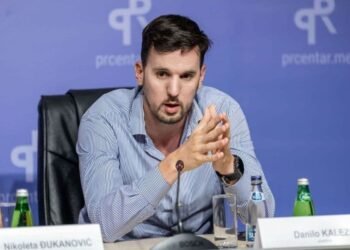
That is, in an interview with Victoryassessed the assistant professor at the University of Donja Gorica, Nikoleta Đukanović, noting that time is running out, because the election year is approaching, when, according to democratic practices, significant changes to the electoral legislation are not recommended.
Đukanović also warns that the European Union observes the accession process not only through the formal fulfillment of technical criteria, but also through the quality of democratic institutions and the functioning of the political system.
What do you expect in the coming period regarding reforms in the field of electoral legislation? If there is no agreement between the opposition and the parliamentary majority, what kind of message does that send to Brussels, and to the citizens themselves?
ĐUKANOVIC: The weather is definitely not in our favor. We are getting closer to the period of one year before the regular parliamentary elections, when, according to good democratic practices, significant changes to the electoral legislation are not recommended. Because of this, the space for serious and high-quality electoral reform is getting narrower. At the same time, it is difficult to talk about the real political will for reform, because if it existed, the key issues of the electoral system could have been resolved during 2024 and 2025, and even earlier. Instead, we are witnessing continuous postponement and absence of political consensus. If there is no agreement between the government and the opposition, it will send a worrying message to citizens and European partners. First of all, that political actors are not ready to put issues of general interest ahead of party calculations. At the same time, this raises the question of the institutional maturity of the system and the ability of political elites to fulfill the obligations arising from the European agenda.
If we really stop and Montenegro ultimately fails to reach an agreement on key changes to the electoral legislation, how much can it realistically threaten the plan to close the negotiation chapters by the end of next year? Could it happen that Brussels simply sees through its fingers?
ĐUKANOVIC: It can certainly be a serious challenge. The European Union does not observe the accession process only through the formal fulfillment of technical criteria, but also through the quality of democratic institutions and the functioning of the political system. That is why the question arises whether the EU could ignore the fact that the full conditions for holding fair and democratic elections have not been provided, if other segments of the negotiation process progress. Past experiences show that the European Union has been able to be pragmatic in certain situations when there is a broader political interest in enlargement. However, in the long term, it is difficult to imagine the full integration of a state that has not resolved key issues of electoral integrity and trust in the electoral process. Precisely because of this, the question remains open as to whether the closing of the chapter will really take place according to the planned dynamics if the reforms that are essential for democracy are absent.
It is constantly pointed out that Montenegro has advanced the furthest in the EU accession process. However, it seems quite possible that we fulfill a large part of the technical criteria, and that, due to these unresolved issues of the electoral system and chronic political polarization, we still do not close all the chapters within the stipulated period. Do you share that fear?
ĐUKANOVIC: You are absolutely right, such a scenario is quite possible. Although Montenegro is currently the furthest advanced among the candidate states from the region, there are still a large number of challenges that can slow down or make it difficult to complete the negotiations from our side. Here, above all, I mean political crises, institutional problems, slowness in implementing reforms and lack of political will in certain areas. Particularly sensitive are Chapters 23 and 24, which refer to the rule of law, judiciary and fundamental rights, as well as Chapter 27, which concerns the environment and climate change, where significant institutional and financial capacities are needed. Therefore, it is not enough to formally meet the technical standards. It is equally important to demonstrate sustainable results and political commitment to reforms. If the existing problems continue, it is not excluded that the planned deadlines will be postponed.
When we draw a line, what is actually the greater danger for our European path today – the lack of reforms or the obvious lack of political will to implement them the moment they encroach on the interests of the parties, whether in power or in the opposition? Do political actors even think about the consequences of their actions for the citizens of this country?
ĐUKANOVIC: I see it so that the lack of reforms and the lack of political will are causally related to each other and it is difficult to observe them separately. Reforms are absent precisely when there is no willingness of political actors to accept changes that may limit their political influence or threaten their short-term interests. I believe that political actors are mostly aware of the consequences of their decisions for the country’s European path and for its citizens. However, practice shows that their political calculations are often dominantly directed towards preserving party positions and achieving immediate political goals. The problem arises when European reforms require a compromise, giving up part of political control or strengthening institutions at the expense of party influence. Then the European agenda often retreats in the face of narrow party interests, and the price of such an approach is ultimately paid by the citizens, through slower development of the state and slowing down of European integration.
European support exists, but progress towards membership depends on us
How do you rate the messages sent from the recently held Summit of the European Union and the Western Balkans in Tivat? To what extent can such international events accelerate our path to full membership?
ĐUKANOVIC: The EU Summit – Western Balkans represents an important political signal and confirmation that Montenegro is recognized as a relevant partner in European processes. It is particularly significant that clear messages of support for the European perspective of the region and the need to strengthen stability, democracy and security on the European continent were sent from that gathering.
However, such events, no matter how important they are for the country’s international position, cannot replace domestic reforms. The most important part of the work still remains with Montenegrin institutions and political actors. European support is there, but progress towards membership depends primarily on our ability to implement reforms, strengthen institutions and achieve political consensus on issues that are key to European integration.